[OT] I love alliterations [/OT]
Yet again I had to skip a HSF-Challenge, simply because all my UFOs where in such an early state of work that I wouldn’t have been able to finish any of them in time.
But this time I’m back in the game. The task was “black and white” ant though I would have loved to sew a magnificent black robe with white details, I was too eager to start an experiment. So I made this experiment match the challenge.
Earlier this year, a colleague in the museum asked me if I were interested in some antique patterns she had been given years ago. She had wanted to add them to the museum’s collection, but back then nobody was intested in doing so, so she kept them in her office. Now she found them amongst her documents and finally the now new colleague in the graphic collection will officially add them to the inventory. Before this was done she gave them to me so I could copy them for my own purposes. Besides one pattern sheet from the 1910s all sheets were from 1904 and 1905 issues of the “Schweizer Frauenheim” (because it is museum property I can’t publish any photos). As Wikipedia tells, this was one of the early magazines of the Swiss women’s movement in the beginning 20th century.
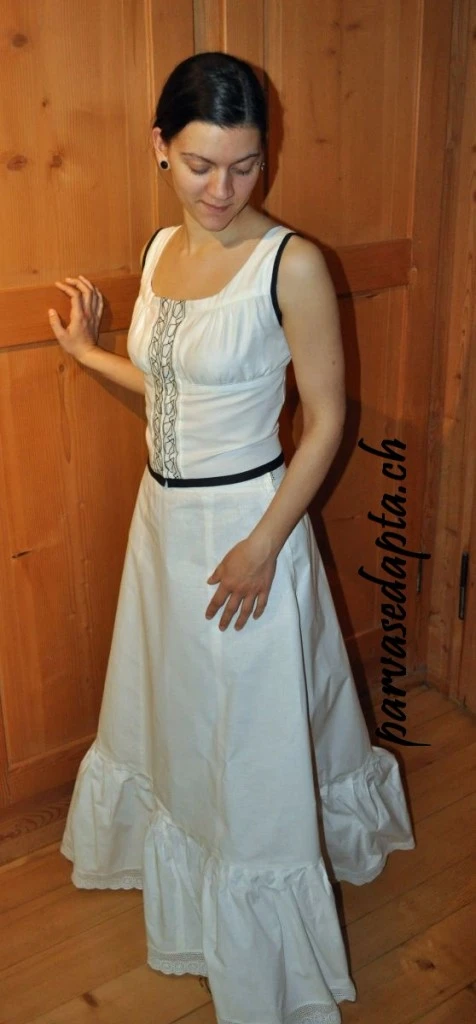
The pattern I chose makes this even more obvious: It is a so called “Reformleibchen” a bodice without any boning, invented as an alternative draft to the heavily boned s-line corset of the 1900s. While it is still tight fitting and more or less supportive, it is not shaping the body, but can be understood as a hybrid between a chemise and a brassiere. I am not completely sure if it names the same thing, but it can at least be compared with the liberty bodice. And of course this new shape wasn’t restricted to undergarments, but is part of the so called dress reform (the second one, there was already a first attempt in the 19th century, today often closely connected with Amelia Bloomer, similar attempts but in different shape were also done by the Pre-Raphaelites, whose women dressed in wide dresses without shaping corsets underneath). In contrast to the early, victorian dress reform, this early 20th century reform gained much more attention and did even appear in fashion plates, but also in caricature.
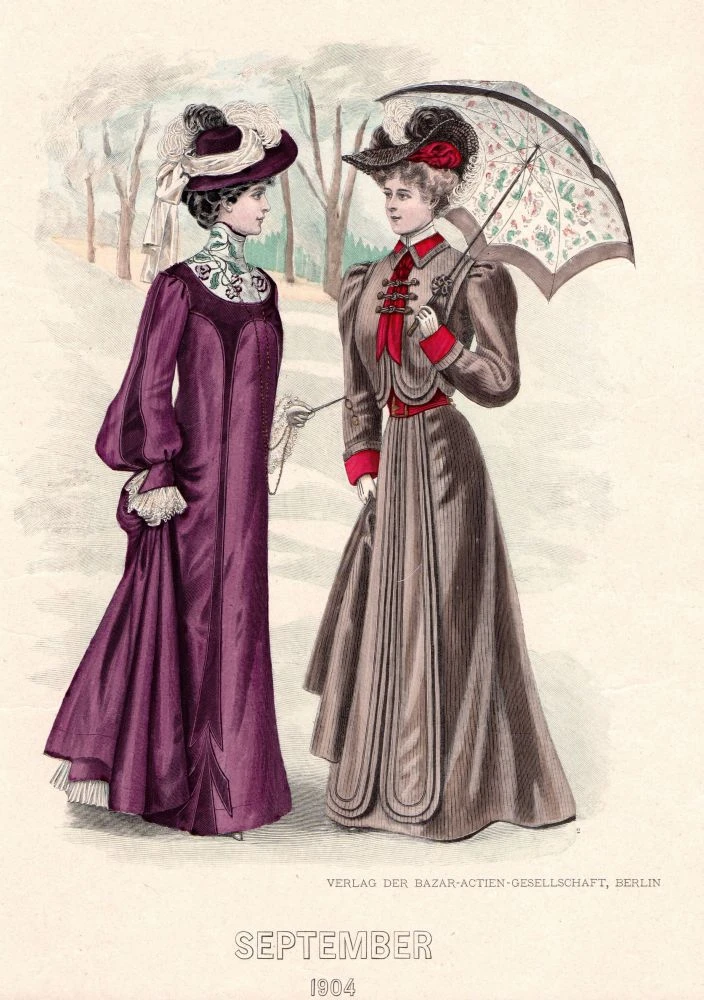
In contrast to the s-shaped-Line of high fashion, the reformed dress has no accentuated waist, but falls straight from the shoulders with a wide flared skirt. The decoration is often predominantly placed around the shoulders and ends above the stomach.
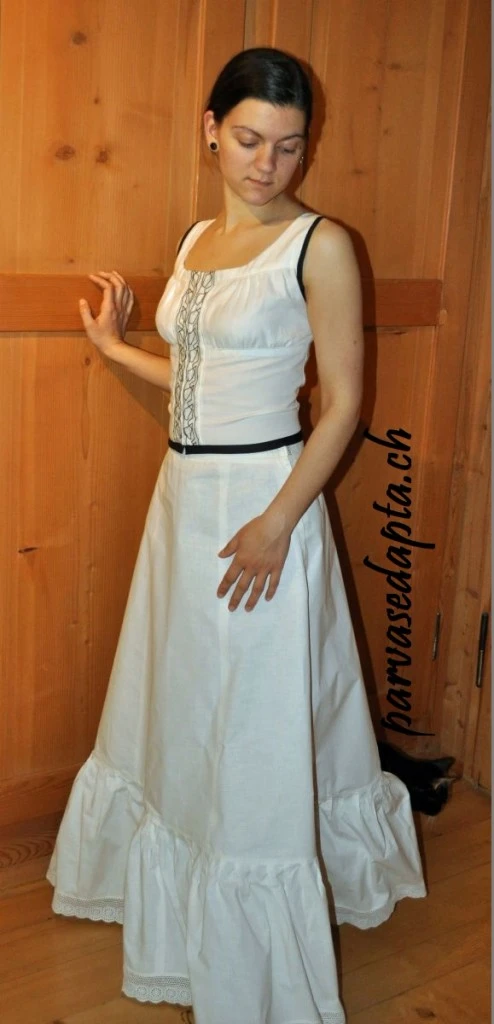
The “Reformleibchen” consists of flat lying bodice parts and ruffled parts around the breasts. My pattern closes with a facing in the front. The biggest problem I had when working with this pattern was, that I had neither instructions nor pictures of how it was meant to look like, only the different cut pieces with numbers in the corners to match. I first sewed everything together to see how it looks like. Having had embroidered the facing before doing anything else, it didn’t even came to my mind that they should be placed differently than next to each other (thinking of a corset substitute rather than a fitted chemise), but in fact it seems as if these bodices where meant to be closed with buttons in the front (note that the linked example is at least somehow stiffened, maybe not with boning, but something similar as the seams around the bodice show).
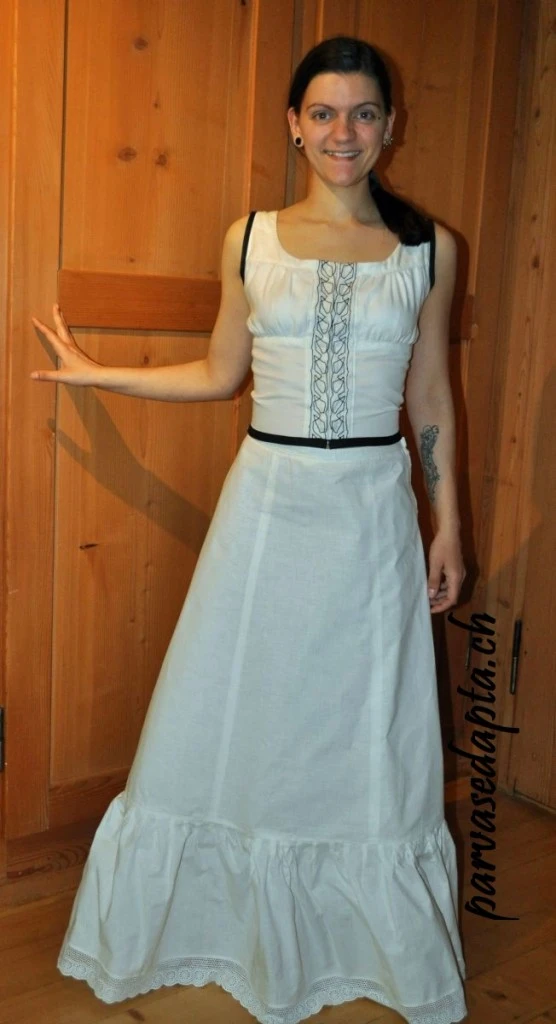
The bodice consists of very loose woven cotton, bought as a duvet cover at IKEA years ago.
Fot the embroidery I used black cotton thread and patterns from a 1906 issue of “Kunstgewerbe für’s Haus”.
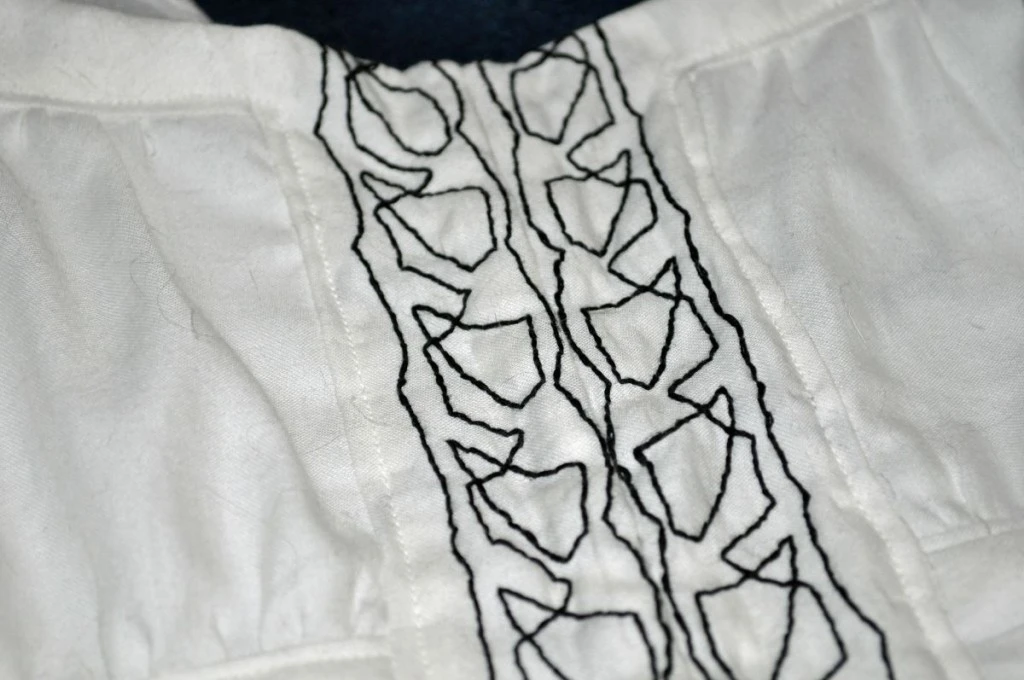
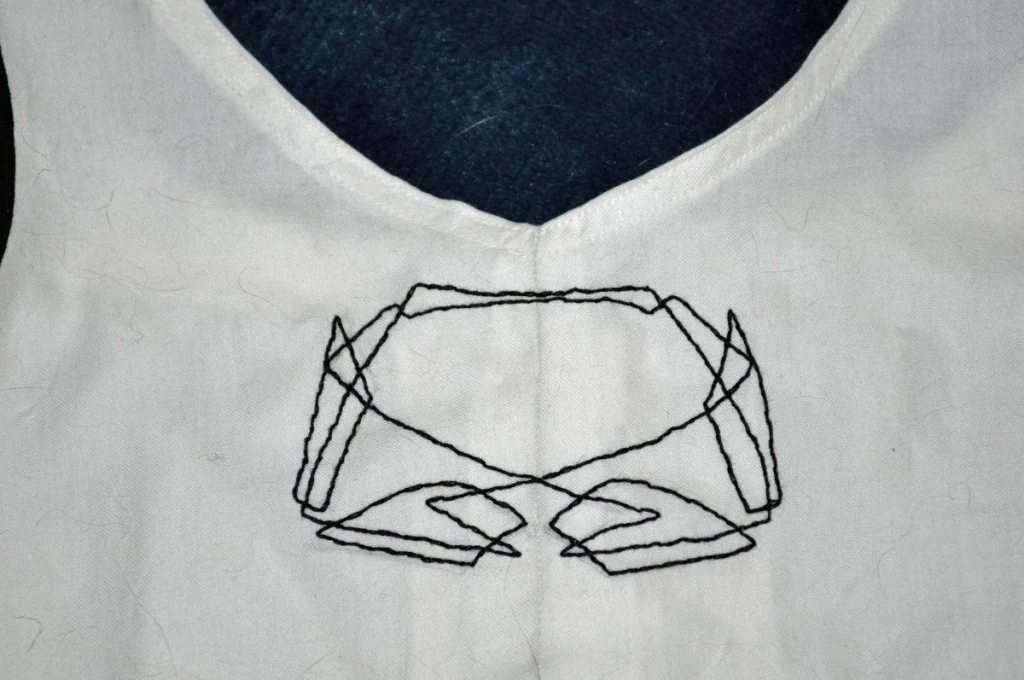
I used a ribbon with hooks and eyes as closure. Though I doubt that the quality I used existed in the 1900s, I did find similar ribbons in late 19th century garments, so at least the concept was known and used.
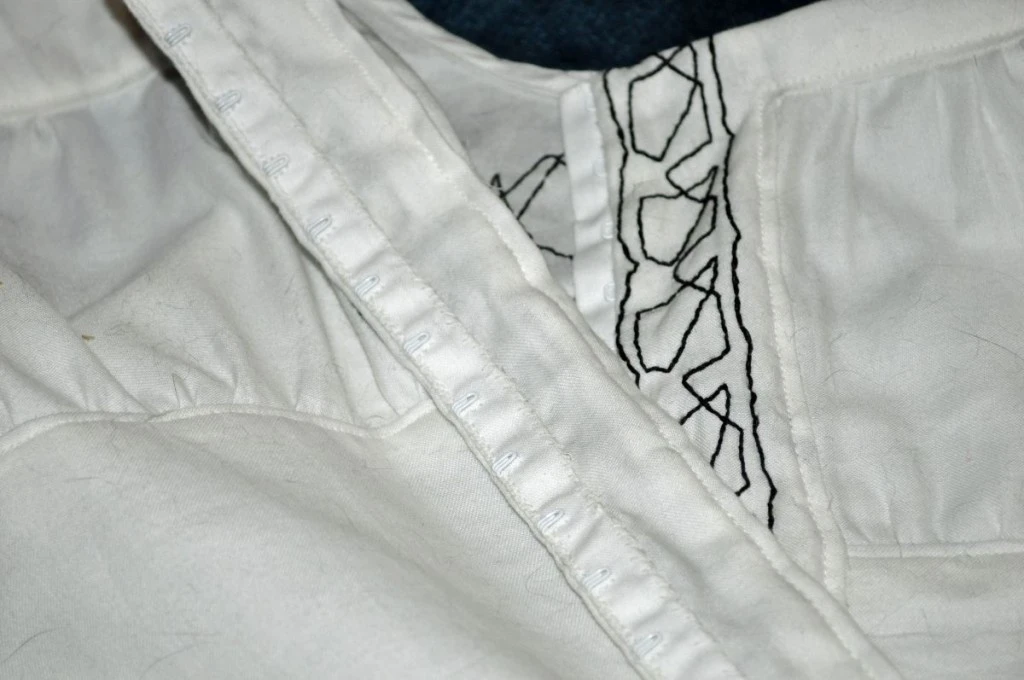
I made no changes to the pattern at all until it was finished but for the hem. In this state, it looked like this in the back:
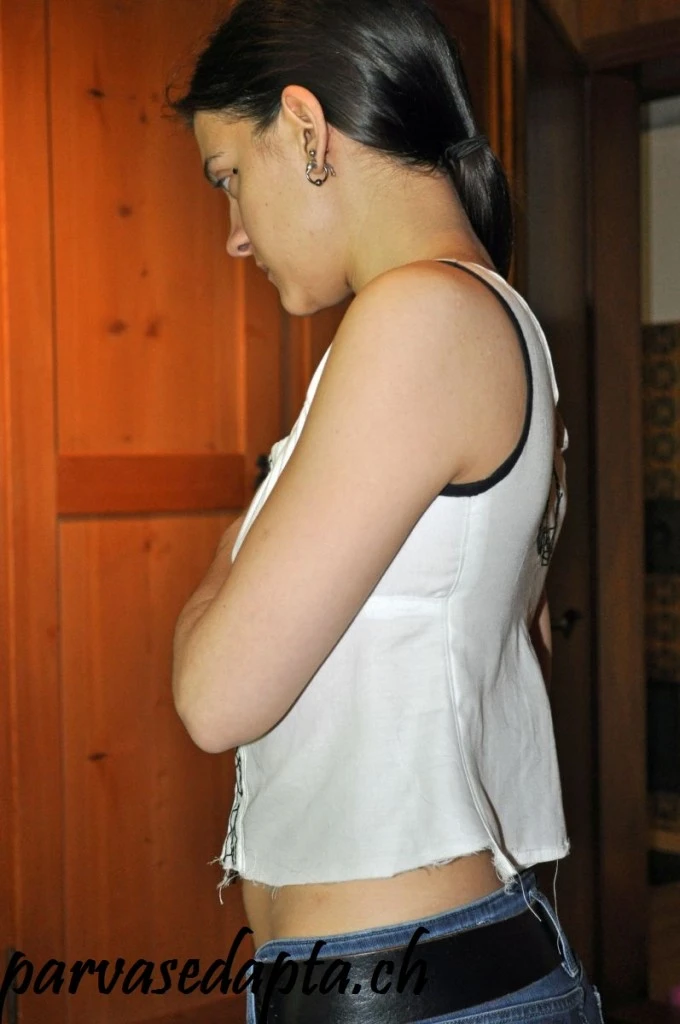
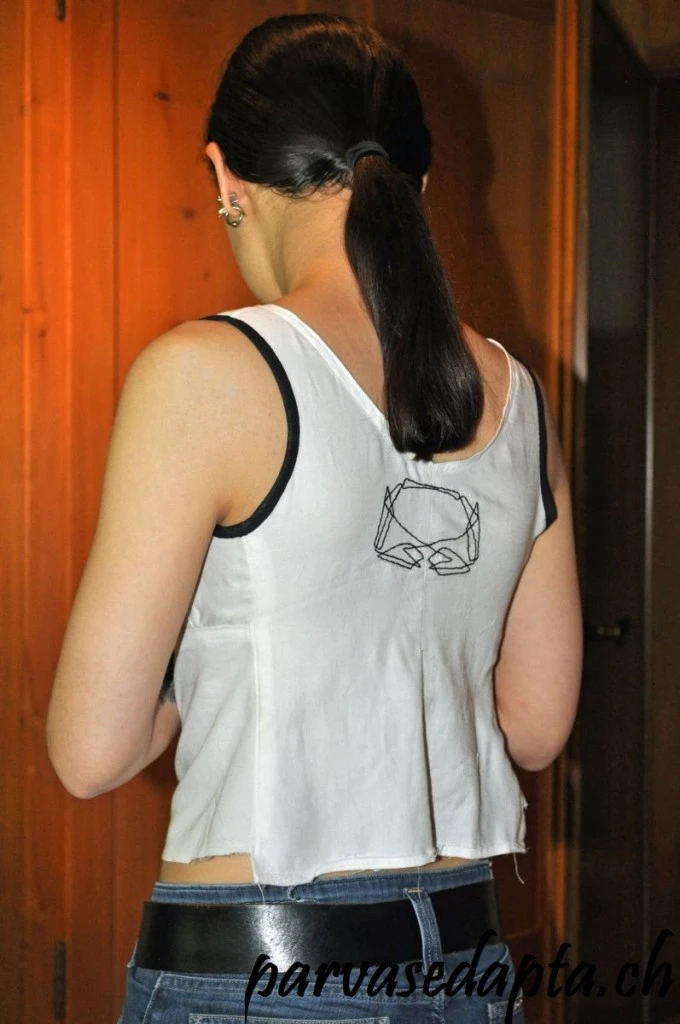
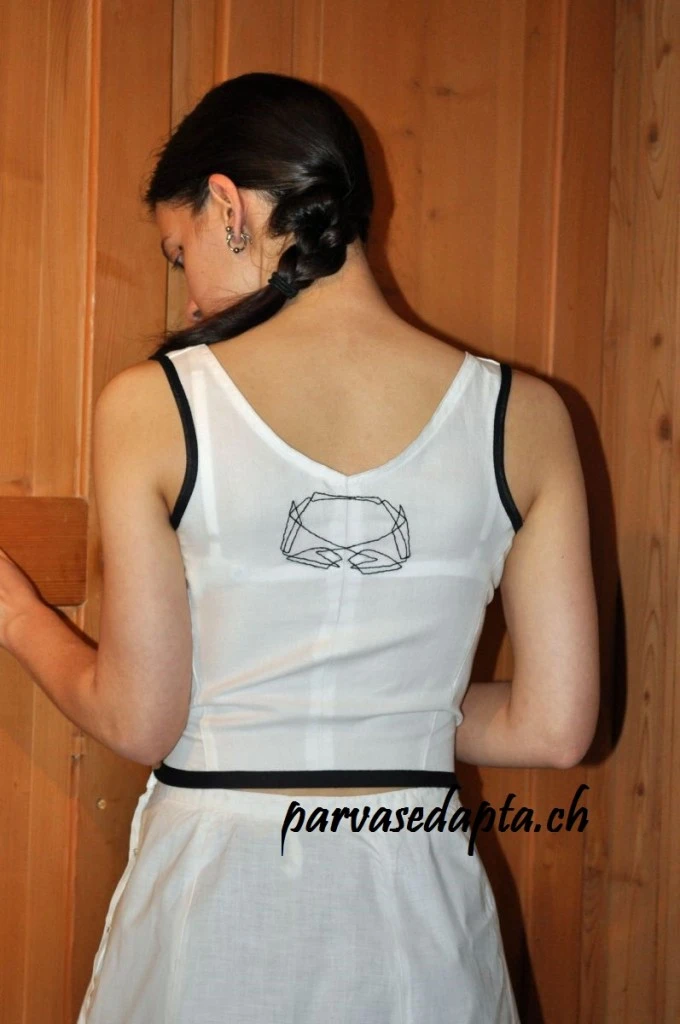
Next thing I did was to eliminate approximately 15cm width to make it fit.
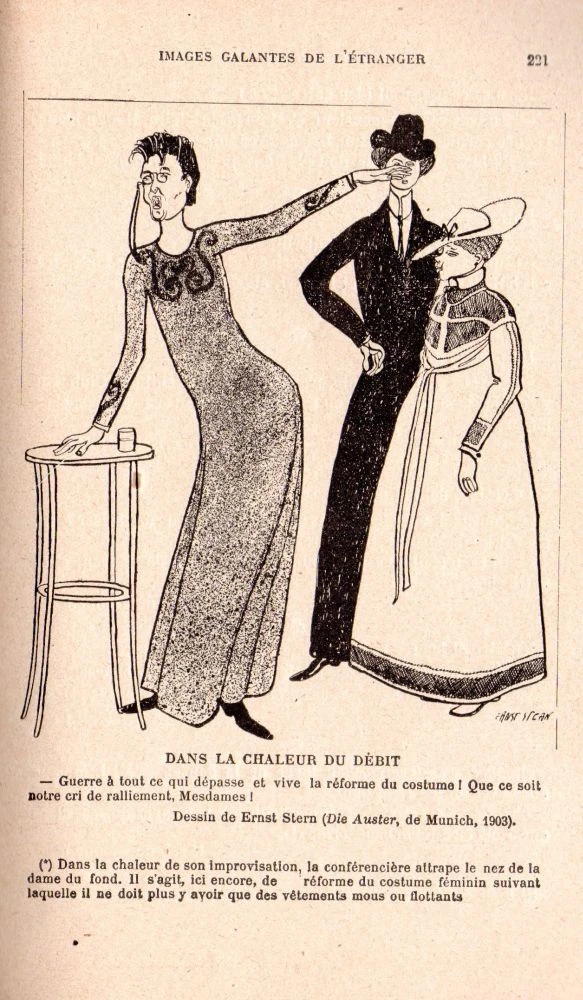
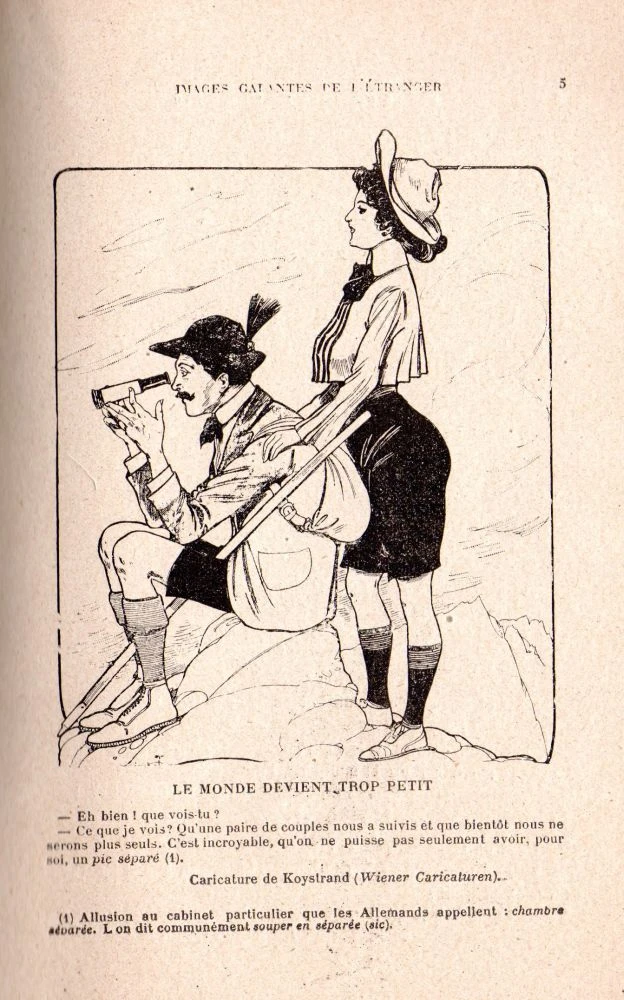
Only after I had done it I found this caricature, showing an upper garment with a very similar cut in the back without any fitting at all.
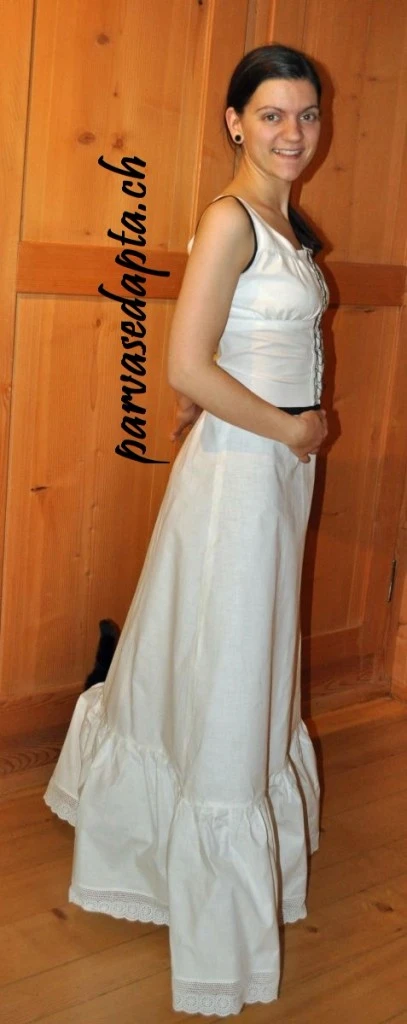
Well, it isn’t the best fitting garment I ever made, but it came together surprisingly well and it was a great experience to reproduce such a special and alternative piece of clothing.
The Challenge: #9 Black and White
Fabric: white cotton (satin or twill, can’t remember exactly and am too lazy to search for my linen tester)
Pattern: reformed bodice from an “Schweizer Frauenheim”-issue of 1905, embroidery pattern for clothing from “Kunstgewerbe für’s Haus”, 1906
Year: 1905/1906
Notions: white cotton and polyester thread, black embroidery cotton thread, white ribbon (to stabilise the rear neckline), black bias binding, hook-and-eye-ribbon.
How historically accurate is it? I was pretty sure about it being quite acurate until I found out about this button-closure-thing. This and the modern hooks and eye ribbon, the polyester thread and the fact that I assume the bias binding not to be correct, 75% ?
First worn: for the photos, on monday.
Total cost: the fabric cost me 4€ as a duvet cover because the pillowcase was missing, but there is plenty of it left and it was already years ago. Notions came all from my stash as well, can’t imagine having paid more than 5€ for all of them, so maybe we could say 7-8€.
See you soon, love,
ette
 Follow
That’s adorable, and very modern for the time!
gibt es irgendeine moeglichkeit an das schnittmuster zu kommen? ich wuerde es so gerne auch selber versuchen zu naehen 🙂
Thank you. Well, maybe it is because of the embroidered border. Could imagine that it would look a little moe old fashioned if I would have used mother-of-pearl buttons.
Liebe Mila.
Leider nein. Ich weiss nicht mehr sicher, aus welcher Ausgabe es war, nur dass es 1905 (unwahrscheinlich, aber auch möglich 1904) und “Schweizer Frauenheim” war. Ob du da Glück hast und es antiquarisch mit Schnittmusterbogen findest kann ich dir nicht dagen. Aber ich habe keinen Scanner der gross genug wäre, die Schnittteile einzuscannen.
Liebe Grüsse, ette