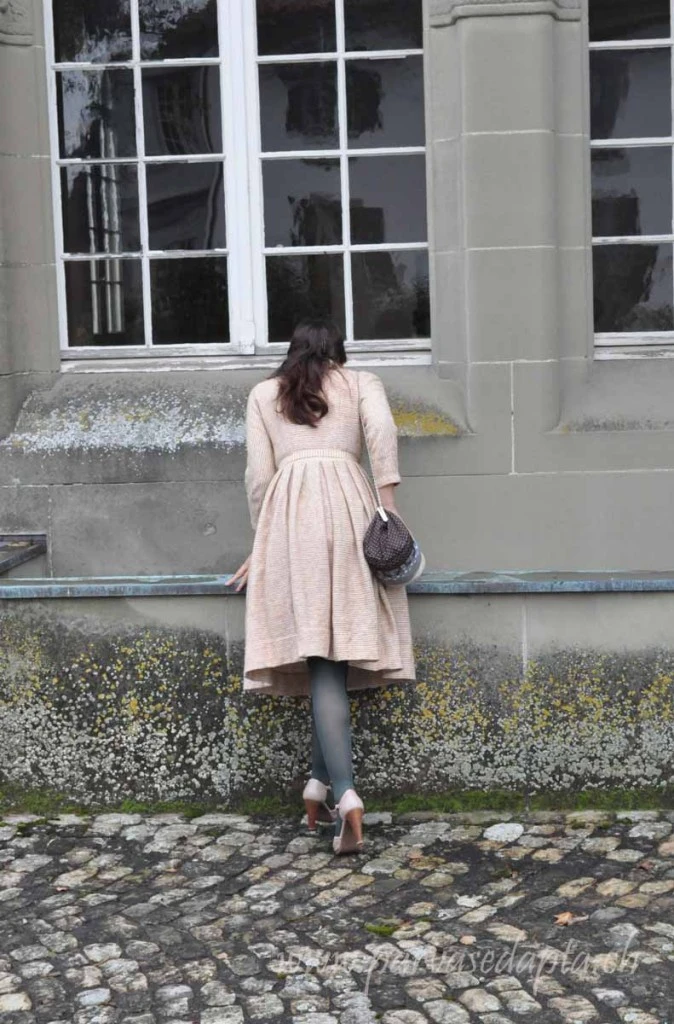
I don’t like altering clothes. I like to sew new ones and I have no problems with fixing a lost button or a broken zipper. But I don’t anymore buy things to remodel them. I used to do but somehow it never turned out how I wanted it and was always a lot more work than expected.
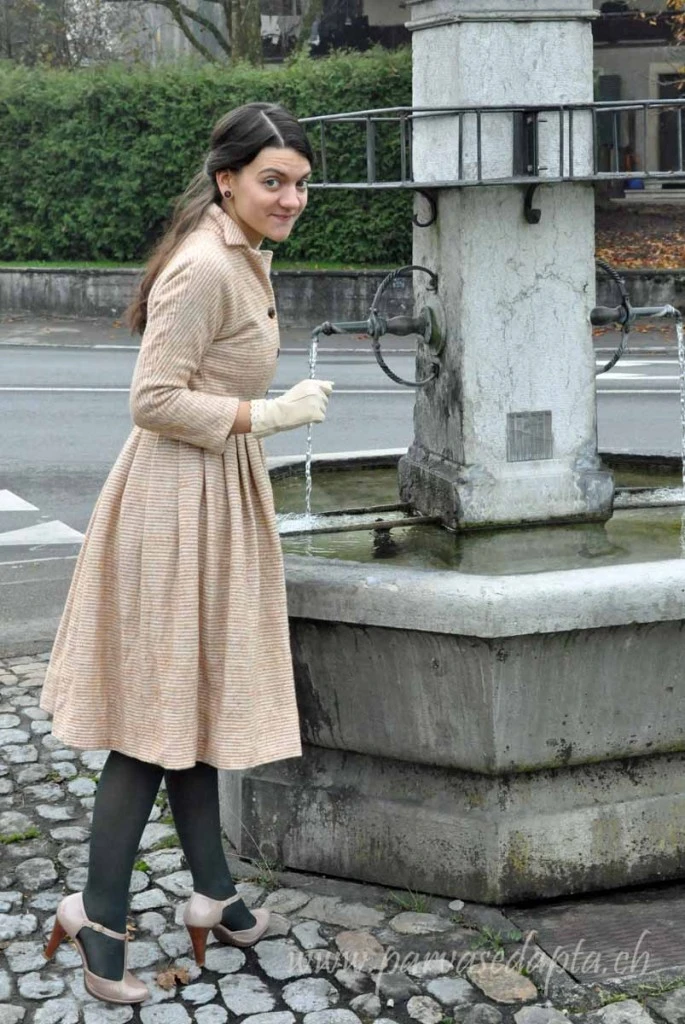
Additionally, I don’t like to alter old clothes. I mean, these things have survived 40 or 60 years without manipulation and I know how valuable unaltered things from previous centuries are for costume historians because they are so rare. A large shop in Berne selling Vintage and modern clothes alters vintage dresses on a grand scale, because most clients want their skirts to end above the knee and not at mid-calf length. The vast majority of these altered dresses dates from the 80ies, but every now and then you see something older amongst them, too. This altering makes the dresses uninteresting for me (because I like my dresses to end below the knees), but it also means less and less dresses in their original state. Because of this I do not buy these altered dresses and I only buy dresses that fit me. Even if a little shortening or two centimetres less circumference would make them look perfect, usually I don’t buy them and hope they’ll find a more fitting client, in the truest sense of the word.
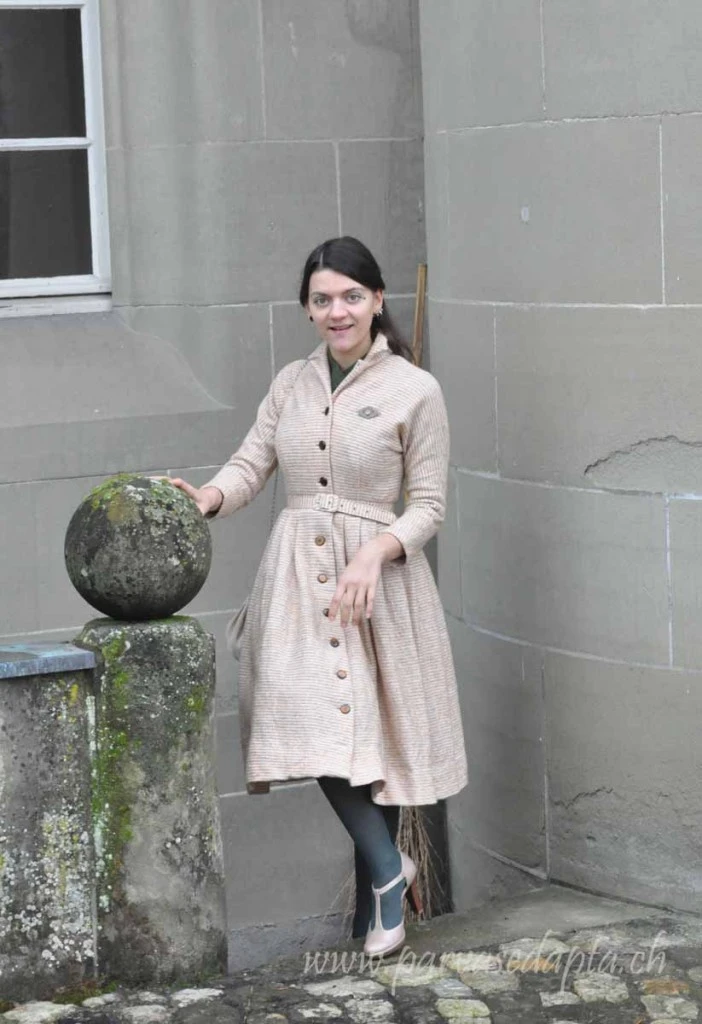
But this spring another user of my favourite sewing board sold a beautiful late50ies/early 60ies wool shirt dress I wasn’t able to resist, despite it being too large and I threw all my priciples overboard. Because the sleeves and the bodice were made from one piece of fabric that made fitting issues at the shoulders nonexistant, this seemed to be a pretty easy one to be altered to fit me.
And so I did. All I had to do was remove the skirt, shift the side seams to fit my size and re-attach the skirt. Because the wool was so easy to gather I didn’t even have to remodel the pleats.
It was obvious that the skirt had been altered before, there were multiple seams in different threads at the waist. So I wasn’t the first to manipulate it and I was, I admit, a little relieved not to have destroyed something completely untouched (because of the thick fabric and the curved seam underneath the arms I had to cut away the fabric, too. I know, something you never ever should do, shame on me).
Because one button was missing I had to remove the one at the bottom and sewed the buttonhole close so it would be less obvious. Grace to this fine striped pattern it works quite well. I added a small hook and eye to the waistband because the dress tended to gape, as there wasn’t a button to hold this narrowest part of the dress.
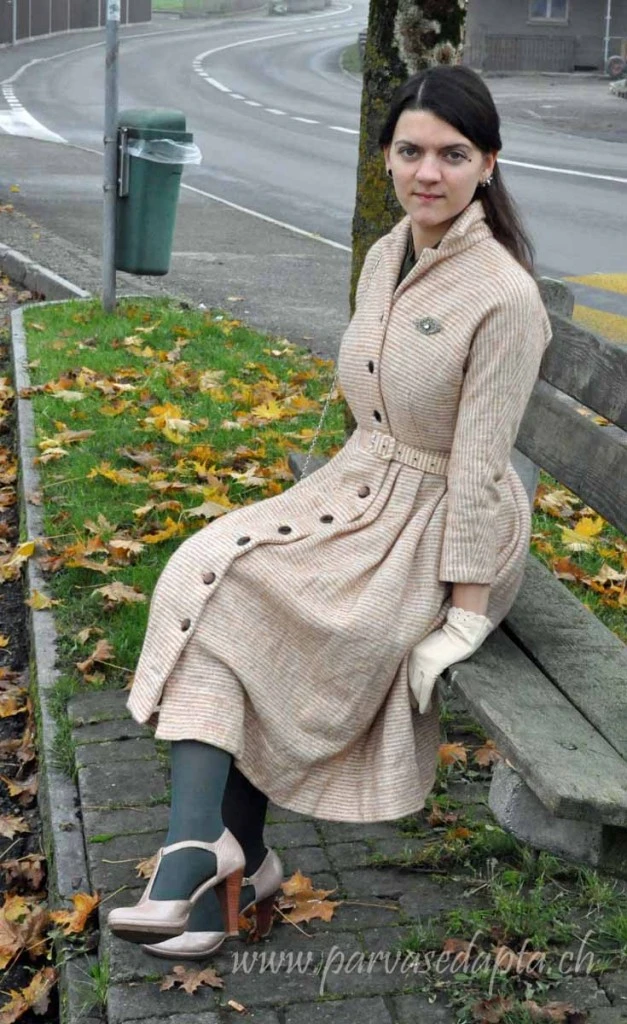
I thought this quite weird and it took an accident to solve this mystery. A few months later the same woman sent me a whole set of hemming feet for my 1932 Pfaff. Before she sent the parcel she asked me if I would be interested in a belt to match the dress, she had found it and hadn’t even known a belt existed. Yes, of course I was! And obviously, with a belt you have far less concerns with a gaping waist 🙂
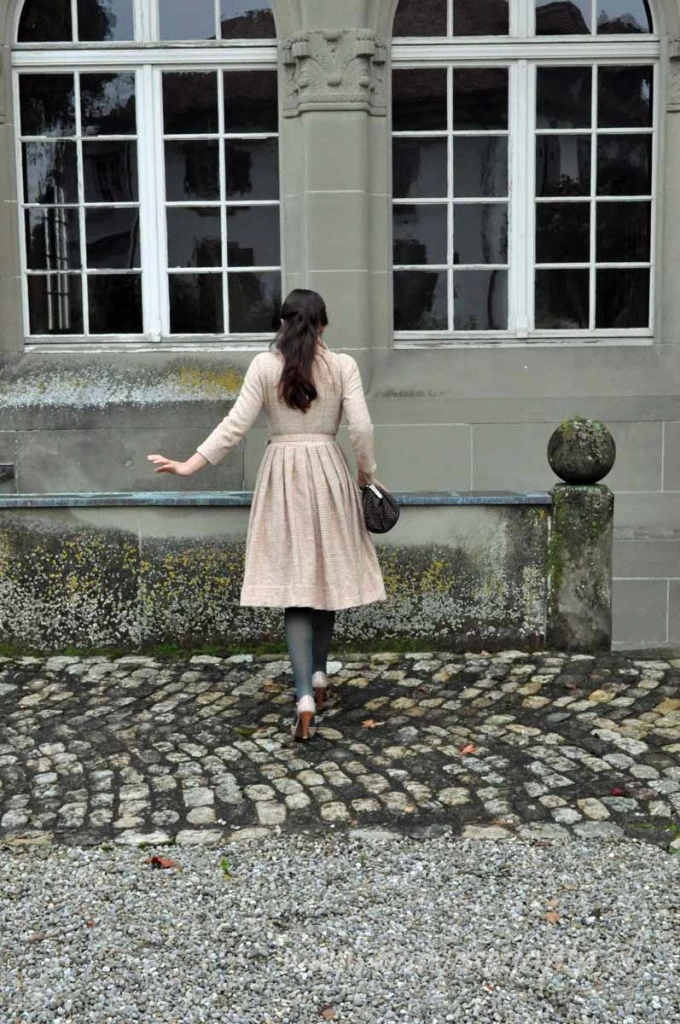
It has been finished and in my wardrobe quite some time now and I love it. The hem looks a little pointy in the centre front, I think I will add a little press fastener to keep it in place.
The fabric is, as you can imagine, quite scratchy, fortunately I own a shirt with the exact same sleeve length to wear underneath.
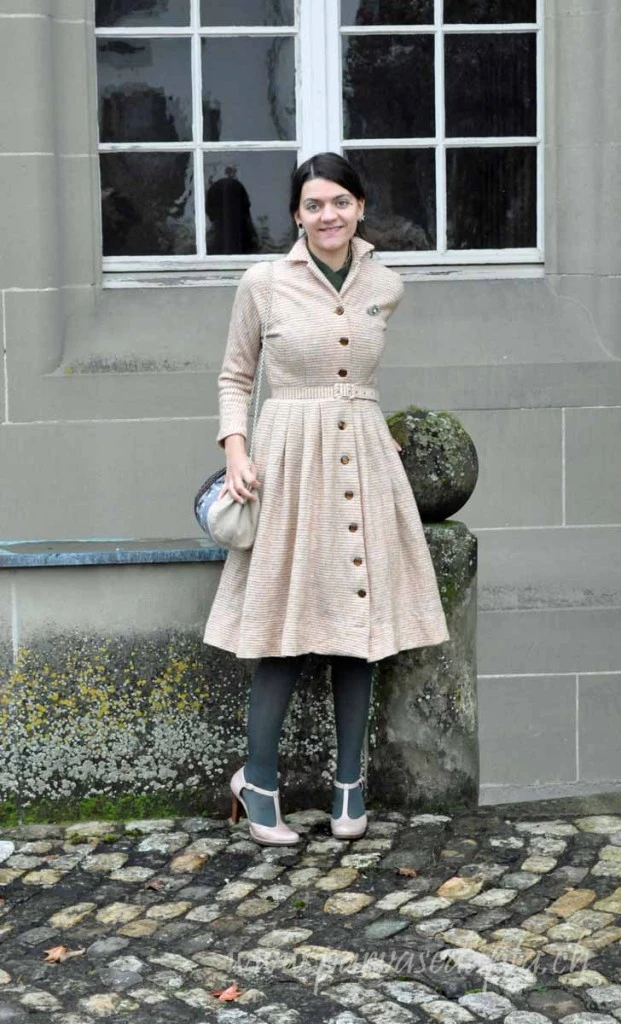
Dear Ravna, thank you so very much for selling me something that has already become one of my favourite dresses!
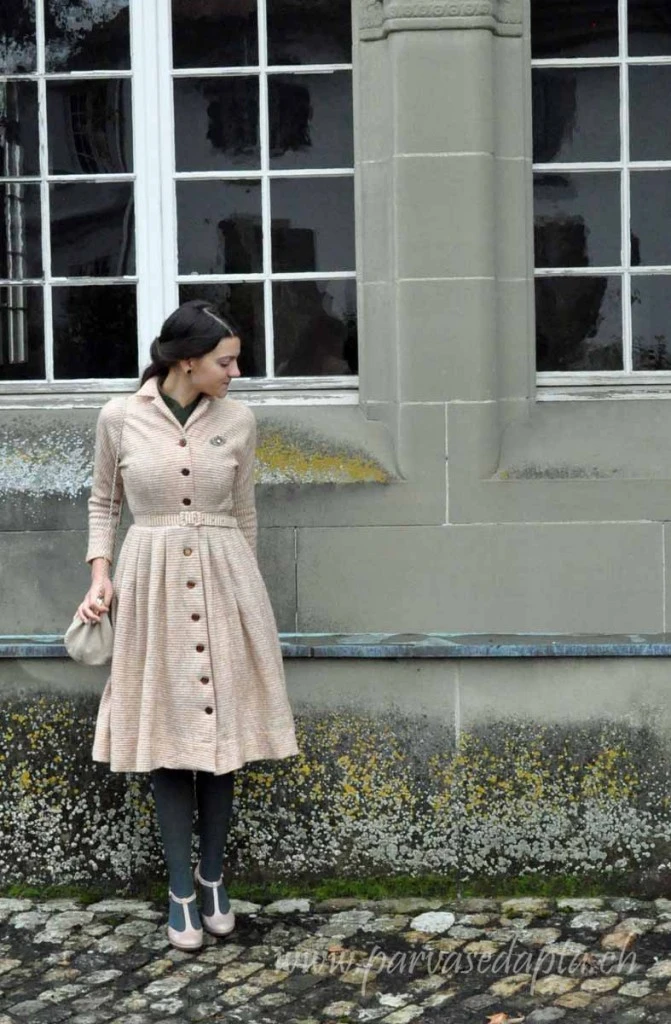
See you soon, love
ette
PS: Forgive me to have skipped this sunday’s Christmas dress post. My weekend was equally parted in work, meeting friends from my favourite online sewing board and being sick. Needless to say the latter third was the time I had planned to use for sewing instead of sleeping and whimpering. I am trying to catch up but the pattern needs more adjustments than expected which makes me progress slower than expected. At least the plaid isn’t the problem 😉
 Follow
Schon beim ersten Bild dachte ich, wie sehr mir gefällt, was ich sehe, hat sich nach unten hin nicht verändert 🙂
Das mit Knopf und dem Gürtel ist aber durchaus üblich gewesen; ich habe das mit meinem Mantel auch getan: wenn ein Kleidungsstück gegürtet werden soll, kann der Knopf sehr unangenehm drücken, daher bleibt die Stelle frei. Während der Kriegsjahre machte das doppelt Sinn, da Knöpfe ebenfalls Mangelware waren.
I think that dress was worth the alterations! It looks very flattering, and still in the style of the period. A lot of Claire McCardell dresses were cut with kimono sleeves like that, though usually the bodice was on the bias. It’s a great look on you!
WIrklich schön, was du aus dem Kleid gezaubert hast! Und ich verstehe dich voll und ganz, dass du Original möglichst wenig verändern möchtest. Ich bewundere Leute, die diese Kleidung aus alten Zeiten lagern und ab und zu unverändert tragen. Aber ich könnte das glaube ich nicht. Weil ich mich keiner der Epochen so zuhause fühlen könnte dass ich sie heute tragen würde. An anderen, so wie dir, finde ich vintage mode bezaubernd. Aber an mir käme es mir falsch vor…
Vielen Dank 🙂
Ja, es ergibt durchaus Sinn. Nur hatte ich eben das Kleid ohne Gürtel bekommen und erst Monate später erfuhr ich, dass überhaupt ein Gürtel dazu existierte. Und die Knöpfe sind recht dick, einer unter dem Gürtel sähe wohl auch merkwürdig aus. Und das Kleid wirkt ganz ohne Gürtel auch nicht richtig, manchmal trag ich es auch mit einem anderen (dunkelroten) und stimme dann die Schuhe dazu ab, das setzt nochmal einen schönen Farbakzent.
Thank you very much. Well, this isn’t cut on the bias, but this seems like something I could try if I ever plan to recreate such a dress, thanks for the hint. I couldn’t find any labels so I assume it has been made by a tailor because it doesn’t look as if it had been home-sewn.
Naja, es ist schwierig. Manchmal muss ich schon aufpassen, dass ich mir selber nicht verkleidet vorkomme. Bei dem Outfit sind die Schuhe zB zu modern und mehr als einen Pferdeschwanz würde ich dazu wohl auch nicht tragen. Bei 40er Jahre-Mode ist es noch krasser, da fühl ich mich mit Victory Rolls dann komplett wie ein Püppchen. Also einen kleinen Stilbruch brauch ich meistens, sonst wird es entweder bieder oder Fassade. Und ich trag alte Sachen ja auch gerne mit Neuem kombiniert, die 40er Bluse die du genäht hast würde ich glaub ich im Alltag vor allem zu Jeans tragen.
Ich kann deine Befangenheit verstehen. Aber früher wurden Kleidungsstücke ja oft von Person zu Person zu Person weitergegeben und da musste geändert werden, wenn man nicht in einem Sack rumlaufen wollte. Und außerdem erhältst du das Kleidungsstück und die (okay, fiktiven, da nicht wissentlich vorhandenen) Erinnerungen an die Menschen, die es wohl mal vor dir getragen haben, weiterhin am Leben. Bei mir jedenfalls geht das Kopfkino an und ich stelle mir vor, wer das schicke Kleid zu welchem Anlass angehabt haben könnte. LG mila
Ja, sich die Vorbesitzer vorzustellen ist schon schön, das mach ich auch manchmal. Vor allem da ich ja kaum Familienerbstücke habe und somit wirklich fast alles “von Fremden” kaufe.
Das Problem mit antiker Kleidung ist einfach, dass irgendjemand es immer enger auf seine Figur näht und es damit natürlich immer weniger große Größen gibt, daher sollte man schauen, ob man Kleider nicht so überarbeiten kann, dass es reversibel ist. Denn das ist der zweite Aspekt, den Originalzustand bewahren (da spricht die Kunsthistorikerin). Am Ende hat man nur noch Kleider in Gr. 34, die irgendwann mal enger genäht wurden und nicht mehr repräsentativ für ihre Epoche stehen können.
Sounds like your year was full of ups and downs but I am happy to hear that you got to work in the field you studied in! Loved to see your sewing projects! I have a huge love for coats so I adore your black coat with the red detailing! Gorgeous!
Rebecca
http://www.winnipegstyle.ca
Thank you very much.