Yet again I had to skip a HSF-Challenge, simply because all my UFOs where in such an early state of work that I wouldn’t have been able to finish any of them in time.
But this time I’m back in the game. The task was “black and white” ant though I would have loved to sew a magnificent black robe with white details, I was too eager to start an experiment. So I made this experiment match the challenge.
Earlier this year, a colleague in the museum asked me if I were interested in some antique patterns she had been given years ago. She had wanted to add them to the museum’s collection, but back then nobody was intested in doing so, so she kept them in her office. Now she found them amongst her documents and finally the now new colleague in the graphic collection will officially add them to the inventory. Before this was done she gave them to me so I could copy them for my own purposes. Besides one pattern sheet from the 1910s all sheets were from 1904 and 1905 issues of the “Schweizer Frauenheim” (because it is museum property I can’t publish any photos). As Wikipedia tells, this was one of the early magazines of the Swiss women’s movement in the beginning 20th century.
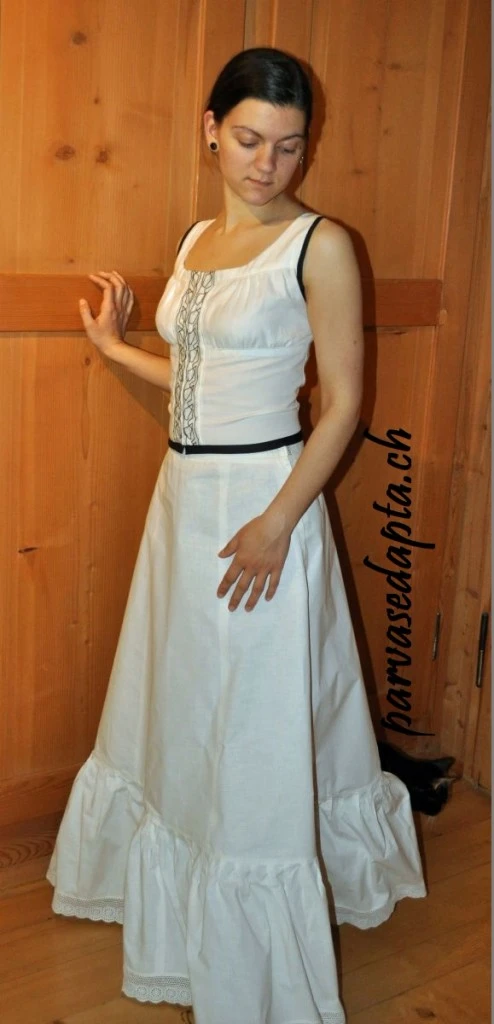
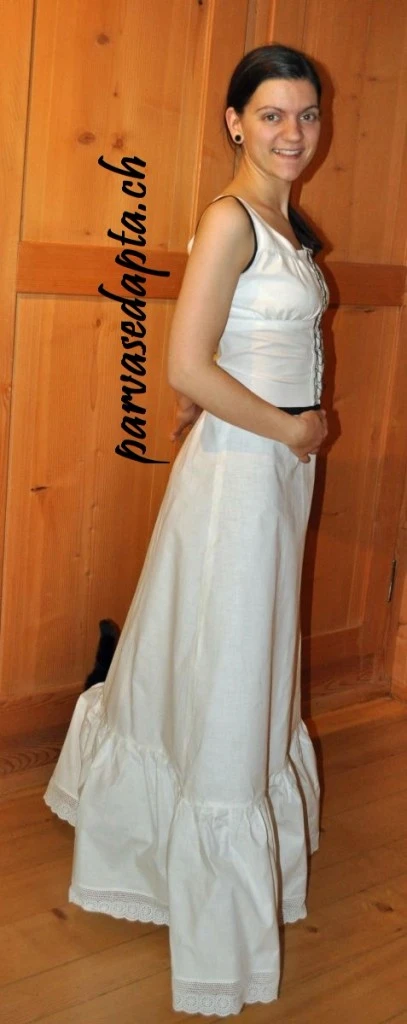
The pattern I chose makes this even more obvious: It is a so called “Reformleibchen” a bodice without any boning, invented as an alternative draft to the heavily boned s-line corset of the 1900s. While it is still tight fitting and more or less supportive, it is not shaping the body, but can be understood as a hybrid between a chemise and a brassiere. I am not completely sure if it names the same thing, but it can at least be compared with the liberty bodice. And of course this new shape wasn’t restricted to undergarments, but is part of the so called dress reform (the second one, there was already a first attempt in the 19th century, today often closely connected with Amelia Bloomer, similar attempts but in different shape were also done by the Pre-Raphaelites, whose women dressed in wide dresses without shaping corsets underneath). In contrast to the early, victorian dress reform, this early 20th century reform gained much more attention and did even appear in fashion plates, but also in caricature.
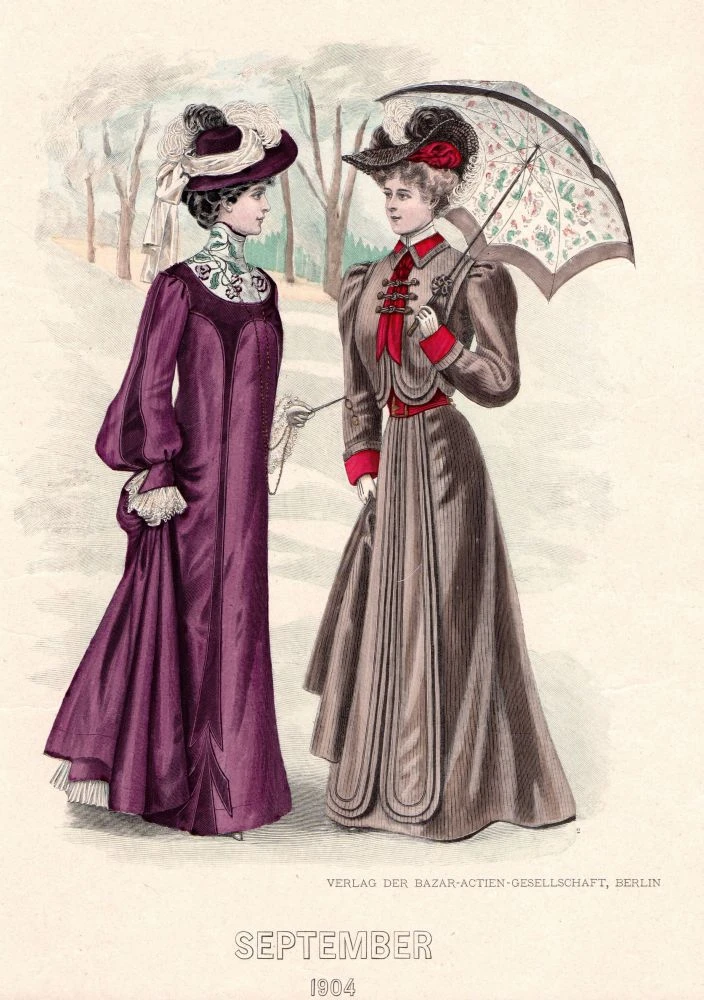
reformed dress next to a fashionable dress, Der Bazar, september 1904
In contrast to the s-shaped-Line of high fashion, the reformed dress has no accentuated waist, but falls straight from the shoulders with a wide flared skirt. The decoration is often predominantly placed around the shoulders and ends above the stomach.
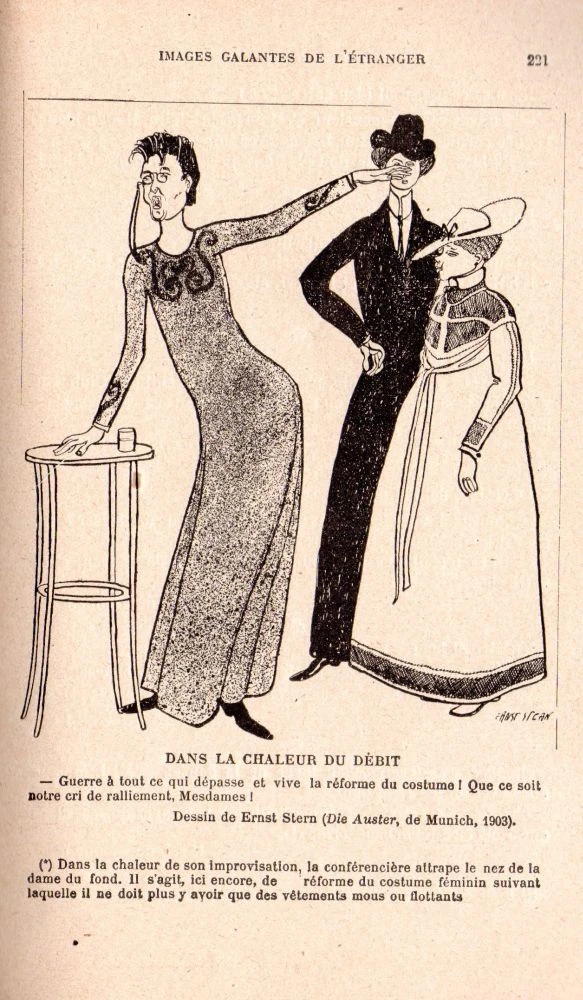
caricature, depicting the woman wearing a reformed dress as a masculine women’s libber, note the short hair cut, from “Die Auster”, munich 1903 as printed in: J. Grand-Carteret: Images Galantes et Esprit de l’étranger, Paris (no date given)
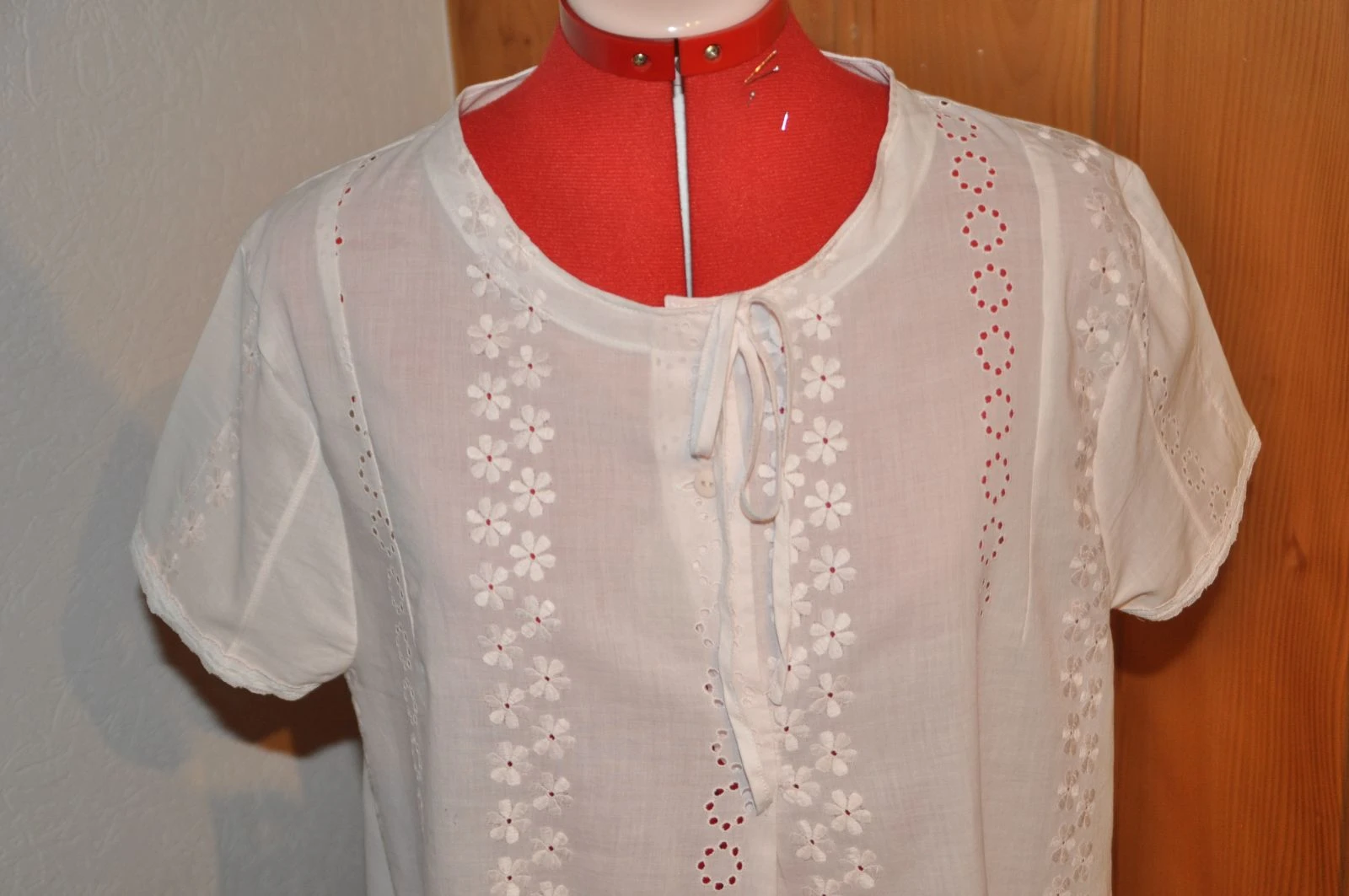
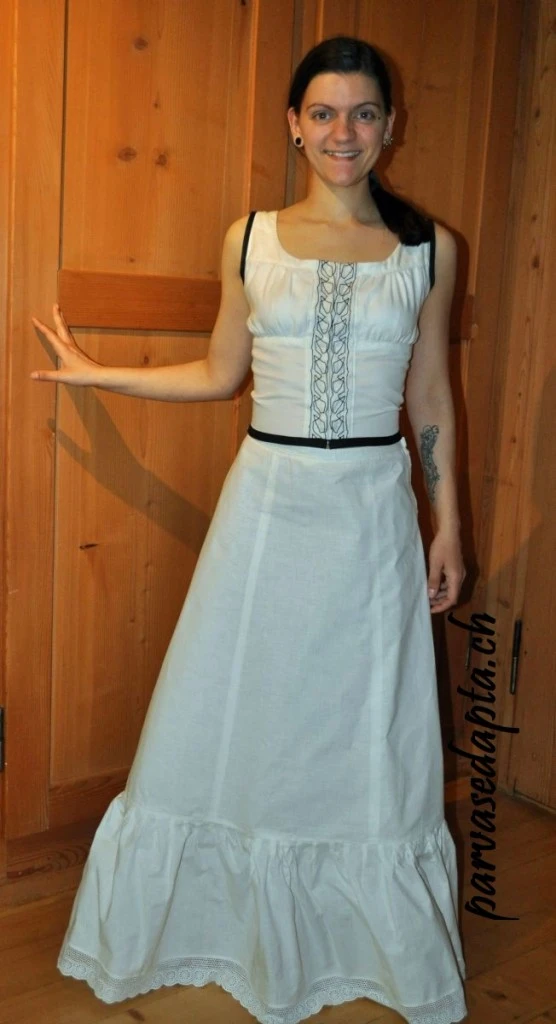
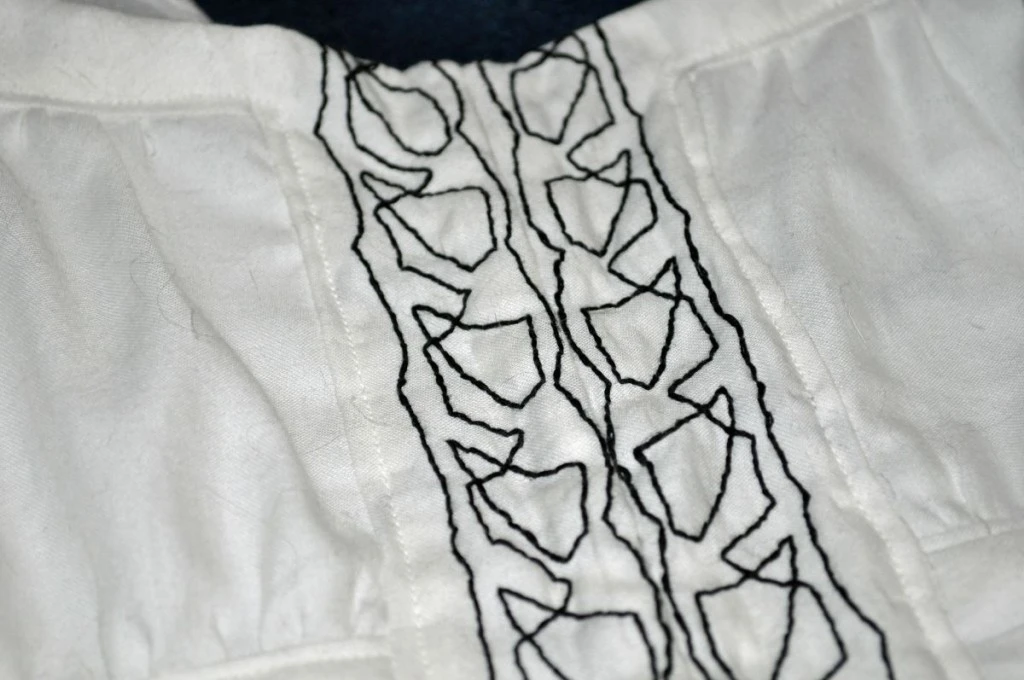
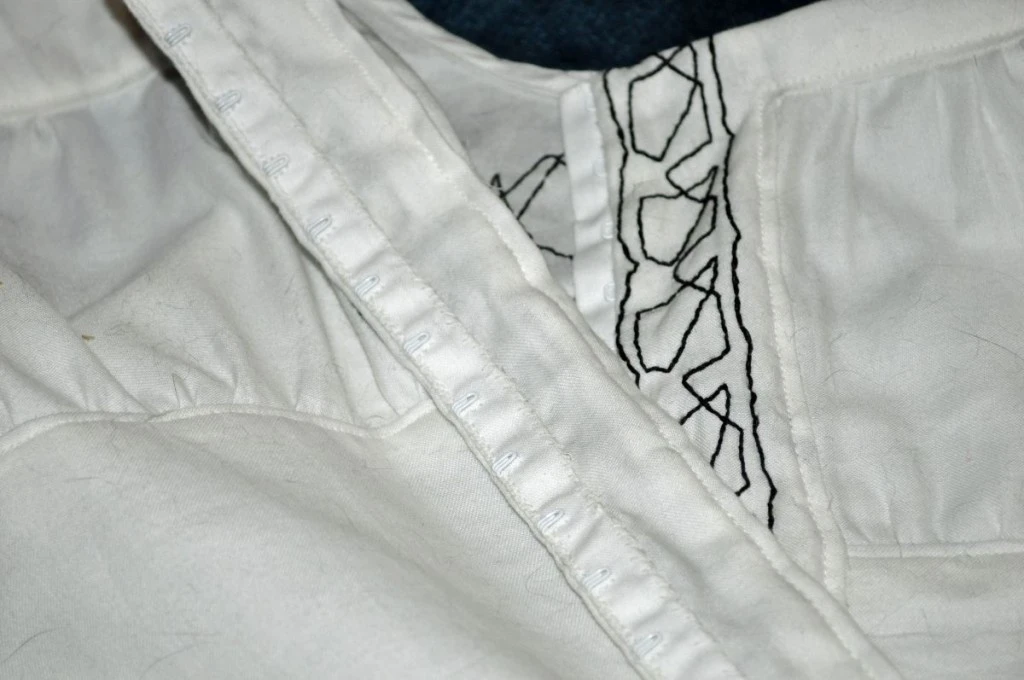
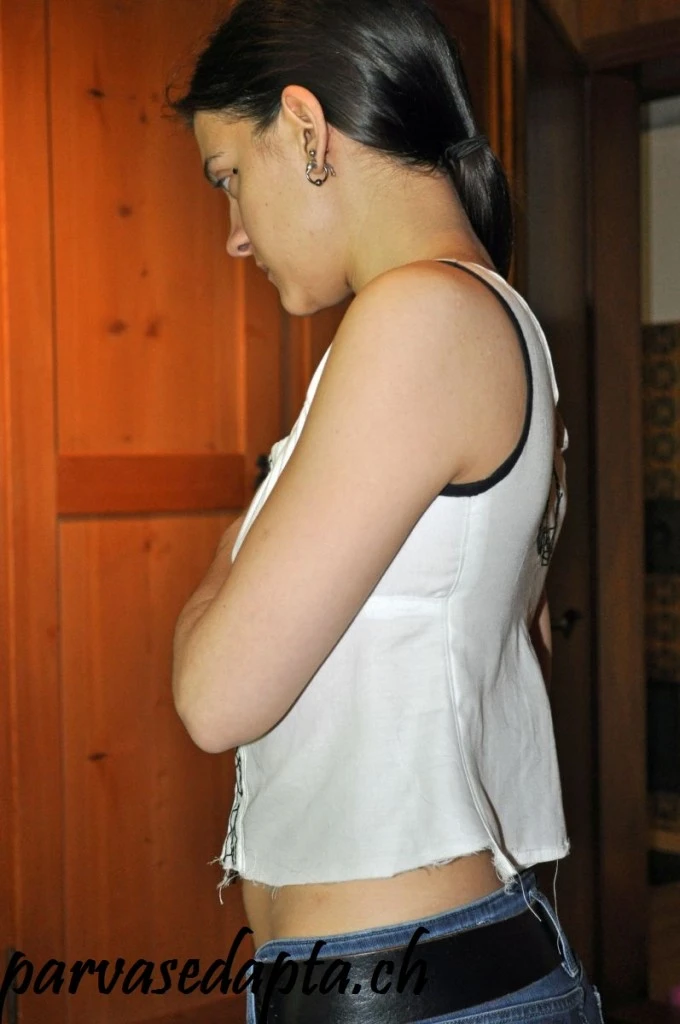
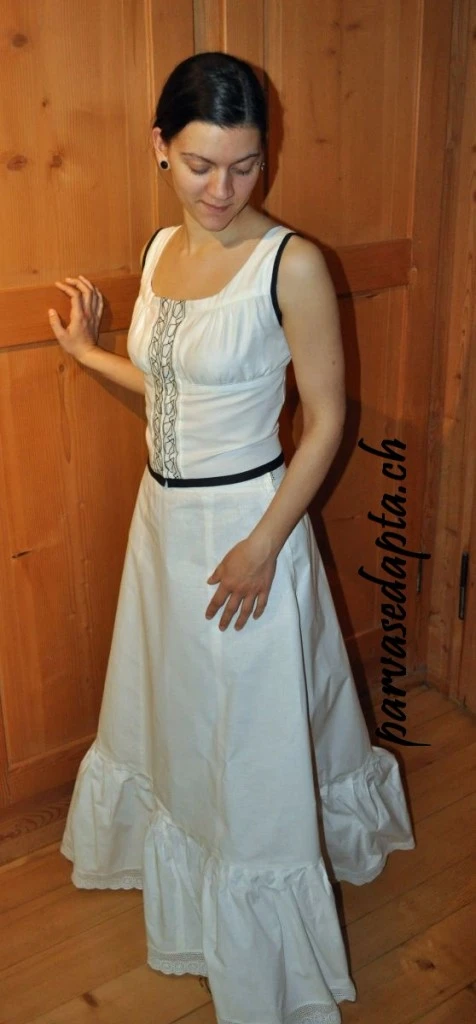
The “Reformleibchen” consists of flat lying bodice parts and ruffled parts around the breasts. My pattern closes with a facing in the front. The biggest problem I had when working with this pattern was, that I had neither instructions nor pictures of how it was meant to look like, only the different cut pieces with numbers in the corners to match. I first sewed everything together to see how it looks like. Having had embroidered the facing before doing anything else, it didn’t even came to my mind that they should be placed differently than next to each other (thinking of a corset substitute rather than a fitted chemise), but in fact it seems as if these bodices where meant to be closed with buttons in the front (note that the linked example is at least somehow stiffened, maybe not with boning, but something similar as the seams around the bodice show).
The bodice consists of very loose woven cotton, bought as a duvet cover at IKEA years ago.
Fot the embroidery I used black cotton thread and patterns from a 1906 issue of “Kunstgewerbe für’s Haus”.
I used a ribbon with hooks and eyes as closure. Though I doubt that the quality I used existed in the 1900s, I did find similar ribbons in late 19th century garments, so at least the concept was known and used.
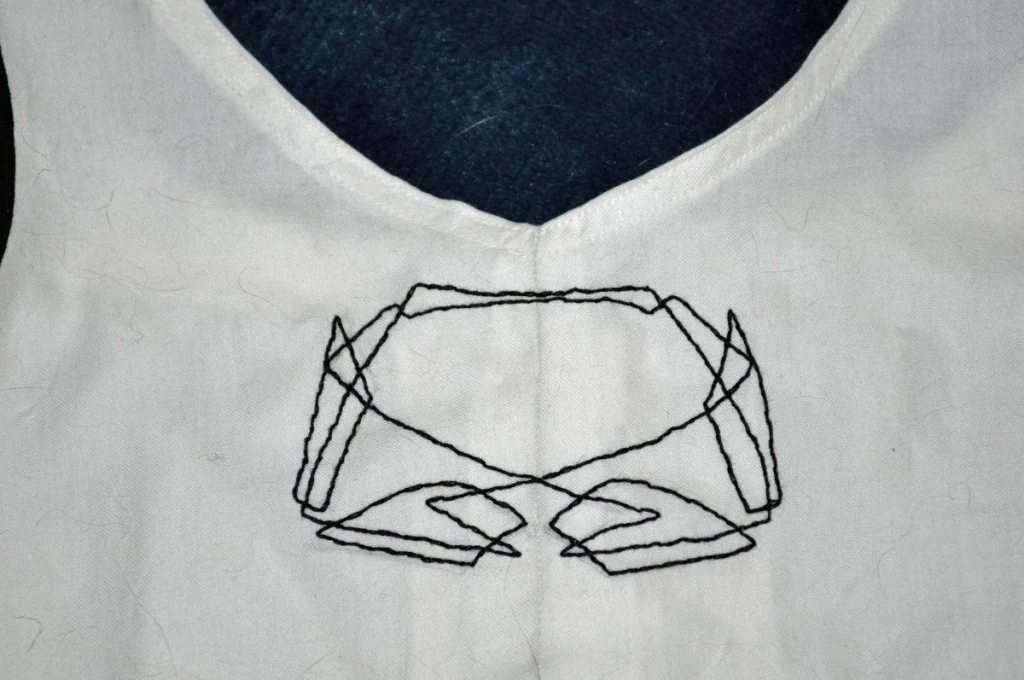
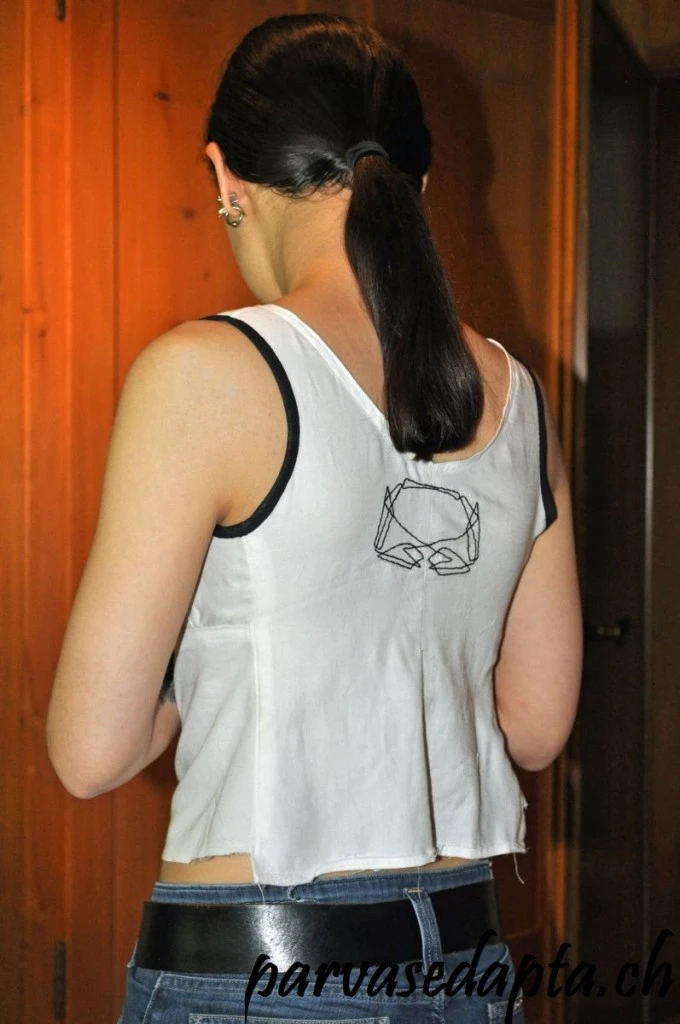
I made no changes to the pattern at all until it was finished but for the hem. In this state, it looked like this in the back:
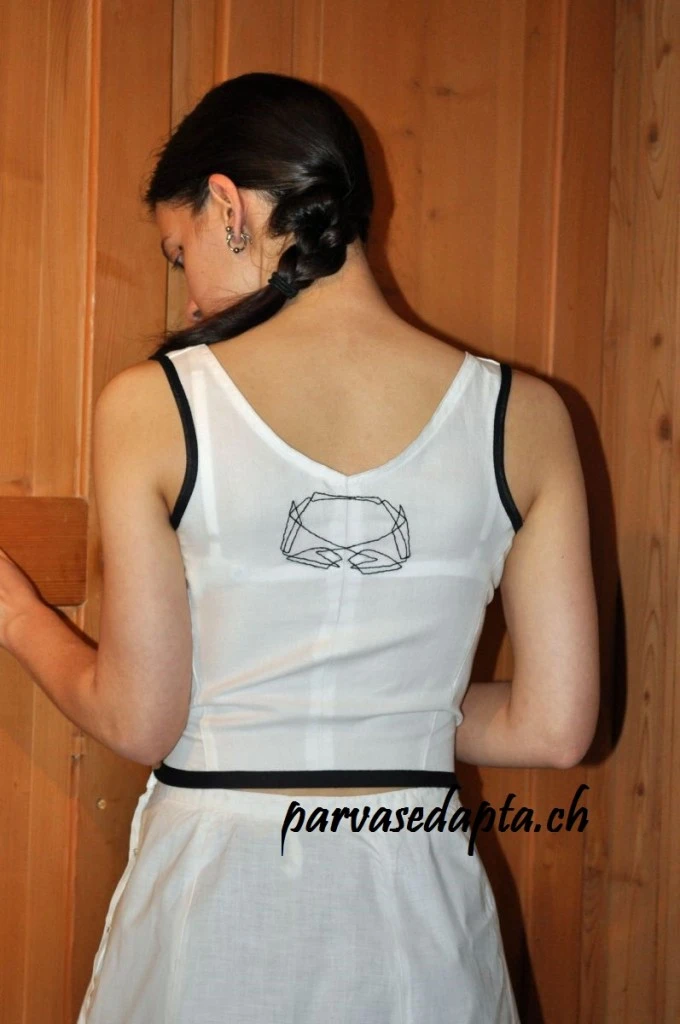
Next thing I did was to eliminate approximately 15cm width to make it fit.
yes, I am prudish and wear a bra, but it was really a little too transparent for my taste not to do so
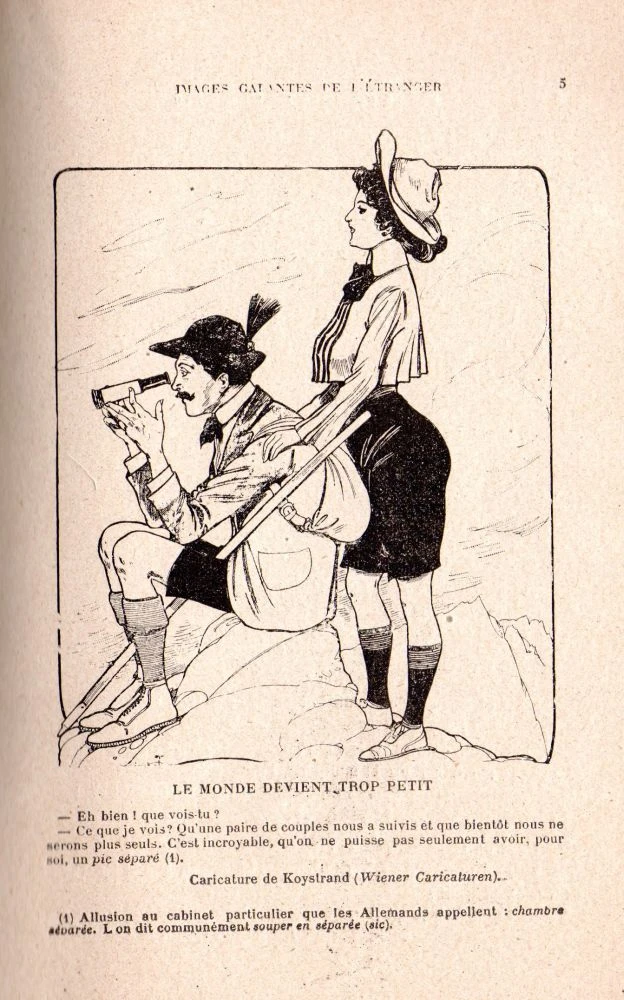
Only after I had done it I found this caricature, showing an upper garment with a very similar cut in the back without any fitting at all.
caricature by Koysrand, published in the “Wiener Caricaturen”, no year given, as printed in J. Grand-Carteret: Images Galantes (see above)
Well, it isn’t the best fitting garment I ever made, but it came together surprisingly well and it was a great experience to reproduce such a special and alternative piece of clothing.
The Challenge: #9 Black and White
Fabric: white cotton (satin or twill, can’t remember exactly and am too lazy to search for my linen tester)
Pattern: reformed bodice from an “Schweizer Frauenheim”-issue of 1905, embroidery pattern for clothing from “Kunstgewerbe für’s Haus”, 1906
Year: 1905/1906
Notions: white cotton and polyester thread, black embroidery cotton thread, white ribbon (to stabilise the rear neckline), black bias binding, hook-and-eye-ribbon.
How historically accurate is it? I was pretty sure about it being quite acurate until I found out about this button-closure-thing. This and the modern hooks and eye ribbon, the polyester thread and the fact that I assume the bias binding not to be correct, 75% ?
First worn: for the photos, on monday.
Total cost: the fabric cost me 4€ as a duvet cover because the pillowcase was missing, but there is plenty of it left and it was already years ago. Notions came all from my stash as well, can’t imagine having paid more than 5€ for all of them, so maybe we could say 7-8€.
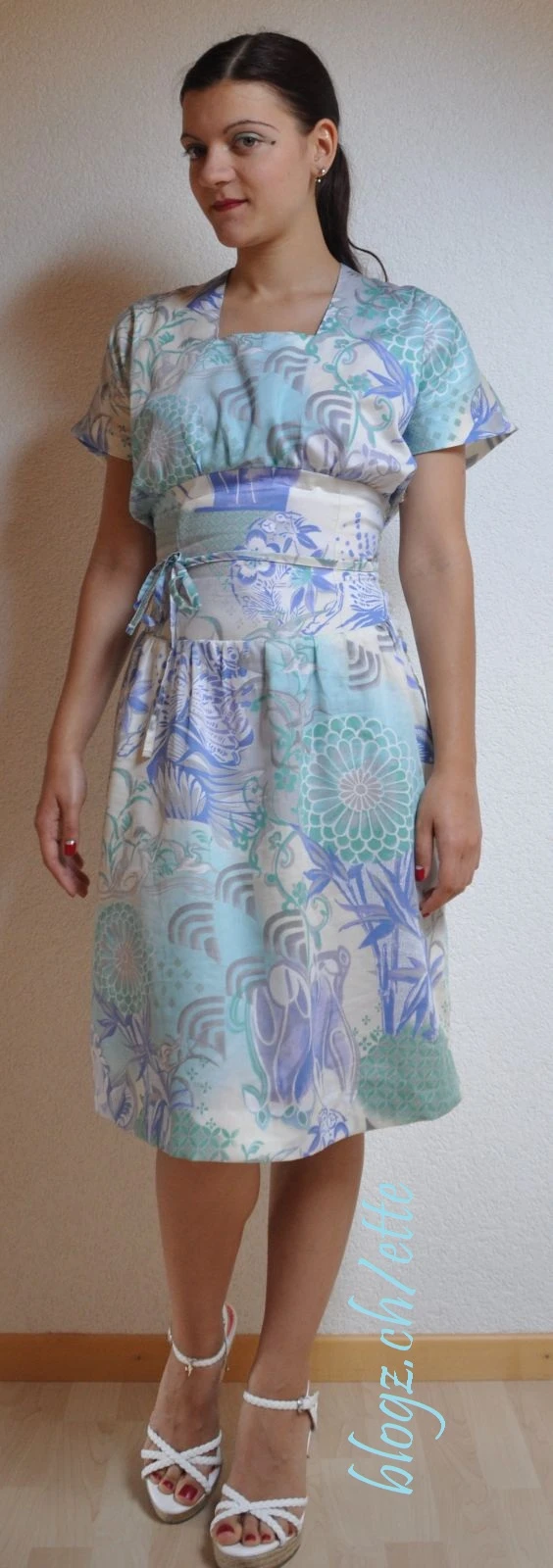
reformed bodice: Schweizer Frauenheim/ette, 1900s underskirt: flea market (july 2012)
Maybe you wondered why I didn’t show you any of my flea market hauls on the 1st. Well, I really bought some things, to be honest I bought a lot. Maybe too much, because I really wasn’t able to decide what to show to you, additionally I was very short of time last week.
But this sunday I went to a household clearance in a village nearby and found something, I just have to show to you.
As you know, I am a fan of old sewing machines, the newest I own dates from the 1990ies and is only used for automatic buttonholes (and I only keep it because it was my grand-aunts). My oldest ist from the early 20th century, around 1903.
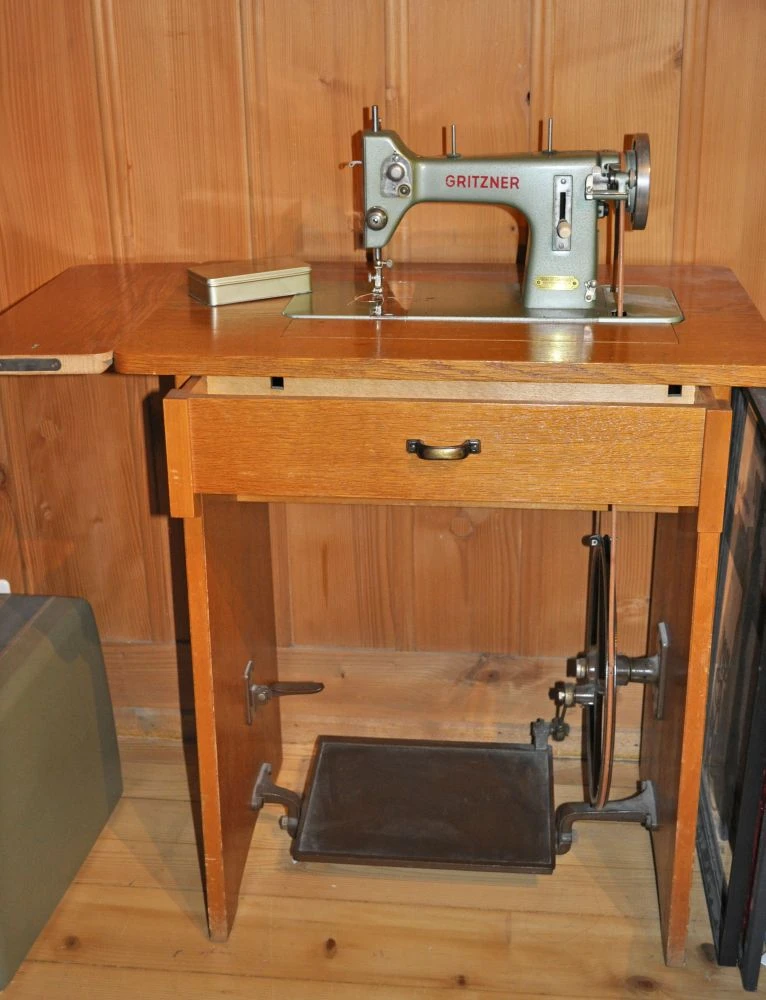
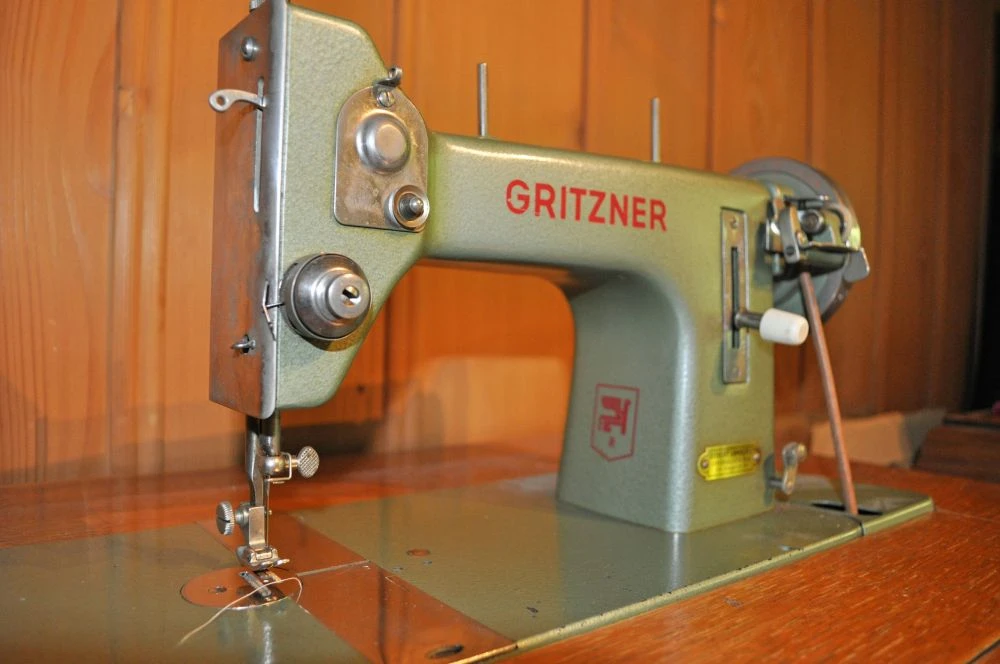
But my by far largest one ist my foot operated Gritzner Modell R, a 1958 machine, working without any electricity and a vibrating shuttle, at a time where electric machines with rotary hook mechanism were the state of the art. You could really say this is pre-war-technology in a post-war-warapping.
I found her in a charity shop in my hometown, literally blindfolded: The machine can be hidden inside the table, the opening is covered with the wooden panel you see on the left side of the table. Well, and this cover was locked. It was obvious that there was a machine inside, but nobody knew what she looked like and in what condition it was. So they sold it to me for 10€ and I tried to carry it the 50m from the shop to my working place, a haberdashery store in the same street. After appr. 15m I asked a man passing by if he could help me and he really did. Thirty minutes later my shift ended and my boyfriend picked me and the machine up.
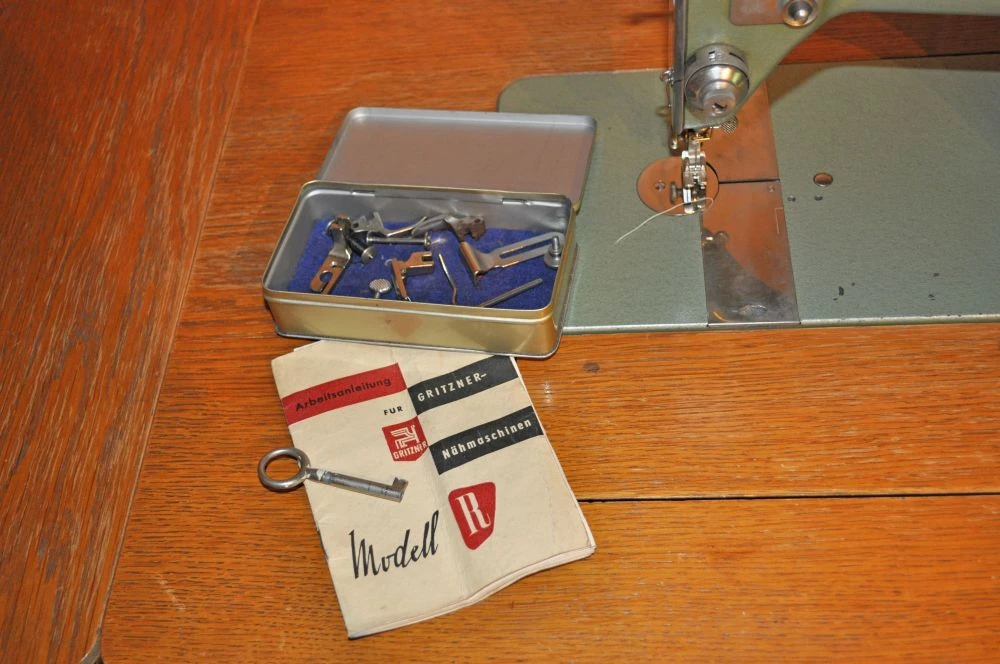
The key on the photo is an old desk key I found in my father’s garage, I was so happy to avoid breaking the lock. As you can see, it even came with supplies and the manual.
Of course she looked different than what I had expected. I had never seen such a “modern” machine in a wooden cabinet. But I loved her from the first day on and she sews very well.
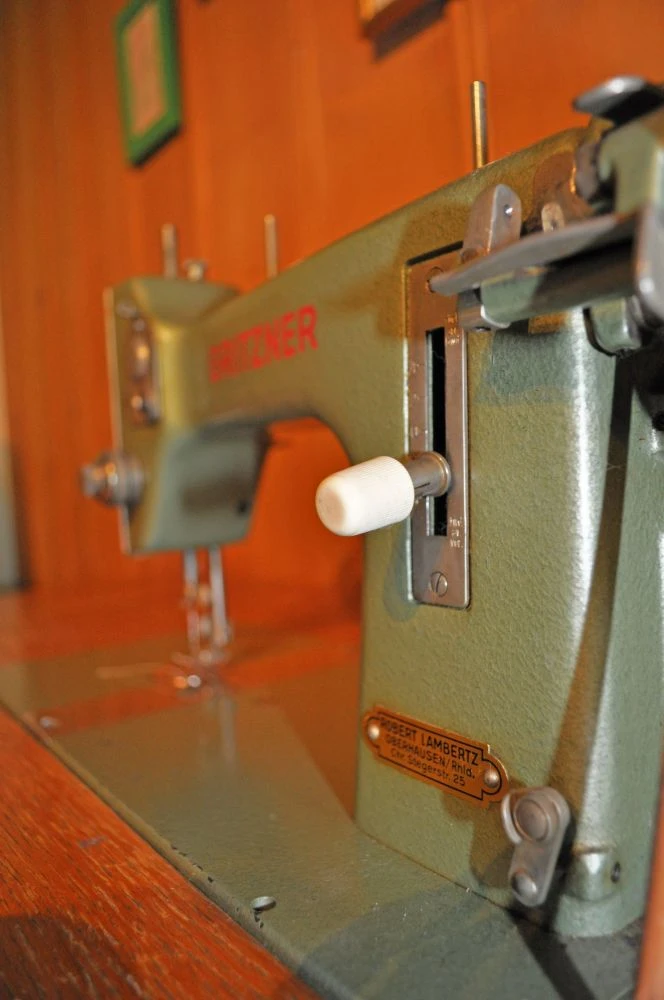
She even has a dealer’s tag on her, a shop in my hometown that sells only bikes today (bikes and sewing machines being a common combination in the first half of the century).
Well, that was…
Because today I met…her:
I found her at the household clearance after I had spent my time in this house mostly in front of the book shelves. The rest was either uninteresting and too high priced or high quality antiques, legitimately high priced but out of my price range.
After we had seen everything there was only one room in the first floor left. My boyfriend and I stood in front of it an all we see was a built-in-wardrobe with some empty hangers and an ironing-board. We were close to leaving when I decided to at least make one step into this room. And there she was!
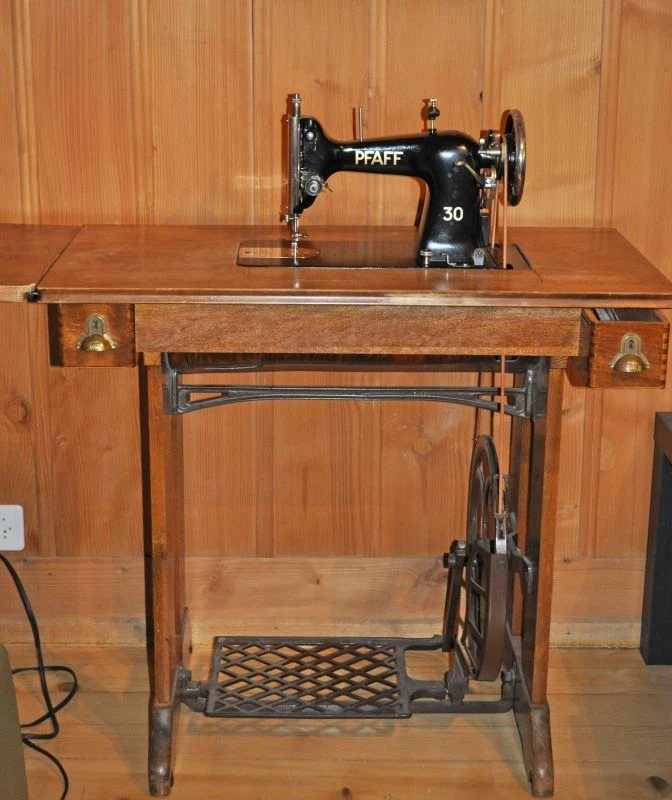
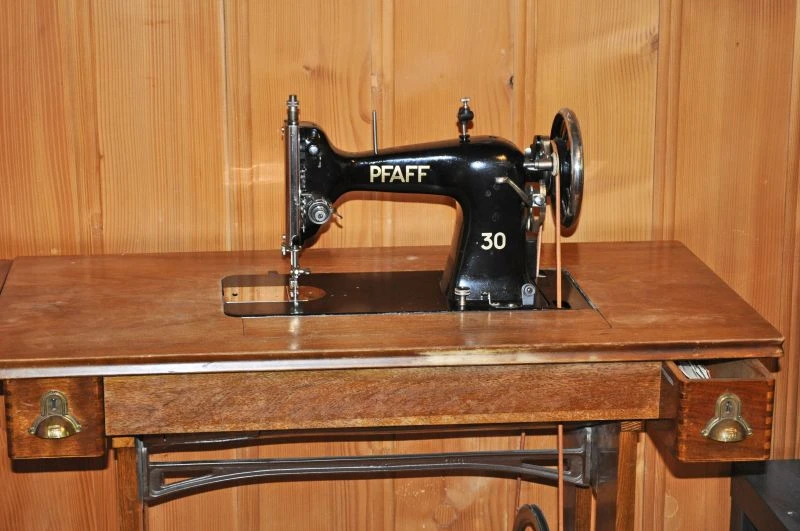
A Pfaff 30, according to the serial number built late in 1932. As with the other one, the key is missing, but this one was open.
The price that was asked? 20 CHF, not much for a machine like this, don’t you think?
Only one screw is missing, the one that holds the rear cover in place. But the cover is there, so I am optimistic to find some random screw that fits.
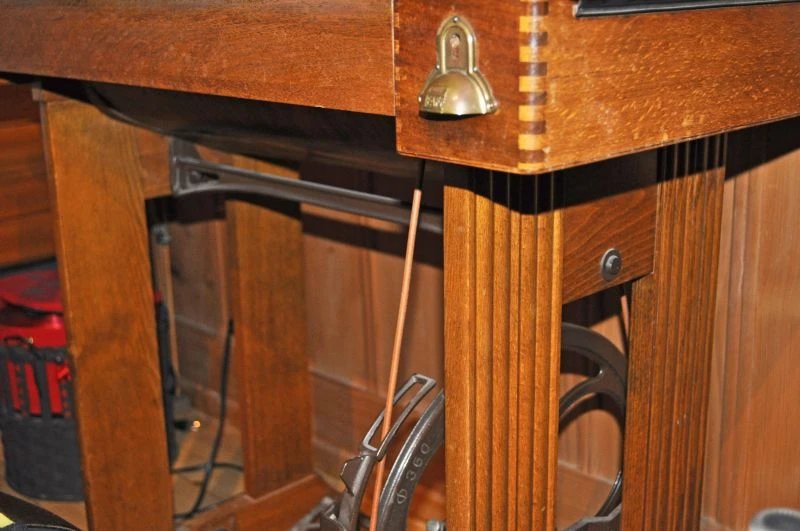
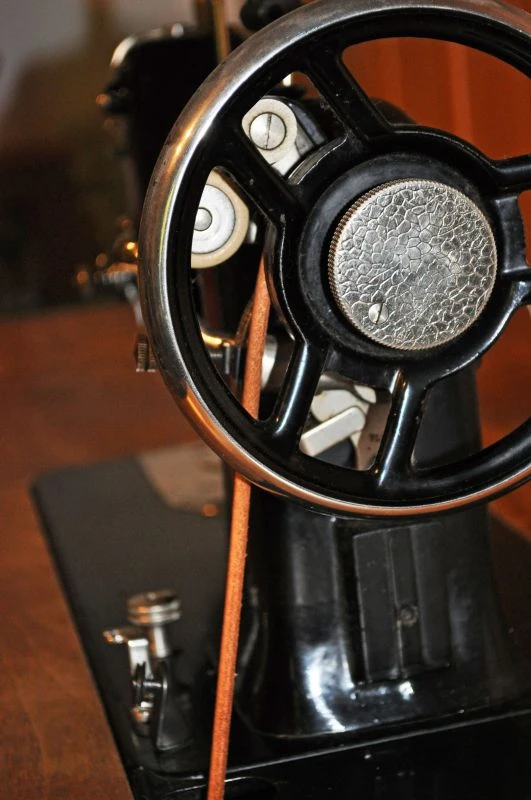
I love the subtle art déco design of the handles and the fluted legs.
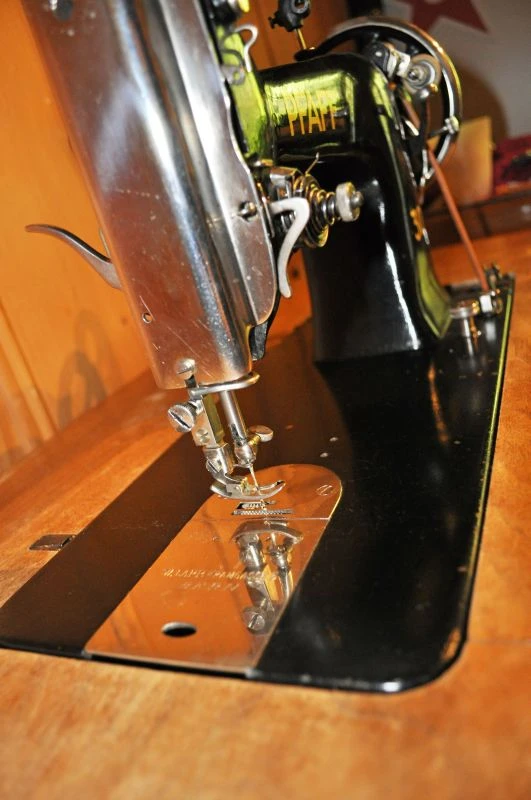
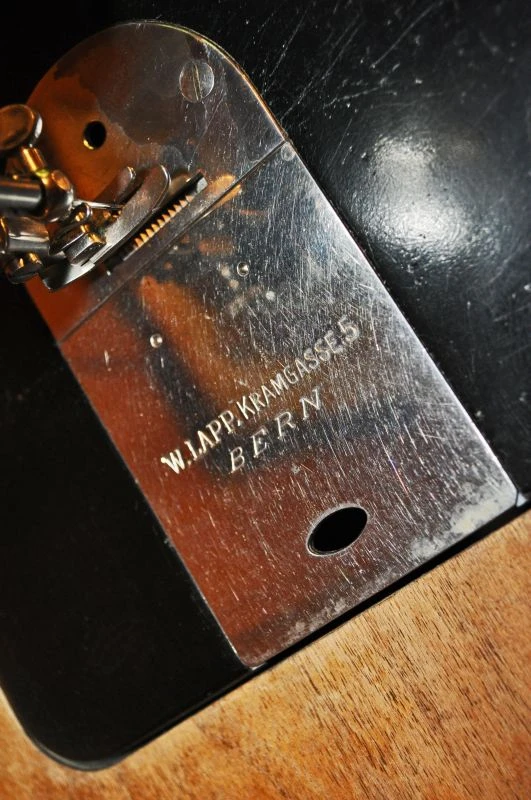
And it too has the dealer given, this time engraved in the needle plate.
Well, and now I have a problem: I promised my boyfriend to part with my beloved Gritzner, simply because we have not enough space for a second cabinet-machine (and I do not only own these two, in fact I have way too many sewing machines). And now she stands there, abandoned in the dining room, waiting for someone to love her…and I do! And she looks so pretty next to our dining table, I don’t see the need to give her away. Additionally, the dealer’s badge that reminds me of my hometown. I am not sure if I am able to give her to someone I don’t know. Anybody willing to give her shelter?
But at the moment, the joy of having found such a black beauty is larger than the grief of parting, surely also because she sews as good as the Gritzner, maybe even a tiny bit better.
So, this was my sunday. I hope yours was fine as well, see you soon,
Again, one month later. And as every month, Beswinges Fräulein is hosting her “Getrödelt, gefunden, gefreut”-series where everybody can show what he or she found at flea markets in the month before.
Well, there really was only one flea market this month, on a sunday where I decided to stay at home and sew instead. But I had a flyer I picked up a few weeks ago at another flea market, giving the adress of what was called a flea market and took place once a month on friday and saturday. Normally either my boyfriend or me have to work and getting there without the car (that my boyfriend needs to get to work) is rather complicated. So I had never been there. In this week we both had our week off and I begged him to go to this flea market on friday.
In fact it wasn’t a real market, but a small shop, where different sellers each had one corner/table/area. It was quite weird because that also meant that you had to pay in each zone seperately, a fact I of course didn’t knew until one of the sellers stopped me from going on and urged me to pay, obviously nervous that I could steal her treasures. Well, the misunderstanding was cleared very quickly and in the end I had found a handful of lovely items, I would like to show you.
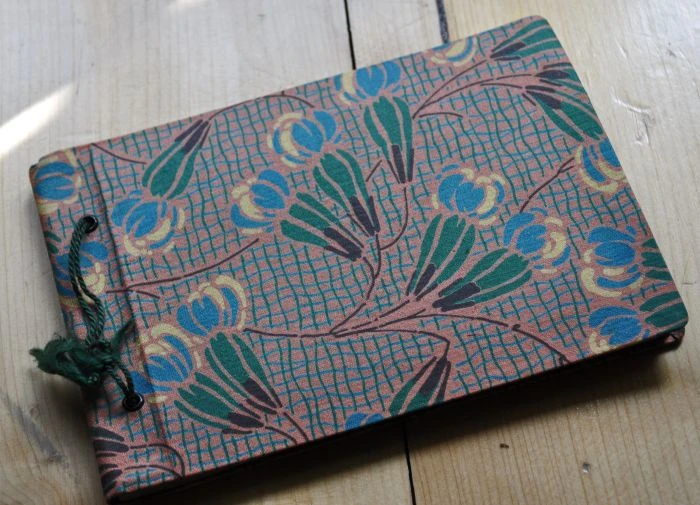
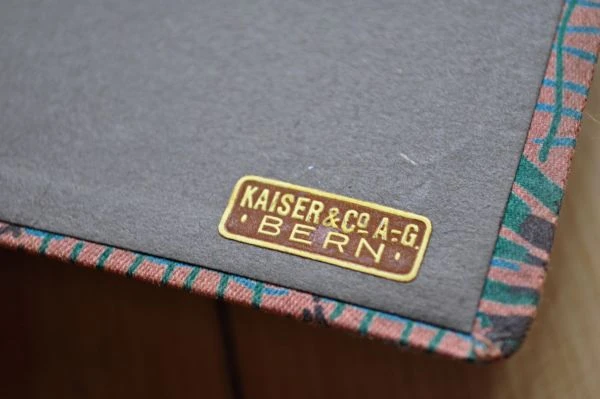
A fabric-covered photo album, never used.
The back cover shows the retailer’s sticker, Kaiser & Co. AG, Bern. Kaiser was one of the large department stores in Bern, run after the model of the famous “Le bon marché” in Paris. The family started their business in the late 19th century with a bookshop, in 1903/04 they built a house for their store, the Kaiserhaus, which still exists and is still named like this, though the Kaiser department store closed its doors in 1972.
And it really is a fun coincidence: I don’t know if anybody still remembers, but I wrote one of my first posts on this blog (it didn’t survive the move to the new url, so I can’t link to it) about a 19th century church vestment and the previous owner told me that it might have come from the private collection of one member of the Kaiser-family. I was unable to prove this assumption, but still, I like the idea of having bought an item from an old Bernese collection.
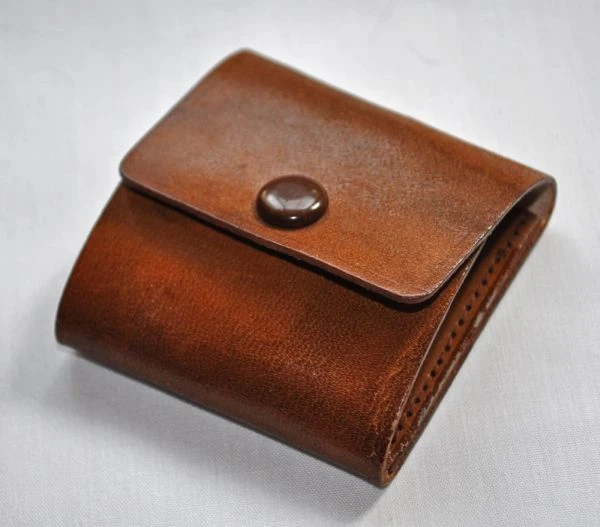
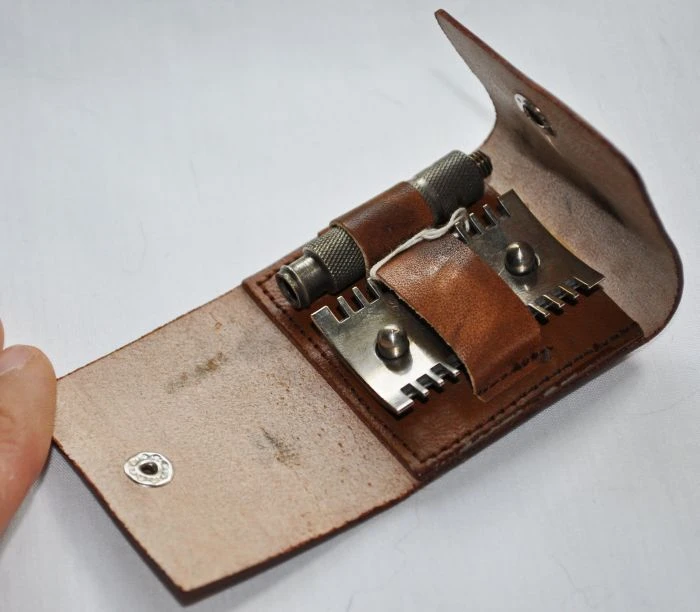
The second little piece I bought isn’t for myself, but for my boyfriend.
I gave him a classic safety razor for christmas and when I saw this small travel razor for only 5 CHF I instantly bought it and gave it to him after we had left the shop, because he had waited so patiently while I was inside for a whole hour.
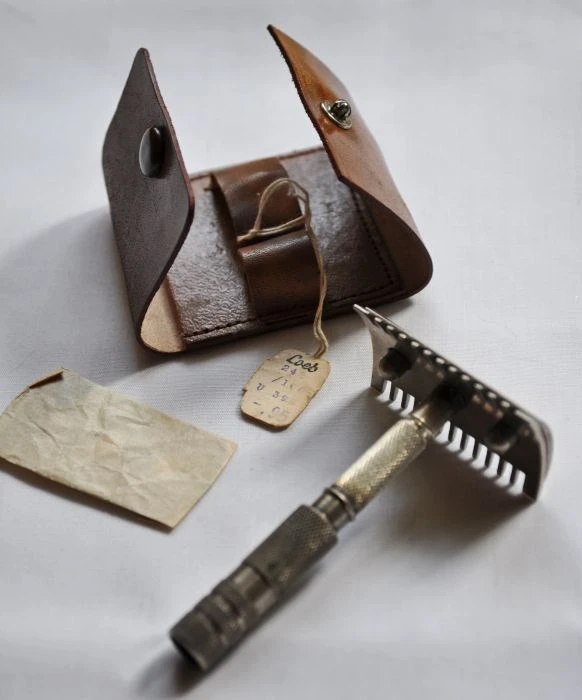
As you see, one part of the handle is nearly black, this and the colour of the upper part makes me assume, that the handle is silver-plated. In the paper on the left are the blades and you see the price tag still attached, 0,95 CHF, bought at Loeb. Loeb is another department store in Bern, opened in 1881 and still family-owned. The bookshop I work at is located in the Loeb flagship store, which has been in this place, directly in front of the main station, since 1929. So crabwise, I work for this company.
The third and last thing I would like to show you has nothing to do with department stores, but tells stories as well.
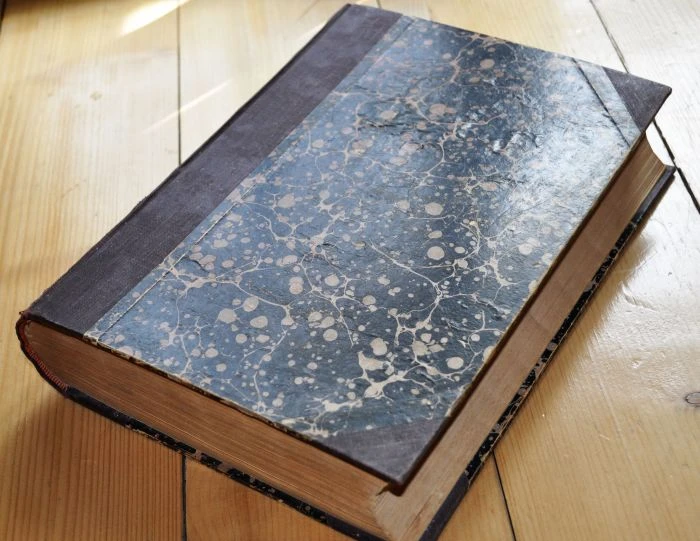
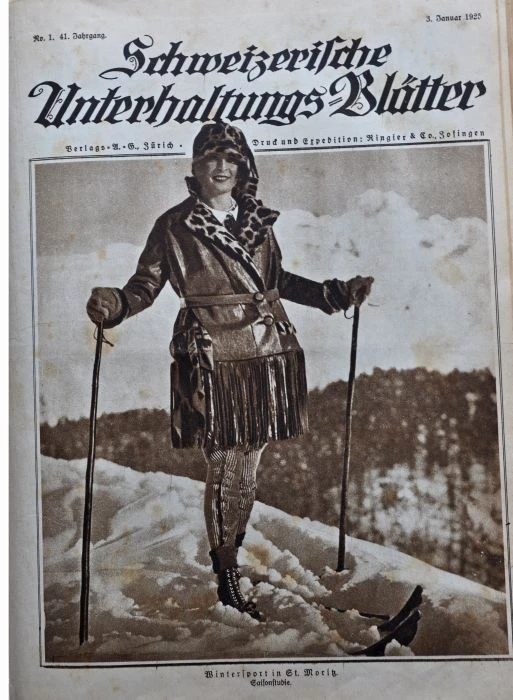
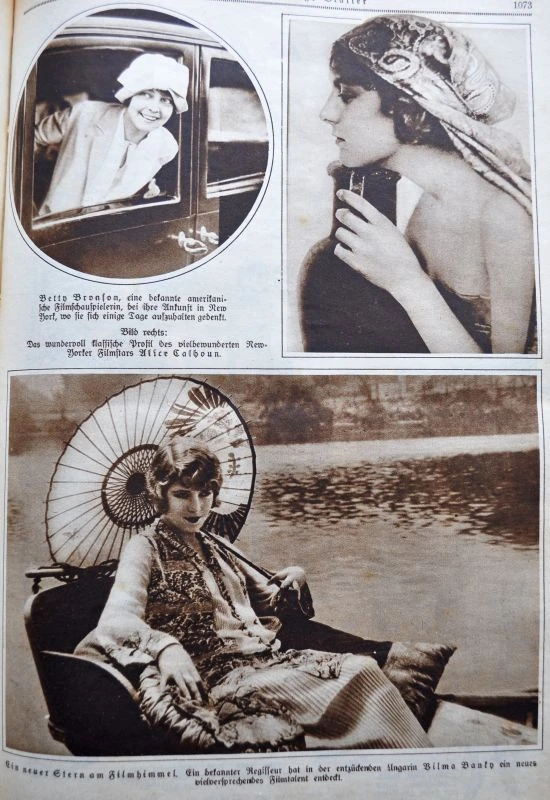
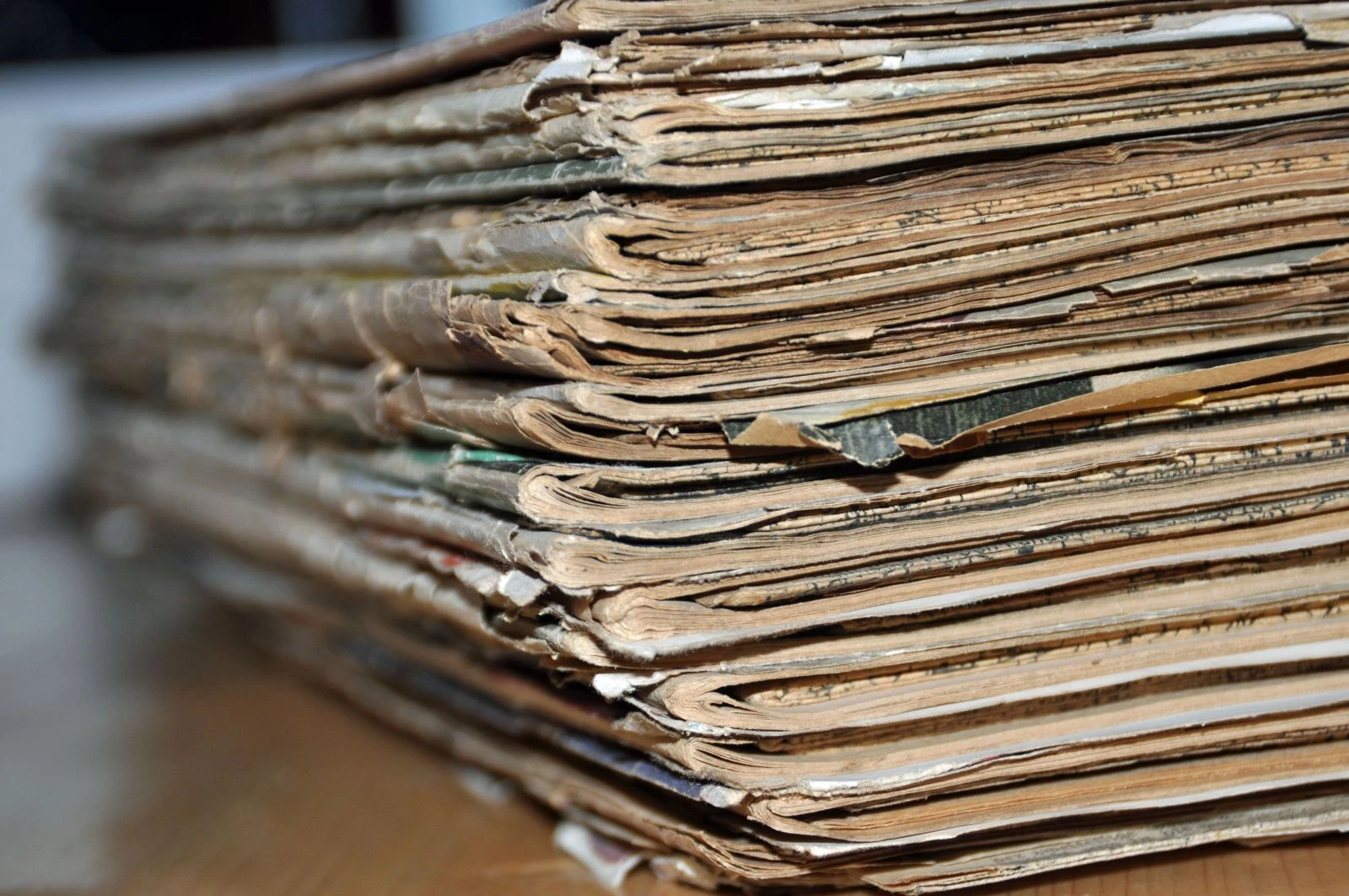
This are issues of the “Schweizerische Unterhaltungsblätter” from a whole year, namely from 1925.
Or, put differently, 1694 pages of yesterday’s news 😀
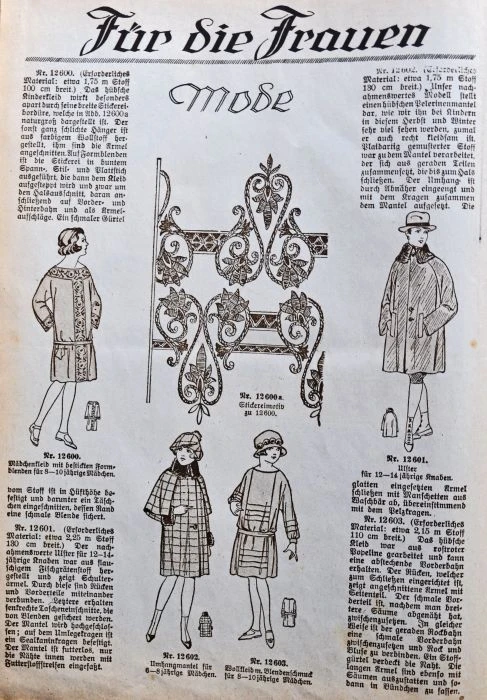
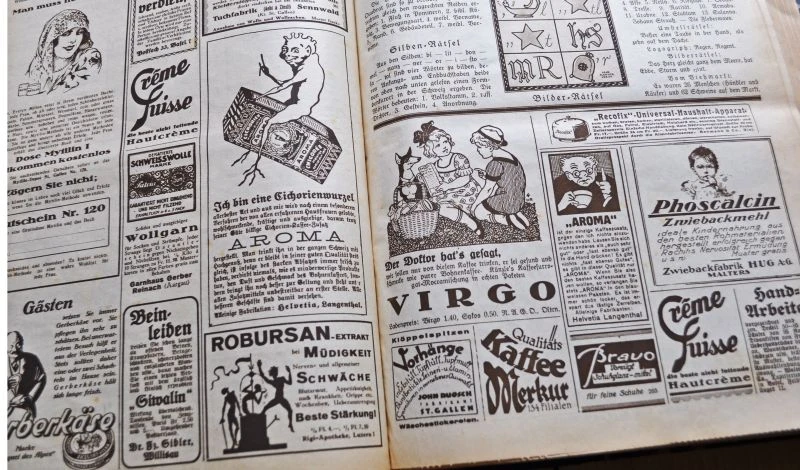
It took me the whole afternoon to get through it, without reading any of the longer articles. It has something of everything in it: fashion, a little crafting, news, reports, novels or short stories, recipes and household hints, riddles, celebrities, well, everything.
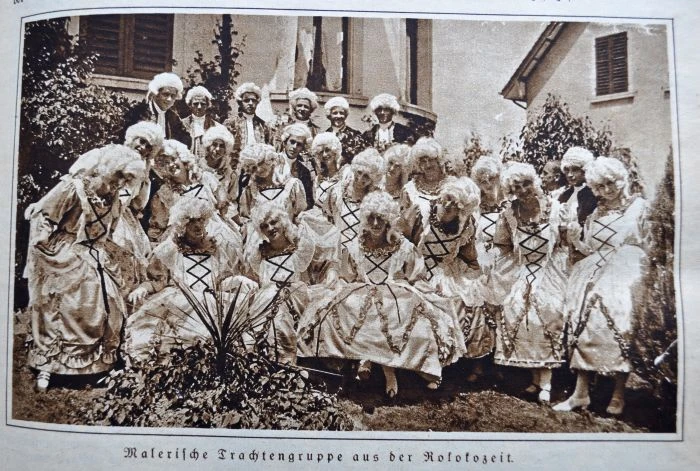
I love old newspaper adsa rococo-costume-group
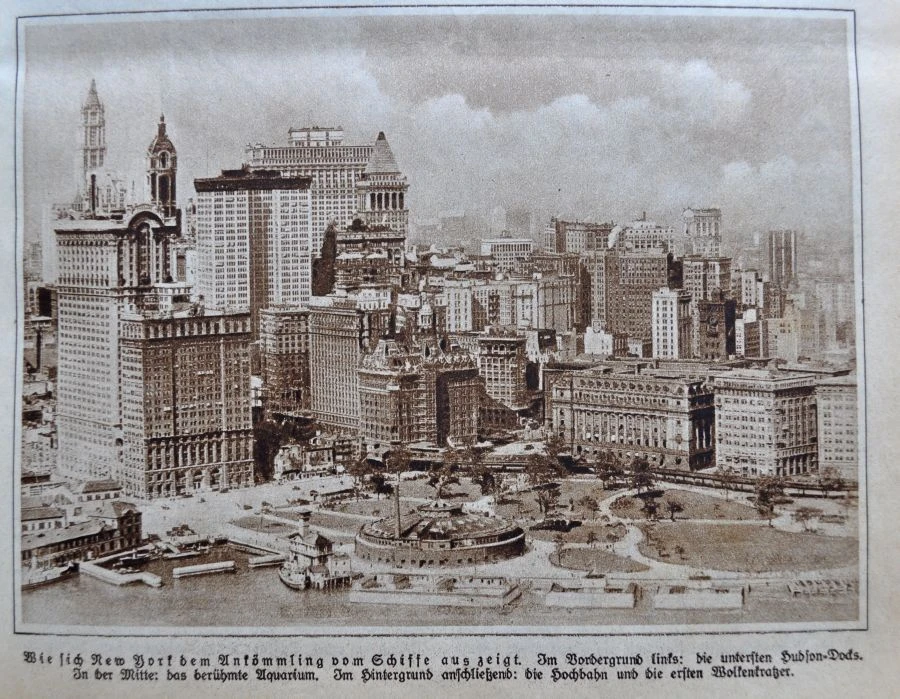
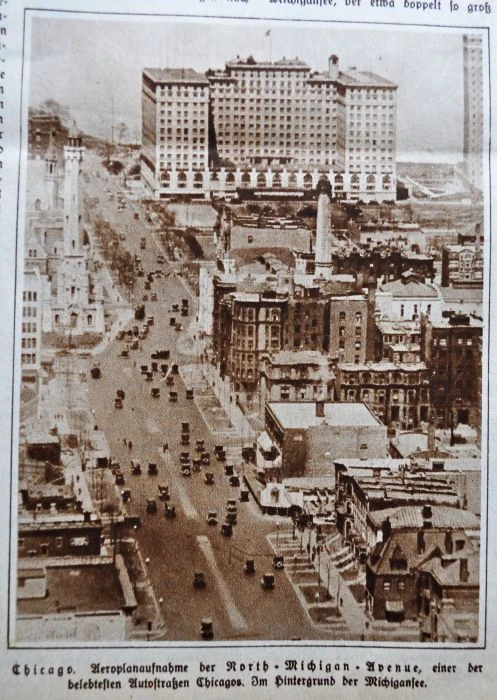
I love things like this. Of course they are a lovely source for fashion, patterns and tutorials. But they are real time capsules, too. I love to read news, that have long become history. I love to see once popular faces that have long been forgotten, I love to see photos that will never be possible like this anymore.
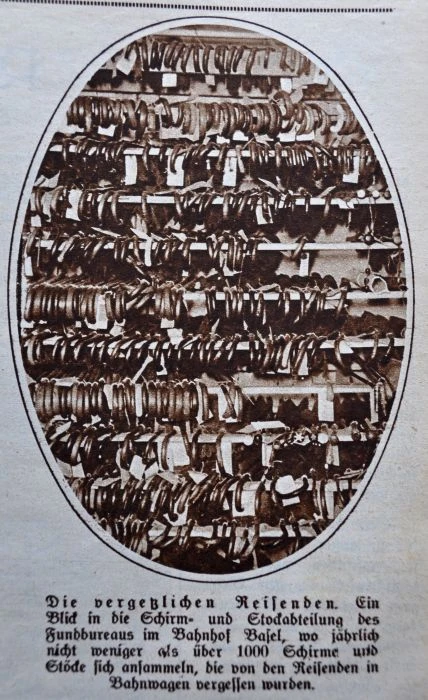
New York’s Hudson docks (compare to today)Chicago’s North Michigan Avenue (compare to today)the walking sticks and umbrella section in a lost property office
I really had a hard time picking only a few favourites to show you.
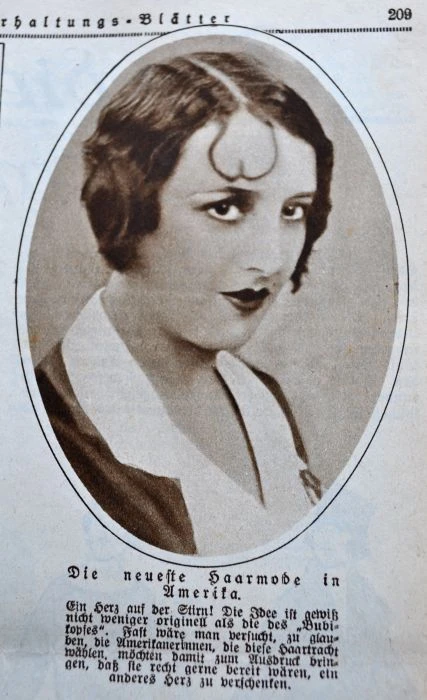
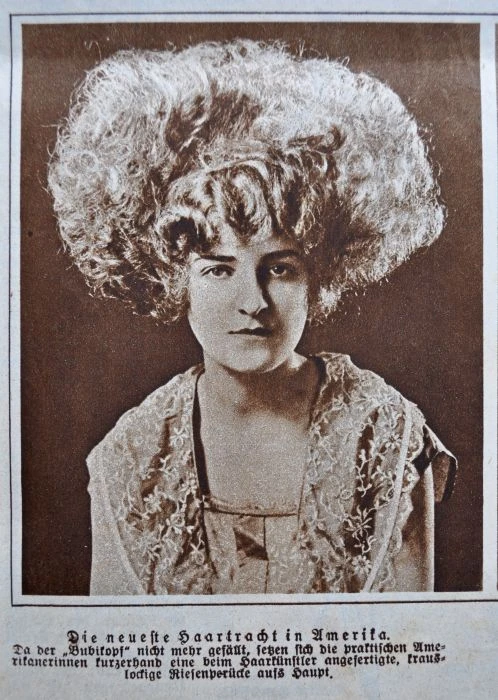
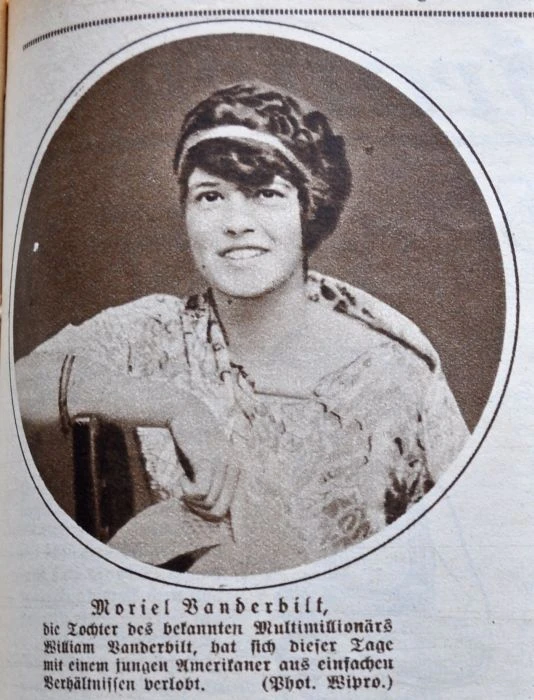
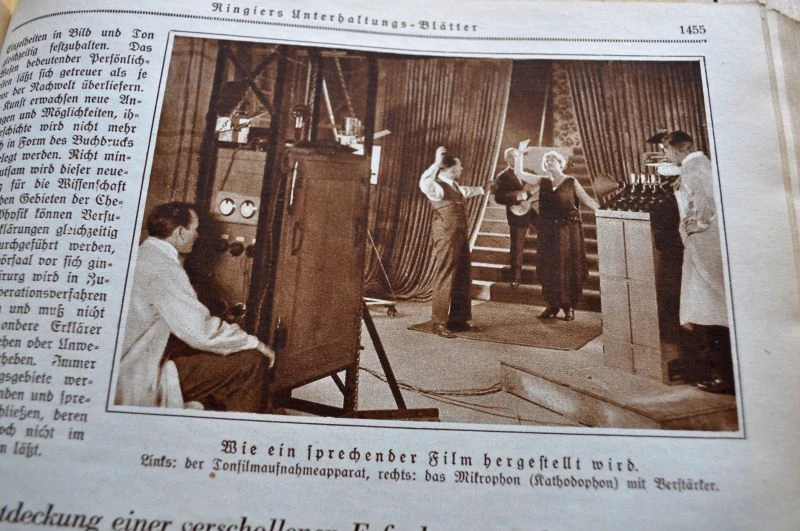
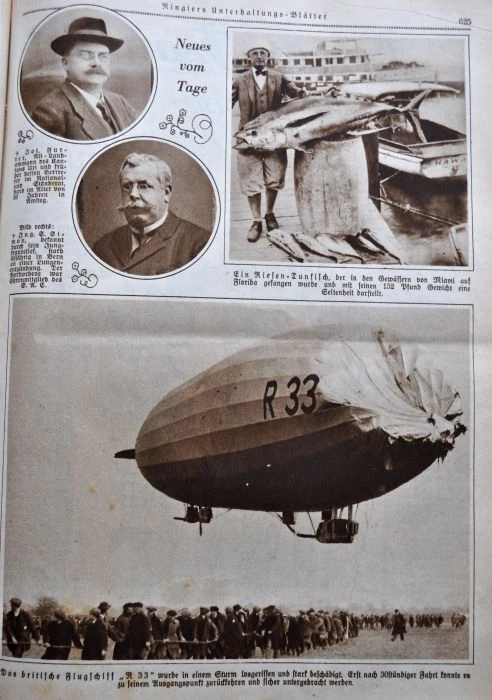
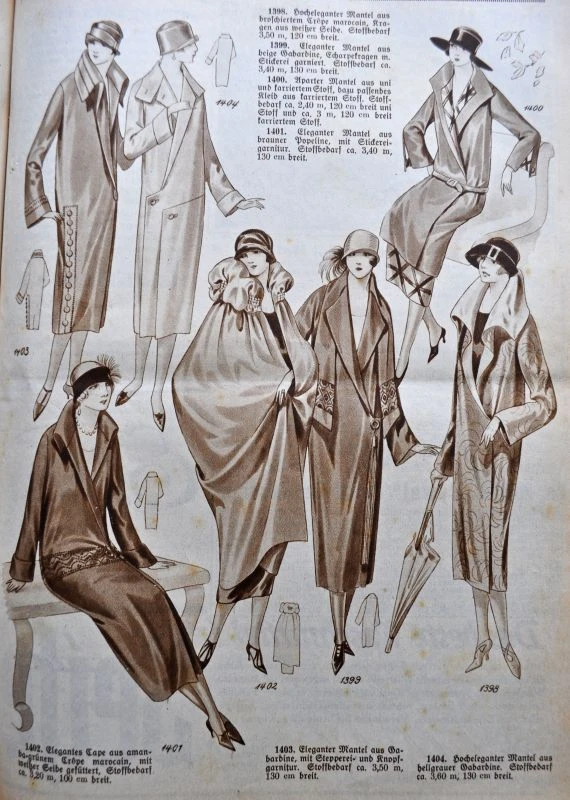
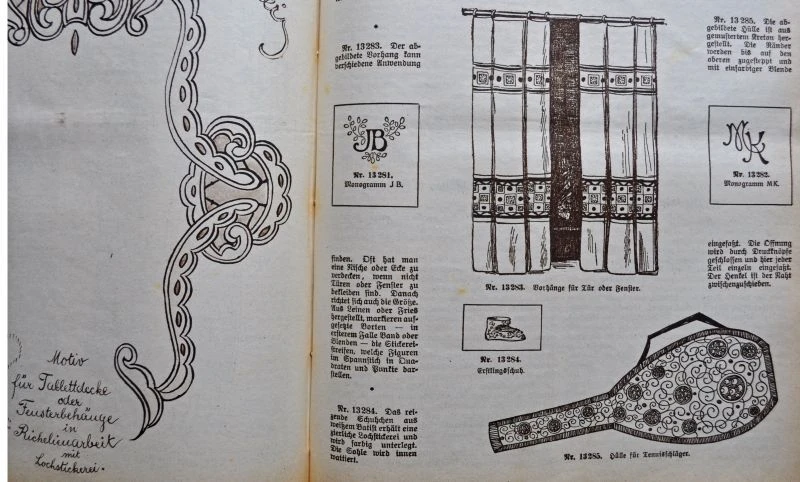
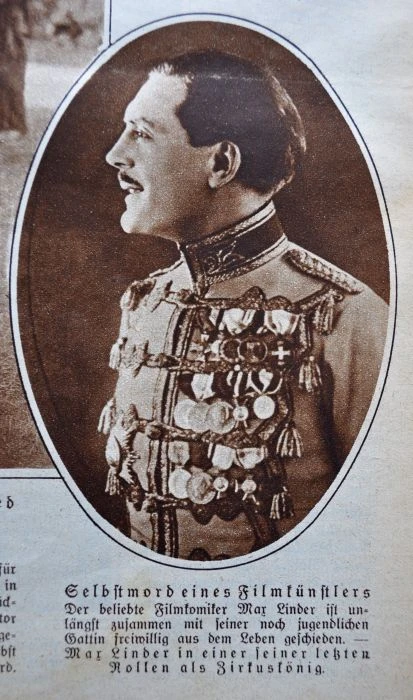
American hair trend no. 1: style two thin strands on your forehead into the shape of a heart upside downAmerican hair trend no. 2: because the page-boy cut was becoming boring…Muriel Vanderbilt’s first engagement, she married the same year but got divorced already in 1929 only to marry two more timesa report about first steps in sound film, “How a talking film is produced”anybody able to imagine reading about an airship accident in the news?though I like 20ies fashion, this coat in the middle is definitely too muchanybody else feeling the urge to start playing tennis only to embroider a racket bag?once popular actresses I had never heard of (Betty Bronson, Alice Calhoun, Vilma Banky)when history was news: the suicide of Max Linder, three weeks after his death.
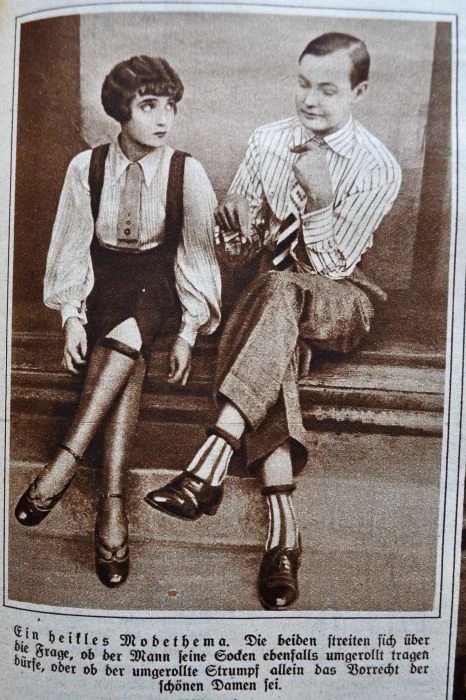
And my absolute favourite: A couple, arguing if the new fashion to wear the ends of the stockings rolled in, is a mere female fashion or if men can wear it as well.
look at her face! as if she sais “kidding?”
Never-ending fun for only 25 CHF, I won’t complain about that!
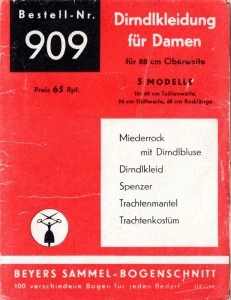
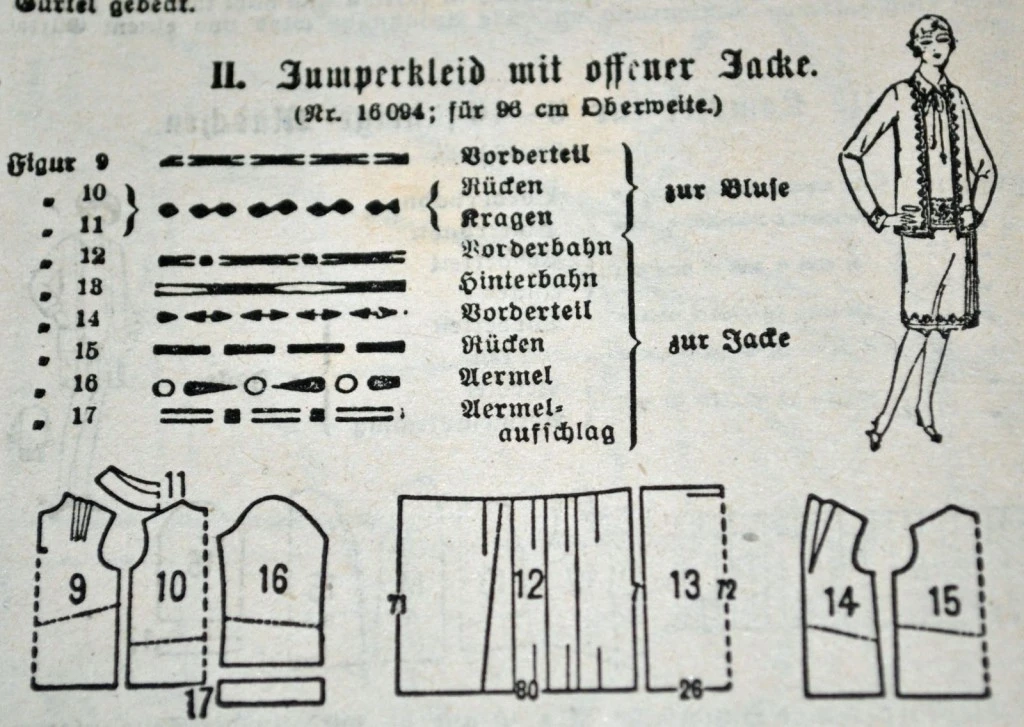
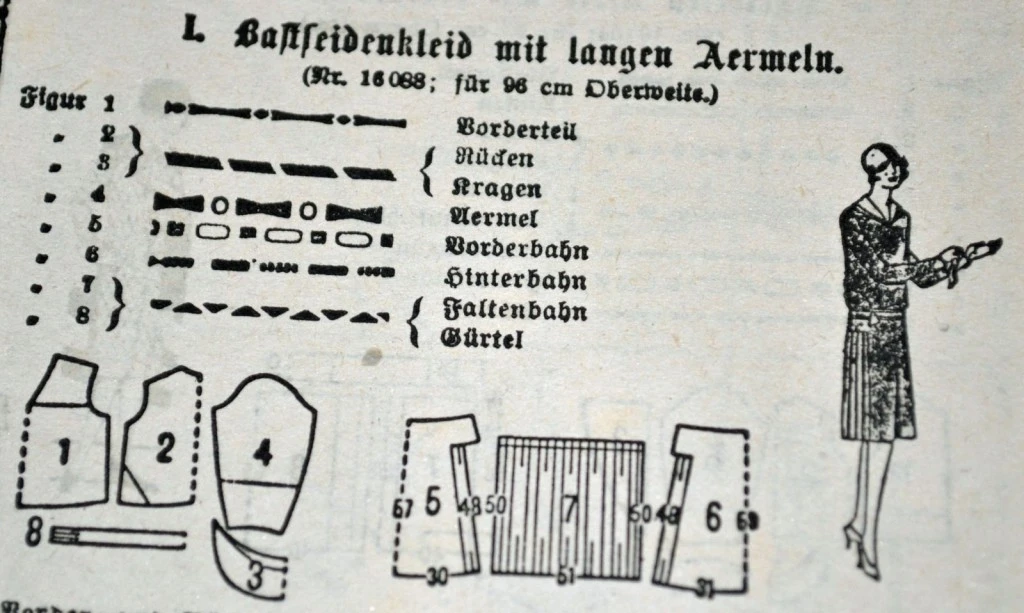
A long time ago, back in 2011, I bought some sewing patterns while being on a study trip to Dresden.
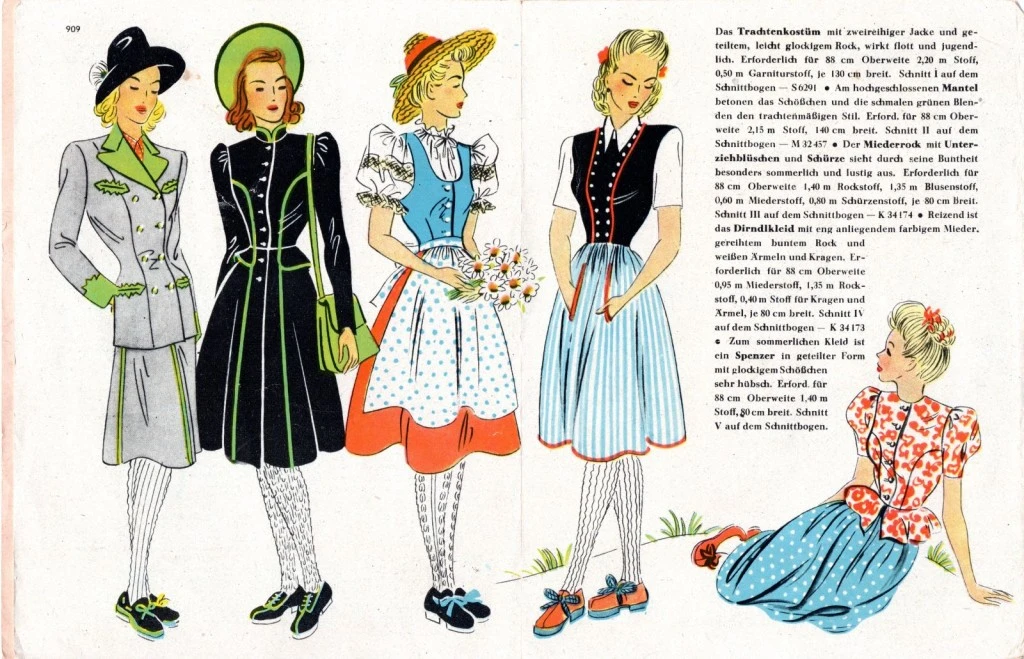
One of the was this 40ies pattern with different projects in “traditional dress”-style.
Popular belief thinks that these traditional dresses once were the festive costumes of peasants, but the traditional dress as we know today is majorly a 19th century invention, based on traditional and simple peasant costume, but entirely constructed. The ‘why’ can be discussed rather controversely. You can call it a longing for tradition and history, an attempt to picture the past and the “good old times”, you can see the construction of a national identity, maybe of something called patriotism.
Well, nobody needs to have studied politics to guess that all these reasons made traditional dress a very popular style in Nazi-Germany. These costumes helped to form an image of the german nation, the rural life and peasants as the fundament of the nation’s unity and strength. To make this clear: I still have issues using this pattern, because apart from “normal” fashion, that could be political, but didn’t have to, this “traditional”-style was without a doubt used in a propagandistic and therefore very political way.
Being born German, having Grand-Parents who had to live under this regime, who suffered from and survived the war, the last thing I want is to romanticize this time and you will never hear me utter a word like “I love the 40ies” or me speaking of WWII-reenactment. I like 30ies and 40ies fashion, internationally seen, because aside from regional differences you can observe the same cuts and styles in pretty much the whole western world. I work with german patterns because I lived in (and still close to) Germany, so these are the patterns most easily accessible for me.
And one last note before we come to the project itself: I don’t like the other patterns of this set very much, so I don’t think I will be tempted to sew myself a 40ies-dirndl-style-dress in the nearer or farer future. And I try to convince myself that the woman who owned this pattern in the 1940ies didn’t like much of them, either: The marks on the pattern sheet show, the only garment that had ever been made from this sheet (or let’s say that left marks of its creation, surely I can’t say if other patterns were traced without a small ridged wheel) was the spencer, the jacket in the far right. And that isn’t very dirndl-like at all, in my opinion.
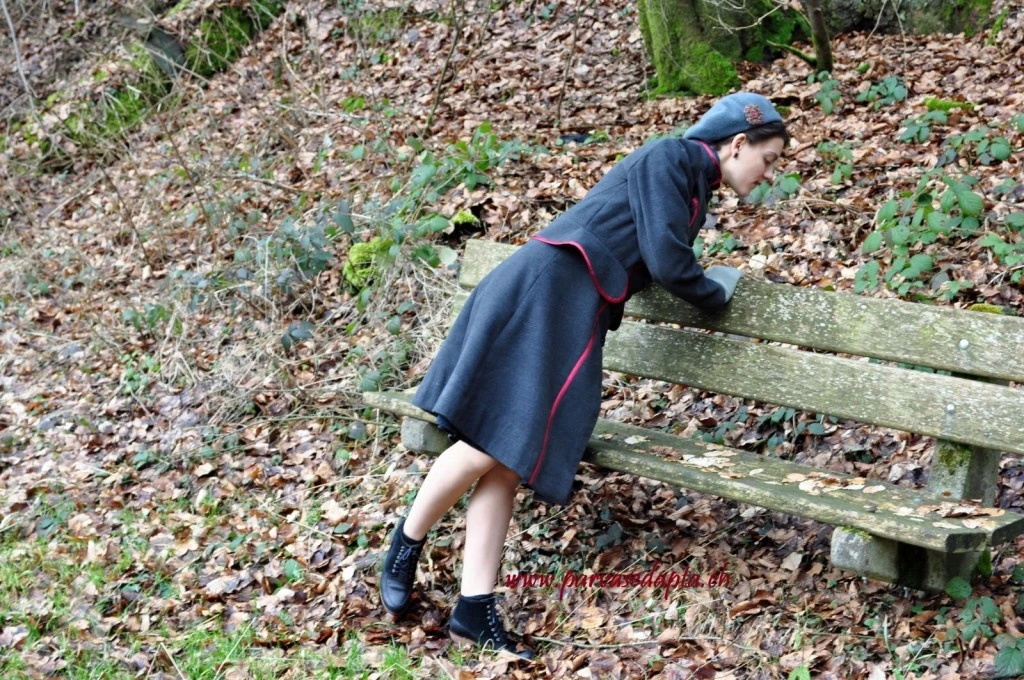
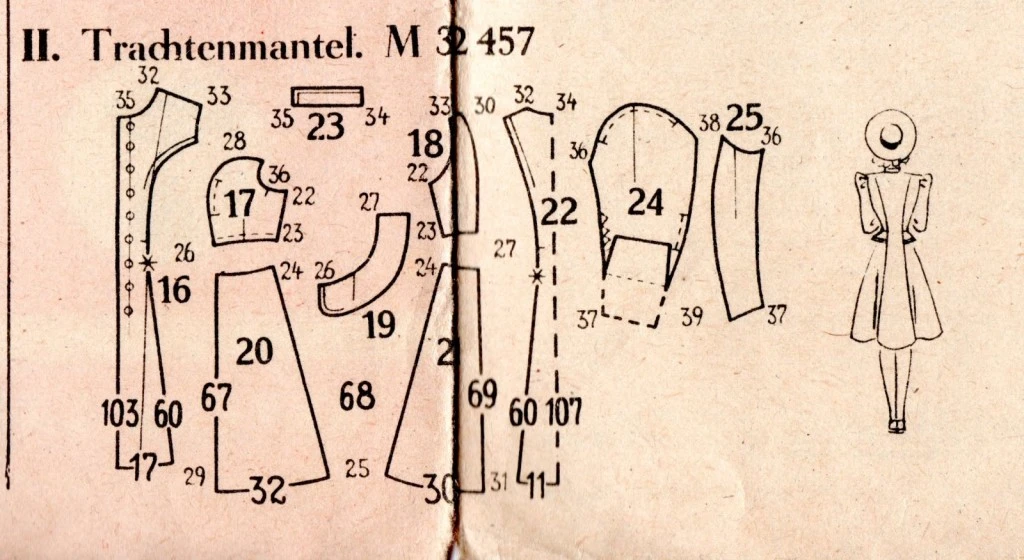
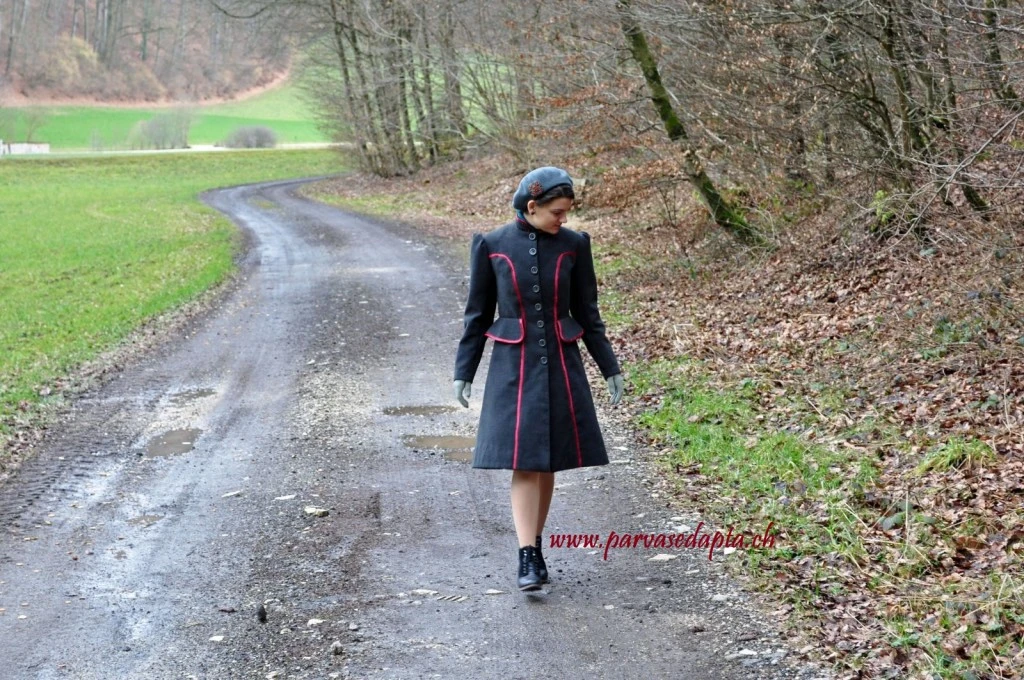
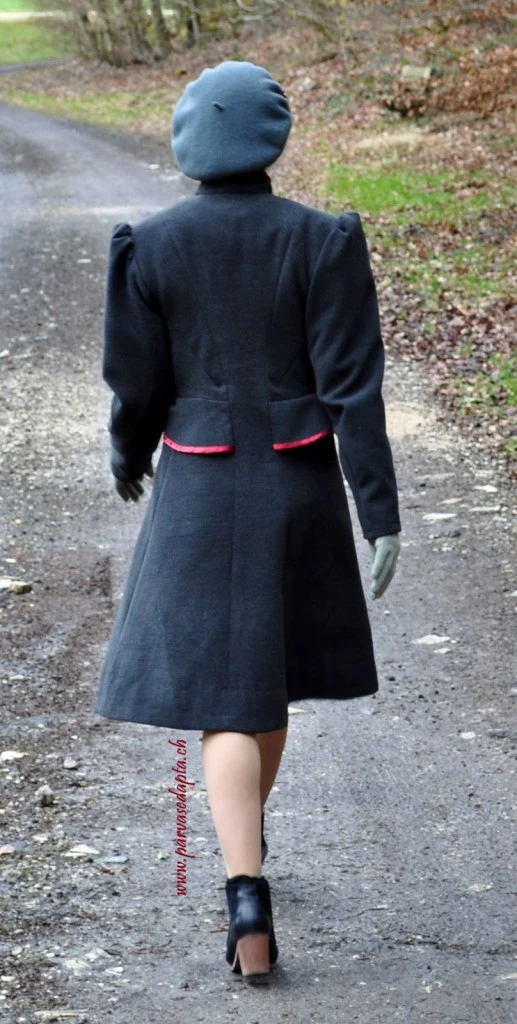
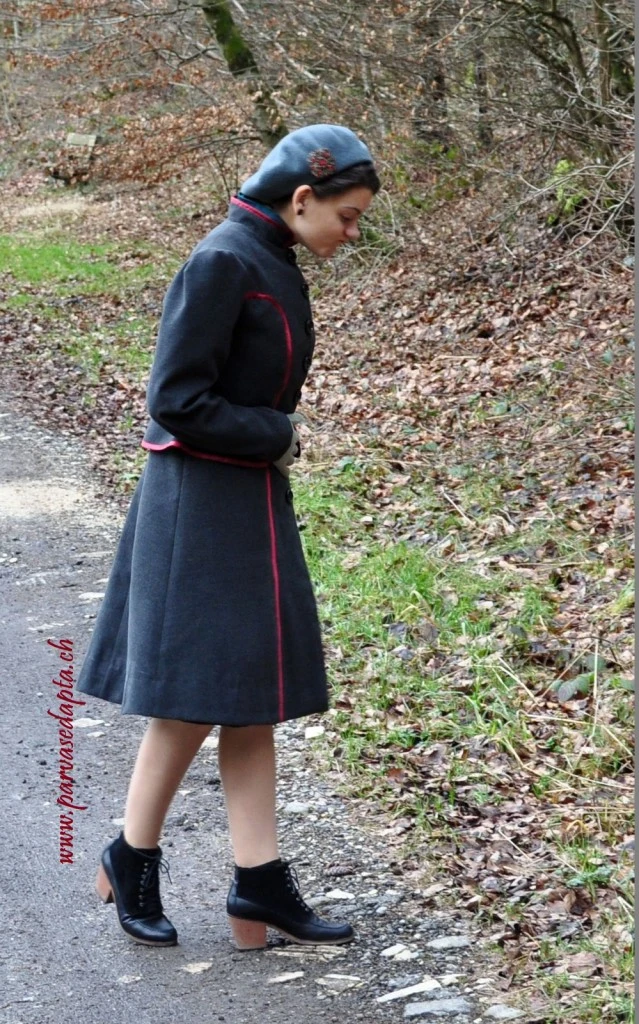
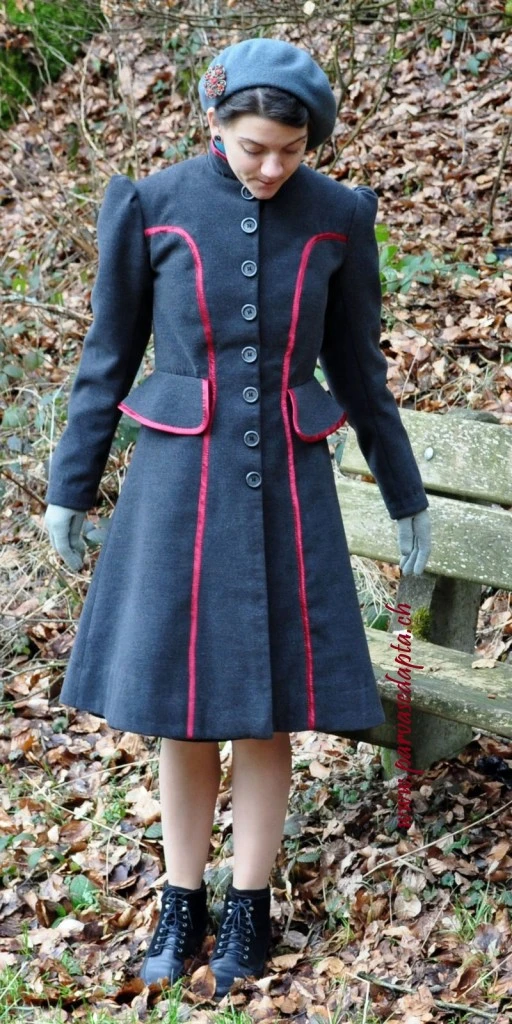
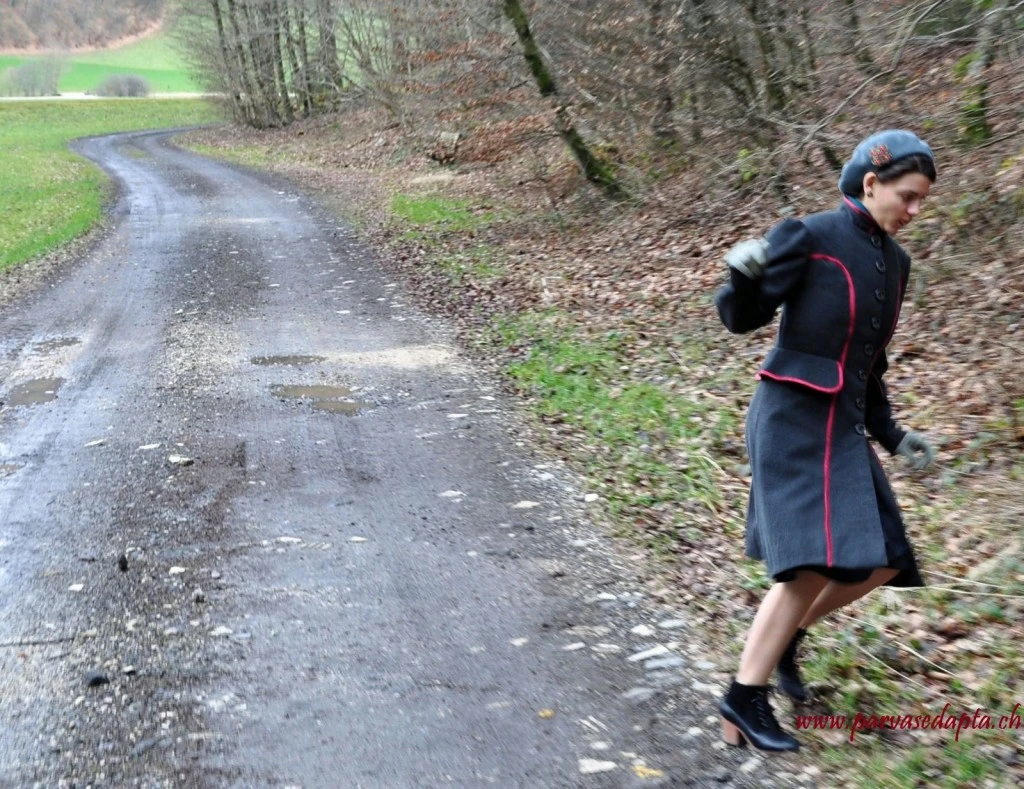
The reason why I bought this pattern (apart from its very low price) is the pattern second from the left, the coat. I already planned to sew it right after having bought the pattern and when I went to my hometown later in 2011 I went to the fabric store I used to work at and bought fabric for this project. An anthracite coat fabric, not made from wool, but from cotton, burgundy bias binding and matching lining.
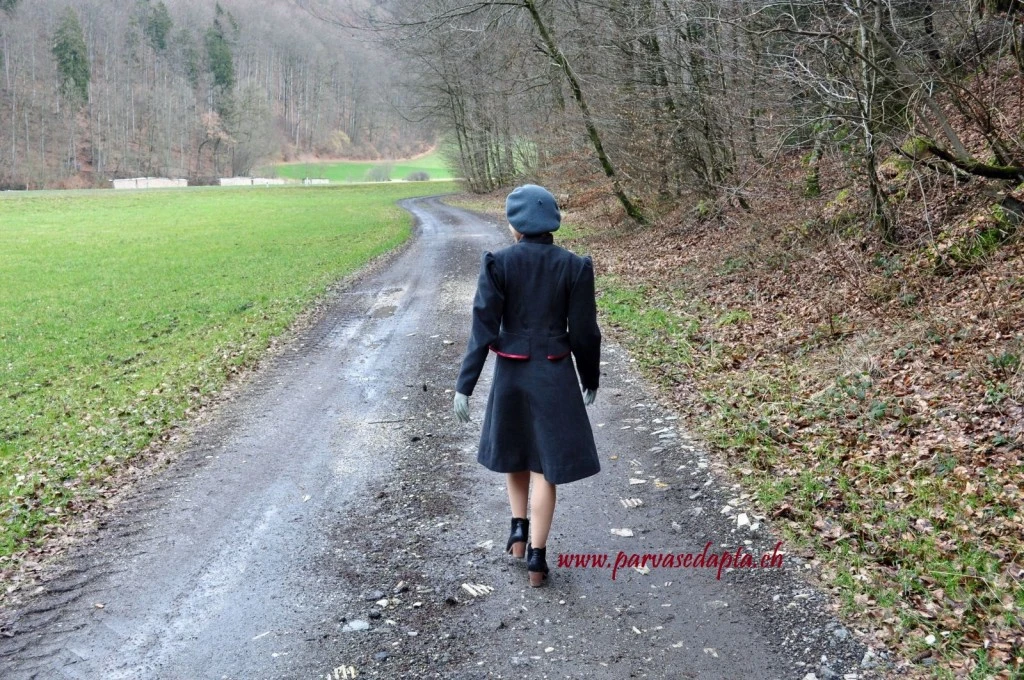
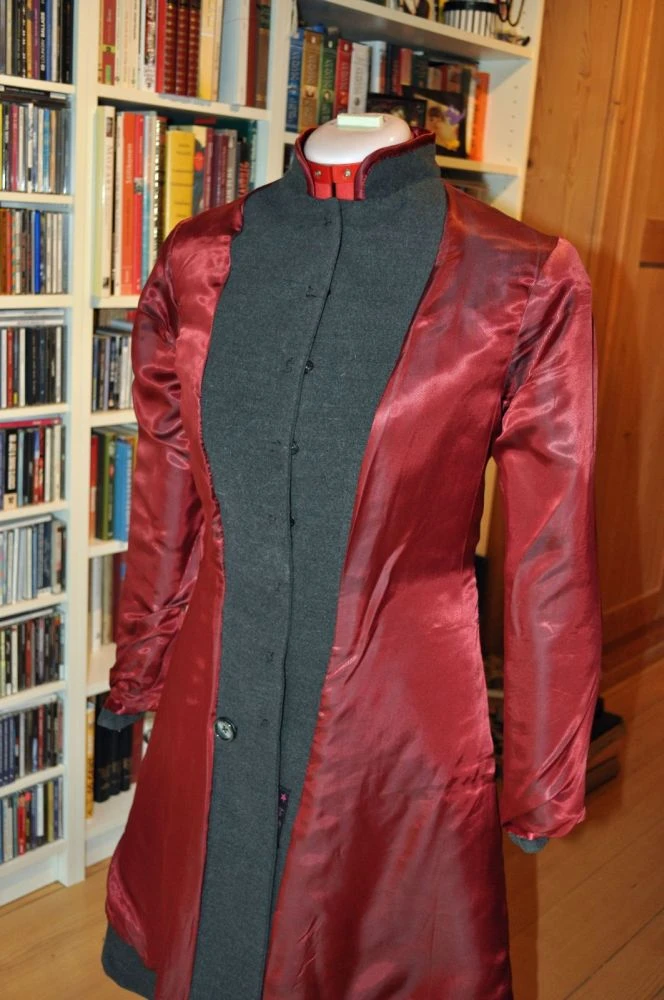
Because it was already late autumn I didn’t manage to finish the coat to wear this 2011-winter season. In 2012 I spent the autumn months in France and came back home only in mid-december, to late to be motivated to finish this project. In autumn 2013 we moved and there wasn’t much time for sewing at all. But it brought the project back to my mind and because I really didn’t want to have it lying unfinished in my fabric-cupboard another summer, I forced myself to finally end this in early 2014.
The coat was one of my first attemps to use historical patterns and I made all the mistakes I could make. Even with modern pattern, sizing often tends to be too large. Today I know that this gets even worse with vintage patterns, but I didn’t know back then, so I cut the fabric according to the 88cm-bust-circumference without any alterations. I closed the seams in the front and attached the bias binding by hand. Only after having closed all the other seams to form the corpus I saw, the coat was far too large.
I managed to make it a little bit smaller shifting the side- and shoulder-seams as well as the seams in the centre back. Still it was far too wide, I had to add the diagonal darts in the back you can see in the photo above. What is really missing is an adjustment in the front. Only thing I was able to do there, was to cut back the front edges a tiny little bit, but because of the applied bias binding I had to leave the pricess seams as they were. Of course all those adjustments made the seam allowances very bulky and they were a pain even beforehand. The fabric floats very nicely, but at the same time it is kind of stiff, so I had to hand bast all the seam allowances to make them lie flat.
The armholes were a little too large after all the adjustments, but the sleeves themselves were just massive and very wide. The puff sleeves looked ridiculous and I had to remove a lot of fabric from the width of the sleeve itself as well as from the sleeve cap.
This fabric fringes horribly and I had to undo the sleeves three times and still the left one looks terrible.
Now, if these were all the problems I had faced, it would have been ok. I still longed to finally wear the coat and loved the colours as well as the pattern.
But the hem looks terribly crumpled, I re-did it a couple of times, the stitches still show and ironing just made it worse. The collar isn’t very flat either, normally I wear the coat with a large scarf so that the collar is hidden.
The worst flaw I only saw in this photos. The waist flounce isn’t on the same height left and right. When I looked at the pictures I was like “no, it only looks like this, can’t be”, but in fact, it is even worse when looking at myself in the mirror wearing it.
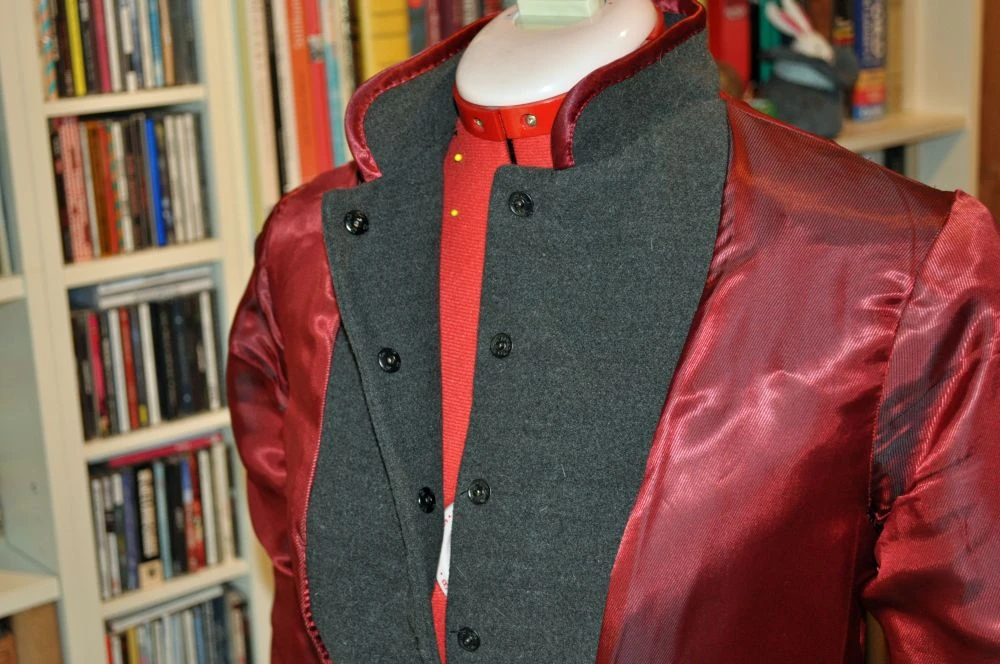
Surprisingly enough, the lining made no problems at all. You can see a button sewn onto the facing, it’s my spare one.
The buttons were another disappointment. During the two years it took me sewing it, I bought two different sets of buttons, both burgundy coloured, they both looked terrible when pinned on. So I used this ones I still had in my stash. They do not function at all, but hide the press fasteners beneath, I really didn’t want to sew buttonholes into this fabric.
I am still a little unsure what to do. The coat is somehow wearable, but I know I can do better and I know that this proof of my sewing skills is not what I want to be judged by. Additionally, it does nothing for me. It makes me look way larger than I actually am, the waist is not as accented as I would have liked it to be. So it really doesn’t improve my figure at all. This winter I will wear it, but it is nearly over, I can’t say if this coat will live another season. I planned to sew a matching hat, having a little leftover from the fabric as well as from the bias binding, but what for if I will never wear it because I don’t like the coat?
It’s already the 1st, that means it’s already time for another Getrödelt, gefunden, gefreut-post, hosted by Beswingtes Fräulein each month on her blog Beswingtes Allerlei.
It’s not that I didn’t buy anything interesting since december (last time I participated), but in january I simply forgot it and the days around february 1st were very busy in a very very sad way. So as you can imagine, I really wasn’t in the mood to chat about old stuff, but was relieved to be able to publish some posts I had already prepared beforehand to fill the gap of the last few weeks.
For the same reason I didn’t participate in the 3rd HSF-Challenge, which would have been “Pink”. But I will blog about my project for the 4th challenge, which ends today, soon.
But let’s talk about something moree cheerful and let me present to you two things I bought in february at the antique fair in Thun:
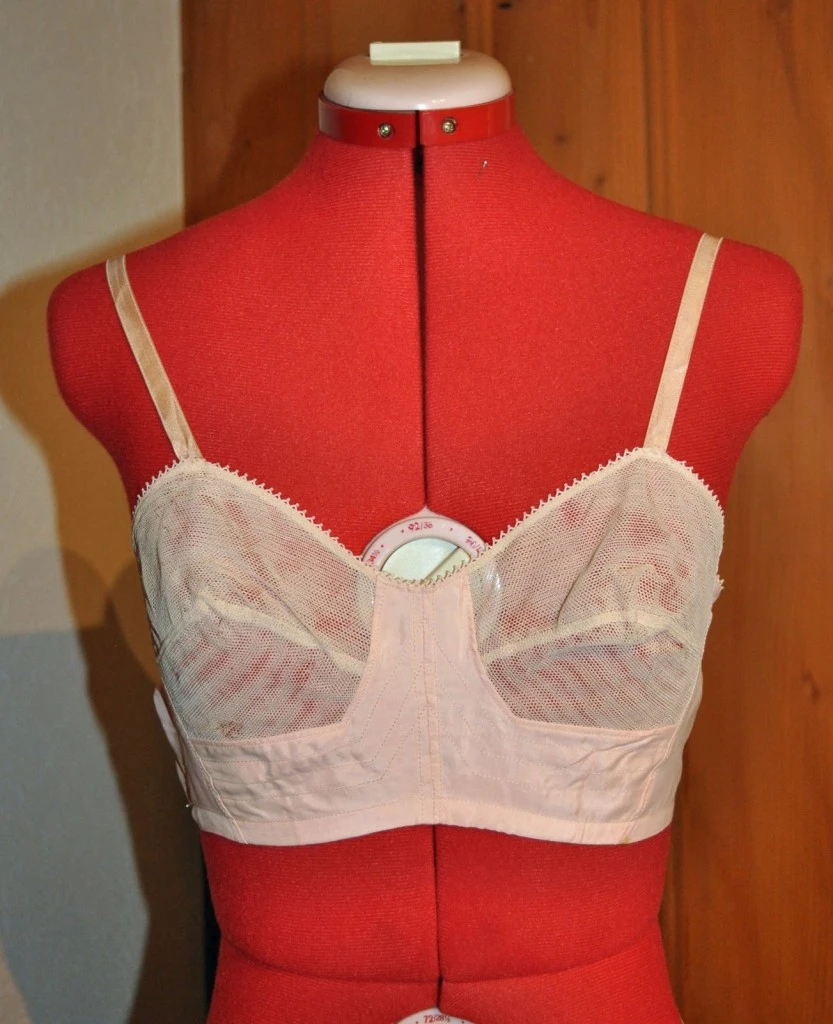
I don’t know about you, but I can’t remember finding Vintage lingery at an antique fair, it is just too far away from the focus of most visitors (and sellers alike). I am not much of an online shopper, so I never attempted to buy anything like this on the internet. To be honest, this ist an item I had never searched for, but when I saw it I knew I had to have it 🙂
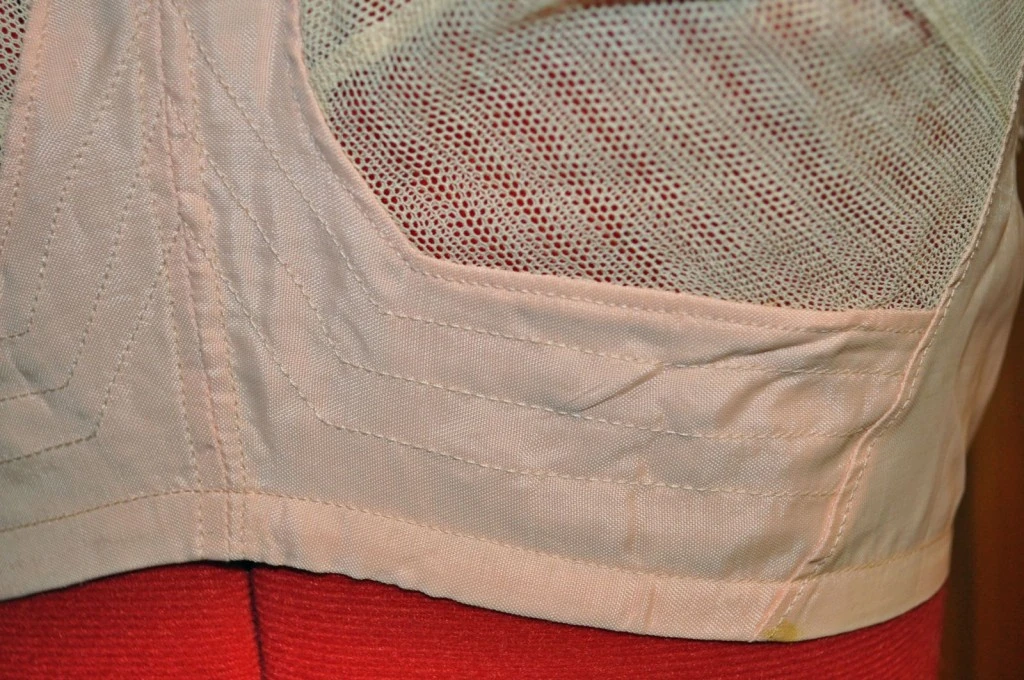
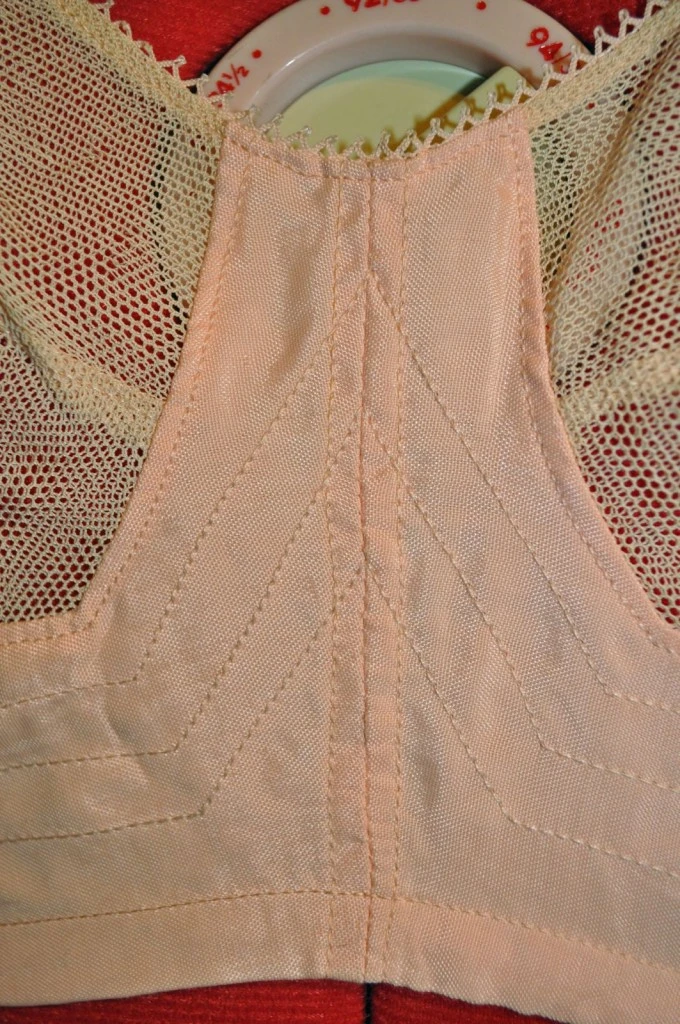
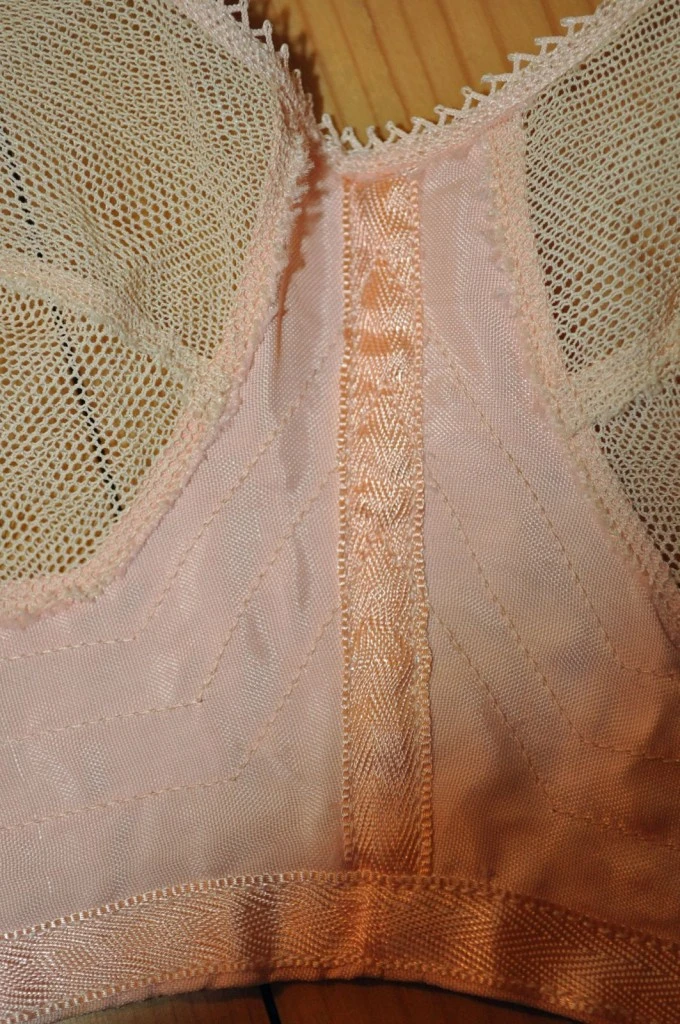
A 1930ies pale pink bra with mesh cups. It only has some very few stains and two little holes in the mesh, which is in fact very brittle.
I love the parallel seams below the cups.
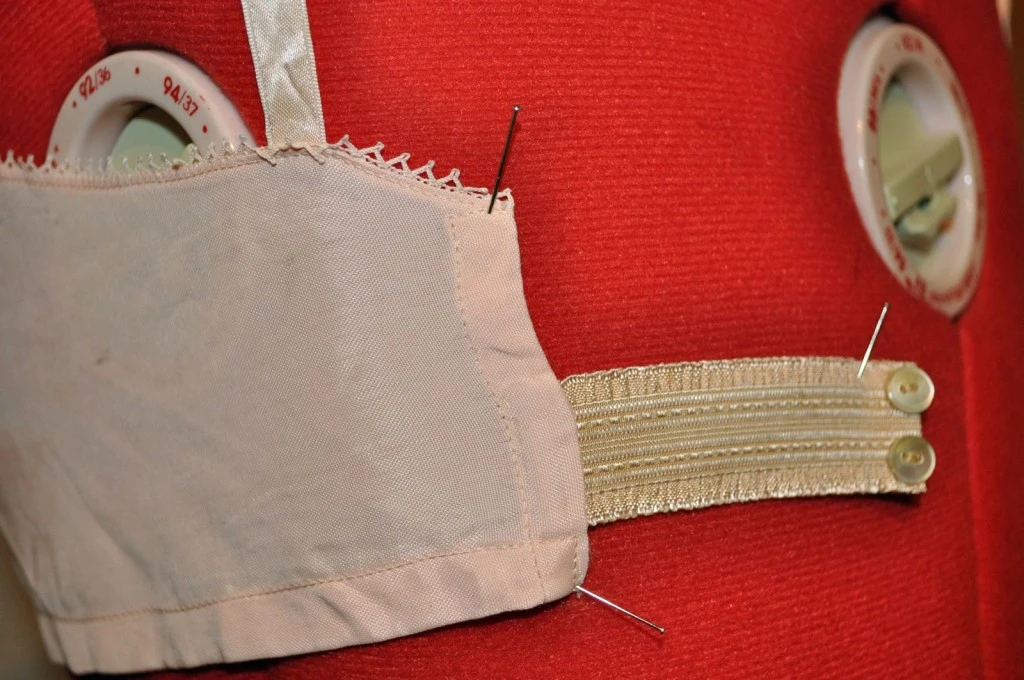
In the back it closes with two mother-of-pearl-buttons on an elastic:
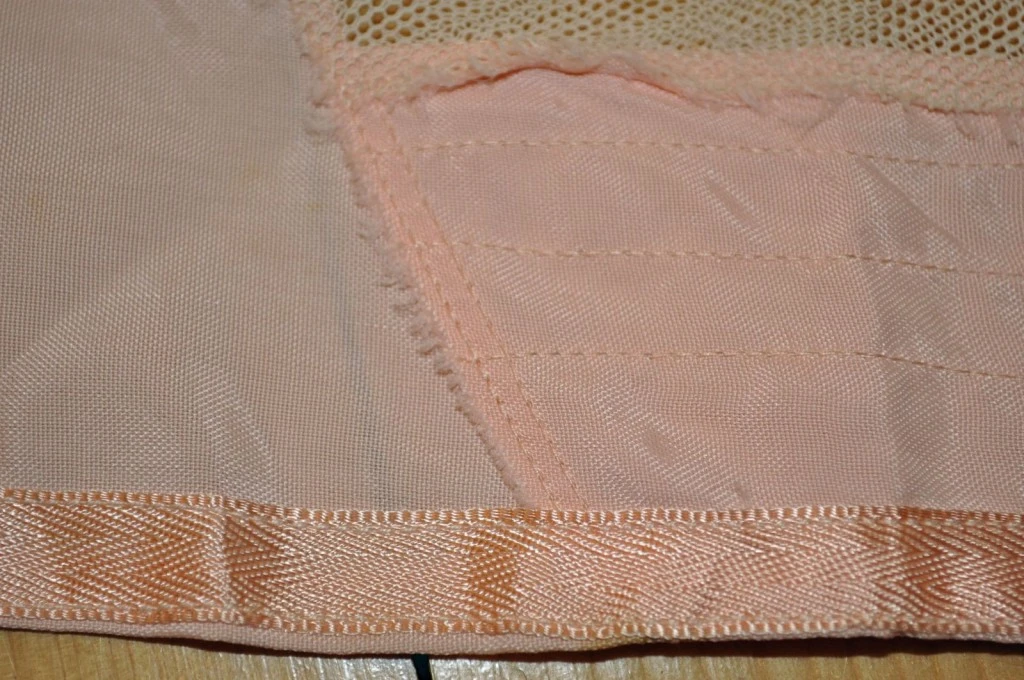
The inside shows no label or anything similar.
Though of course I wouldn’t wear it , I had hoped to create a pattern from it. Unfortunately it doesn’t fit at all, not a bit. It will be much easier to draft a pattern all by myself. But I don’t mind, I still love having it in my collection.
The second thing I want to show you is not very interesting at first glance.
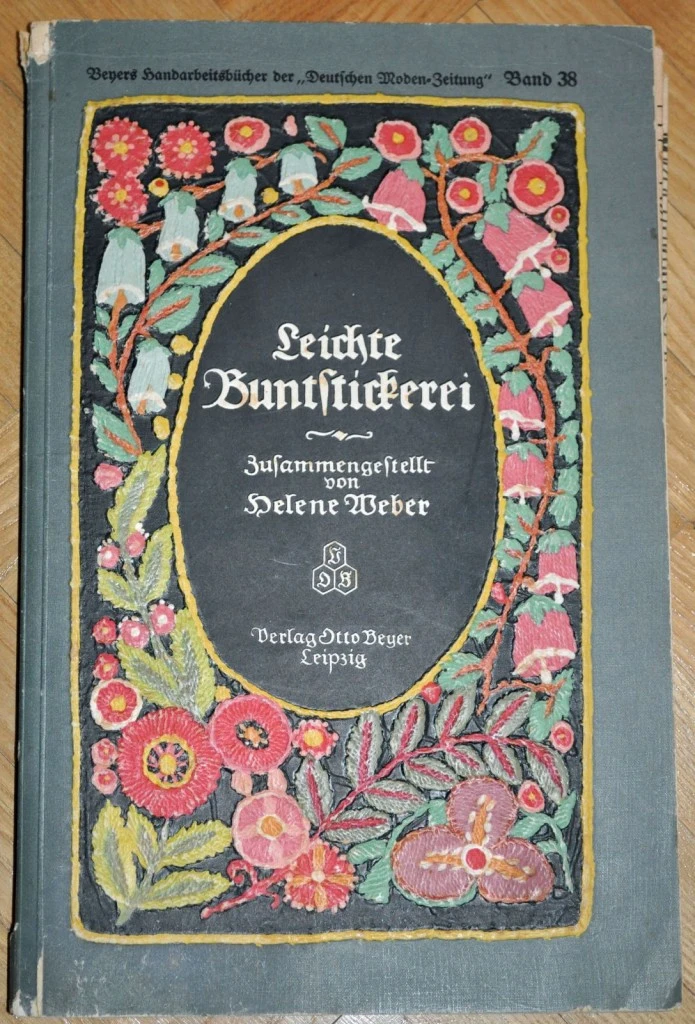
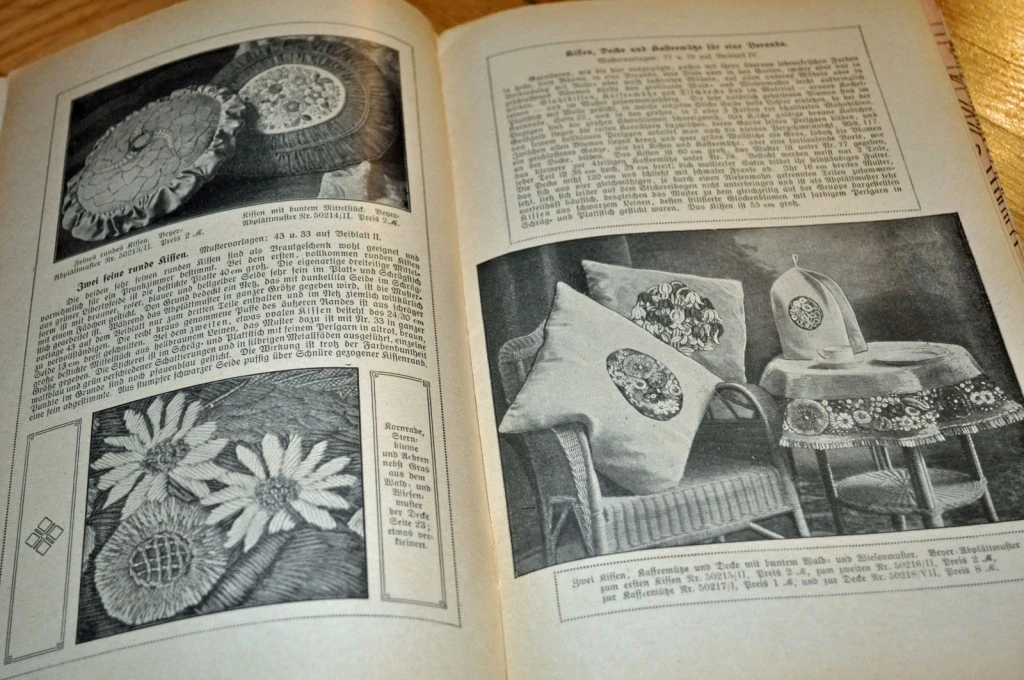
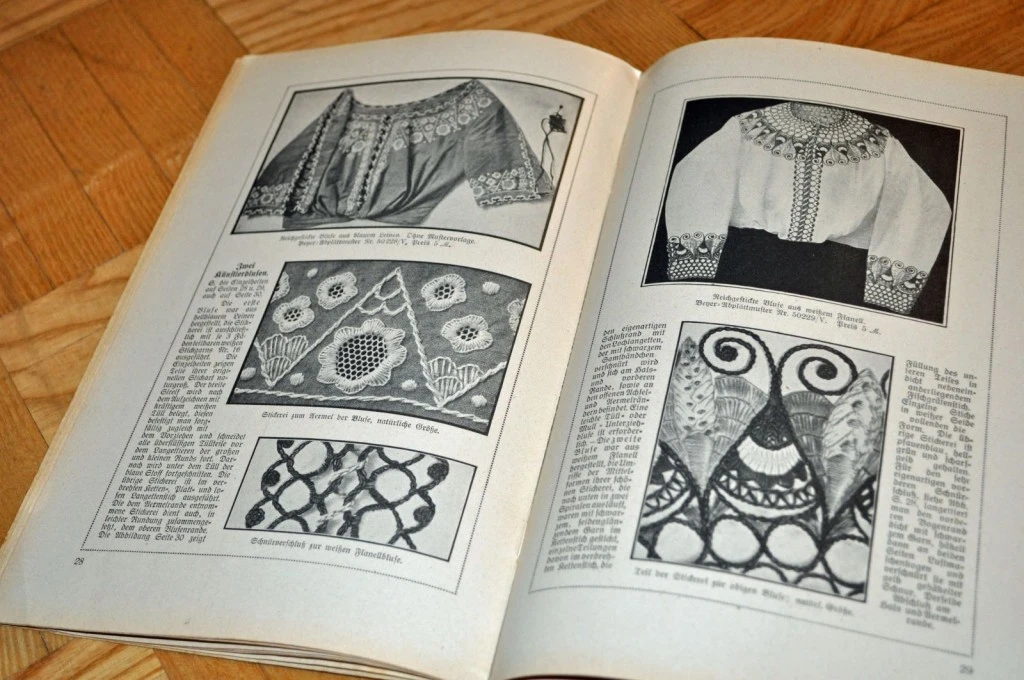
I already own too many embroidery books, the only thing that attracted me on this 1921 exemplar was its placing in a 50%-off-box and so for 4,50 CHF, I bought it.
There are in fact some nice patterns and ideas in it, so after all it was certainly a good buy.
A big bonus was, that it still had all its original pattern sheets.
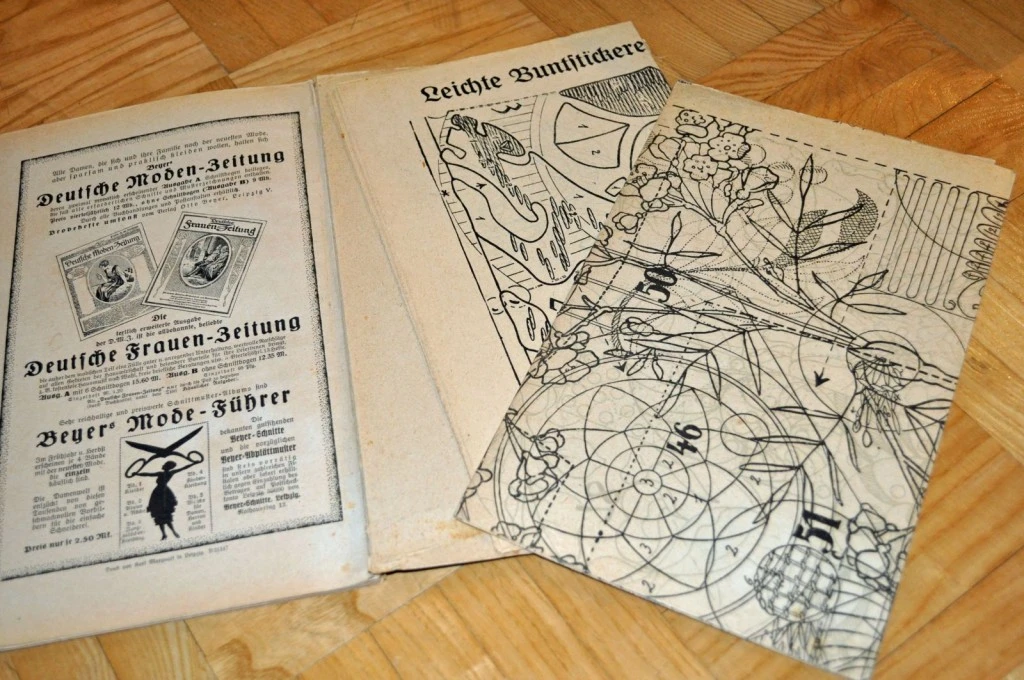
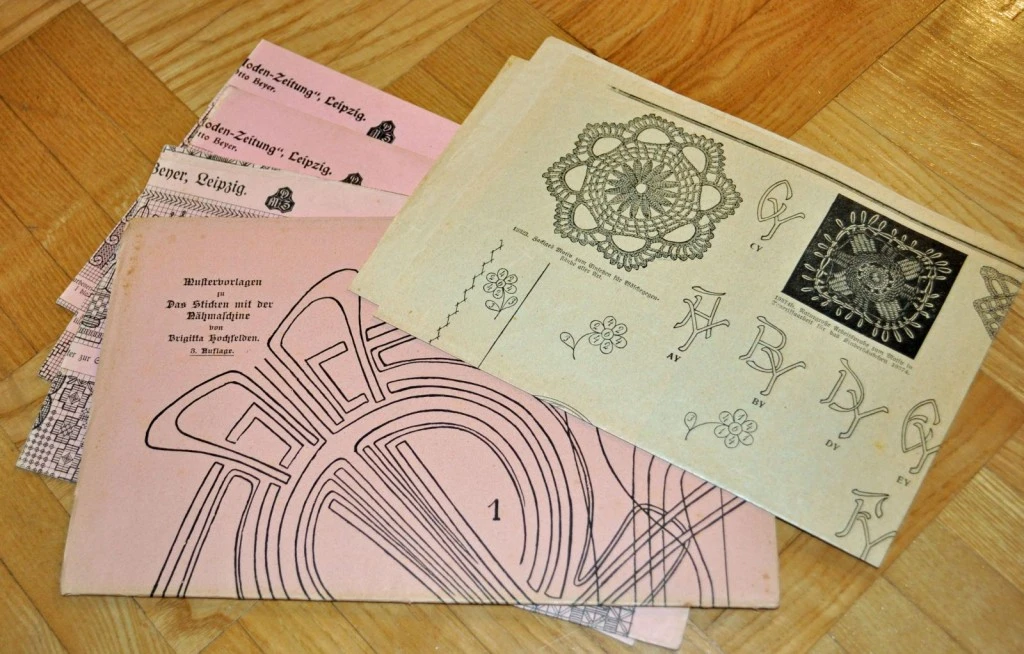
But only in the evening I cared to take a closer look at the sheets in the back of the book. And what a surprise. There were a lot more sheets than those belonging to the book.
Different sheets with canvas embroidery, patterns for early machine embroidery and an attachment with embroidery and crocheting patterns.
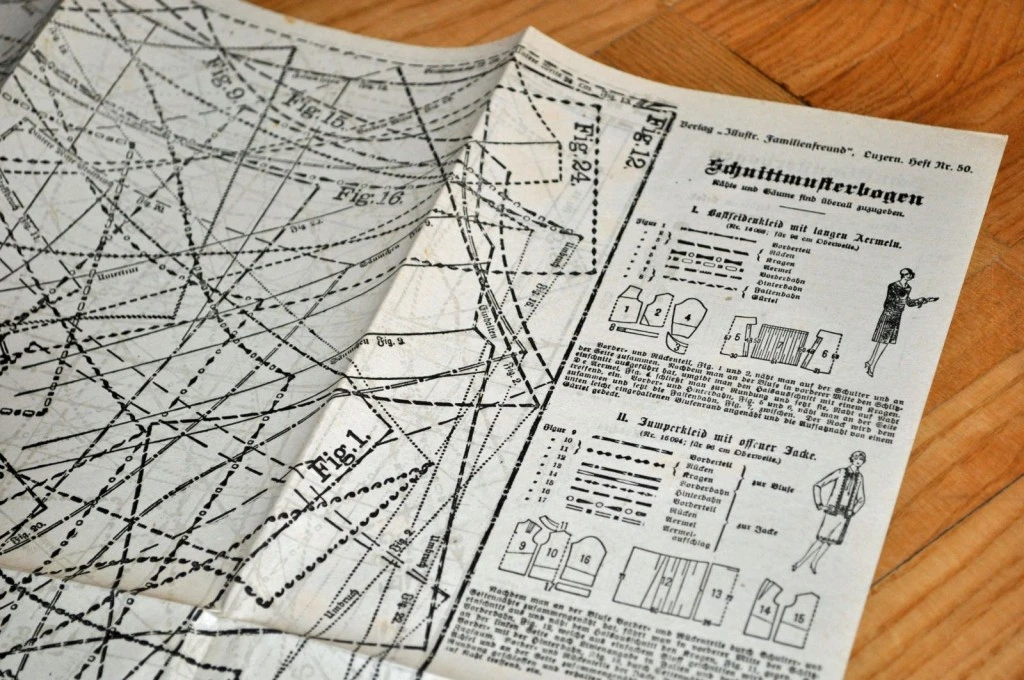
And then I saw something that really made me scream. A sewing pattern sheet:
I know that 20ies sewing patterns exist, I have a bunch of scans on my computer from some magazines a dear friend once borrowed me, but they are comparably hard to find and often very expensive.
Now I own at least one sheet and I got it for free, considering that I was willing to pay the 4,50 CHF for the book alone.
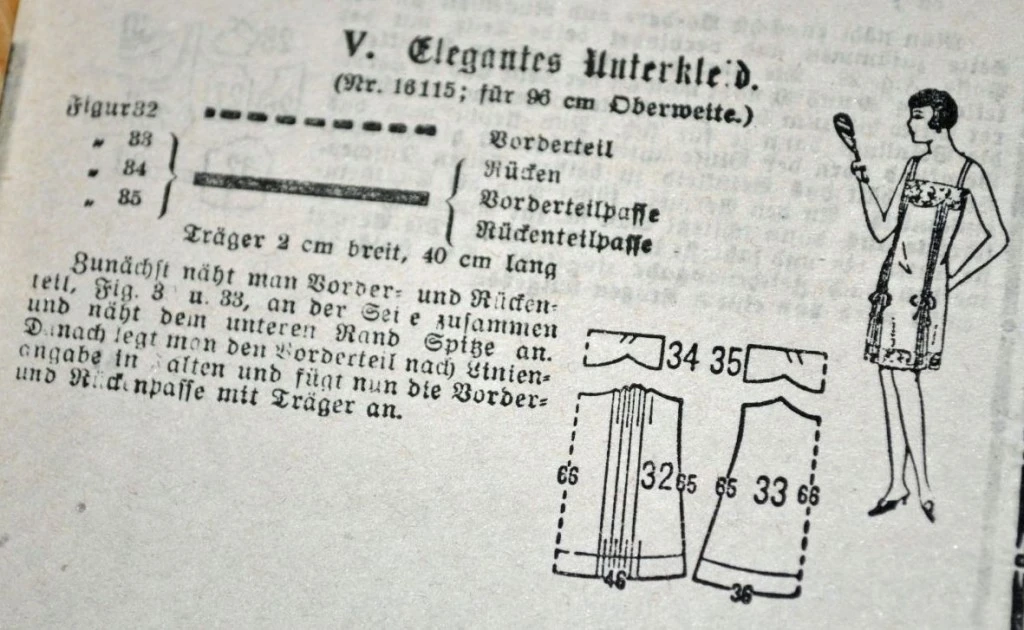
Besides some children’s patterns there are at least three patterns for women. Unfortunately all too large for me, but resizing won’t be much of a problem, I hope.
So much antiques for this month, see you soon, love
First: Welcome to my new blog-adress, I hope you found it without any problems. I was contacted by my old host, telling me that I had exeeded my upload limit, so I had to react rather quickly not to lose my blog. The move made me erase a lot of the old posts, I’m sorry if some links to no more existant posts won’t work anymore.
But let’s talk about sewing:
The second challenge in the HSF 2014 was named “Innovation”.
First I though of sewing a 30ies dress with a zipper after the 1939 zipper promotion I found in november.
Innovation can have a very direct influence on fashion and sewing, namely zippers, artificial colours, artificial fibres and so on. But it can influence life (and thereby fashion) in a different, an indirect way.
Can you imagine Dustcoats developing without cars? Bicycles did so much for the acceptance of women in trousers. Putting steel hoops in crinolines allowed the skirts to grow as big as they did in the middle of the 19th century. And you wouldn’t be able to sew a cover for your smartphone or tablet if there hadn’t been someone who invented it.
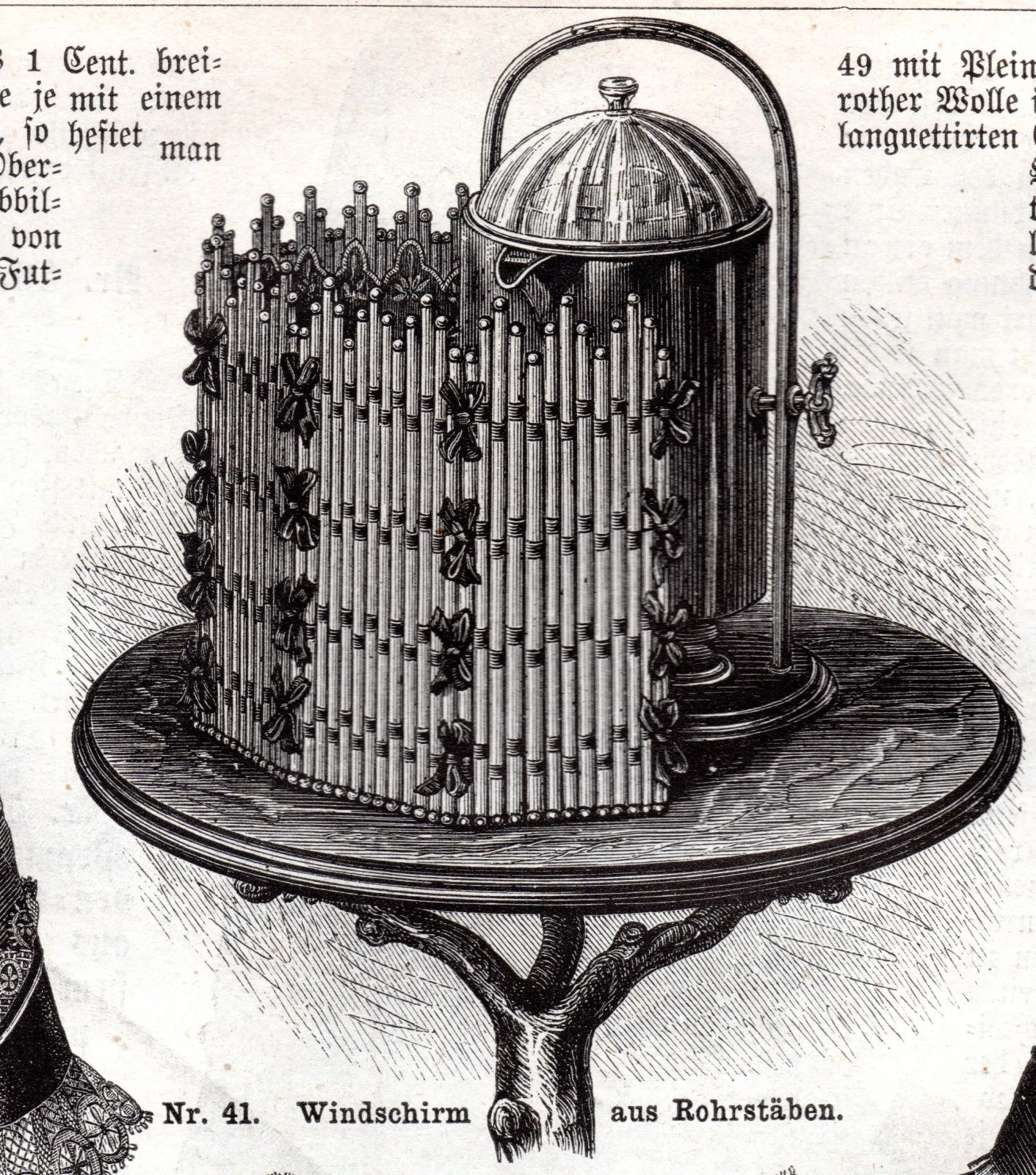
Well, first I was very keen to make this miniature folding screen which is in fact a windbreak for a petroleum-operated coffee machine. But while I would have been willing to ignore the fact, that most participants sew garments (I am still not sure if it is part of the rules, if yes I am going to break it, at least this time 😉 ), I wondered if anybody would accept this as a sewing-project. At least I wouldn’t have, so I saved it for later (and please, don’t ask me when I am planning to use a miniature screen, I have no clue).
While searching for a pattern or at least an idea what to make instead of the zipper dress, I stumbled upon a little device, meant for an invention of the 19th century, surely one of the most profund ones when it comes to sewing. No doubt, sewing machines changed sewing more than anything did in the last hundreds of years. Even inventions of artificial fibres or dyes did not have such an impact on the actual process of sewing.
So I though, why not go with it 🙂
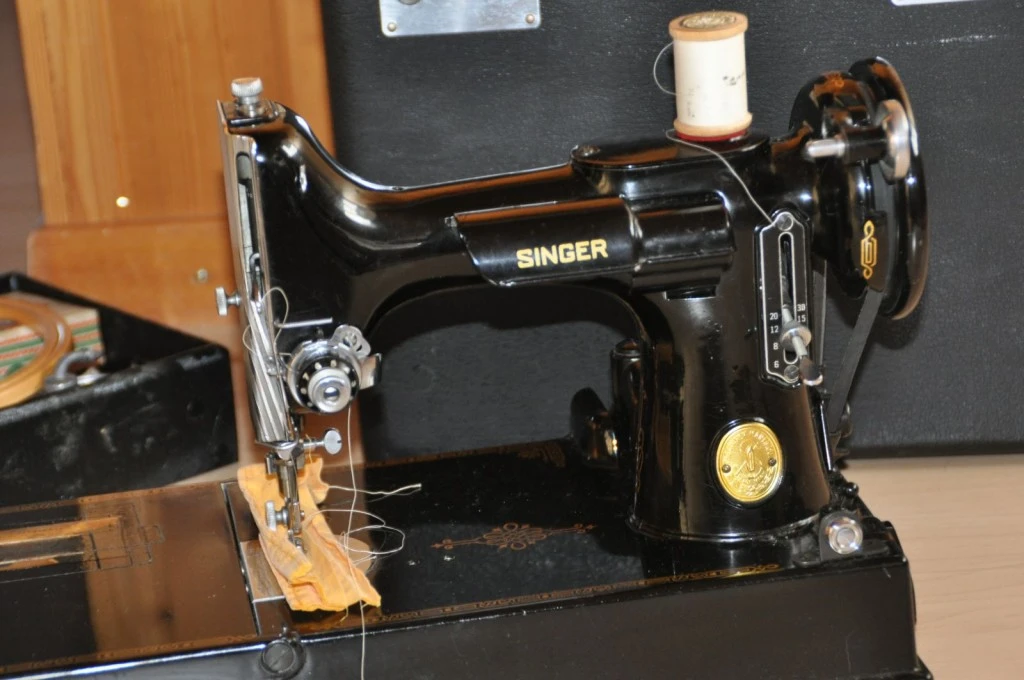
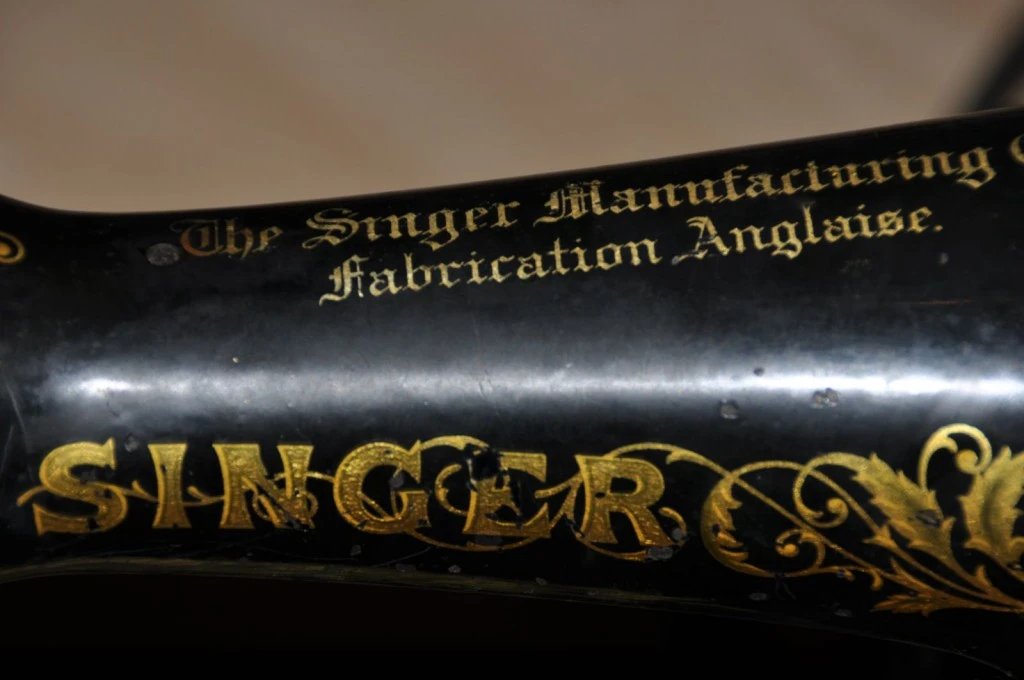
Singer Featherweight, 1948, my everyday-sewing-machine
The first experimental devices to produce a mechanical seam date back to the 18th century, but it wasn’t until the middle 19th century that a properly working and commercially successful machine had been developed. The American Elias Howe had his sewing machine patented in 1846, but he didn’t succeed in turning his invention into money. After having failed badly attempting to put it on the market in England, he came back to America a few years later, only to see that a certain Isaac Merritt Singer very successfully sold sewing machines, working with his technique. This was the start of a triumphant success in the whole world.
Electrical Singer sewing machine, 1923
In Europe, the 1850ies and 60ies saw the birth of a large number of sewing machine manufactories, some of them survive until today. Most of them produced licensed machines after the Howe/Singer patent, often after the founder had been to the US to study the American Singer machines. The 1870ies saw a second wave of factory foundations.
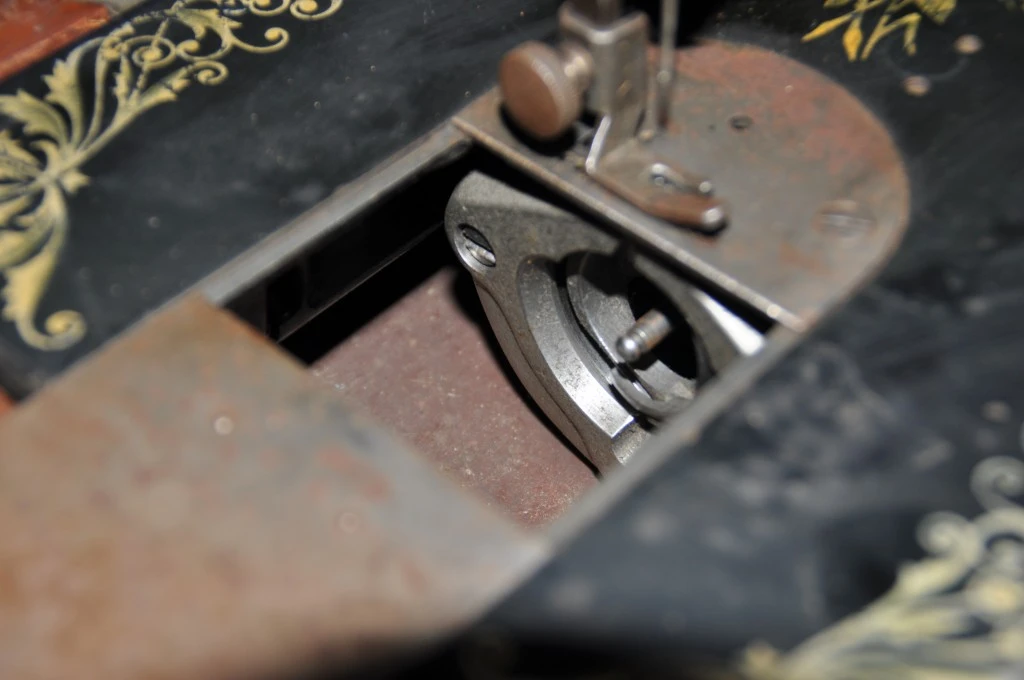
early 20th century Gritzner sewing machine, long shuttle mechanism
It would be too much to enlist all the additional inventions, patents and improvements made in the 2nd half of the 19th century. The chain-stitch machine, working with only one thread, was followed by the shuttle-operated machine, which again was followed by the bobbin system with the rotating hook, as we still use today, though the different systems lived alongside each other until the older ones finally died out. Zig-zag- and decorative seams became possible, the first electrical sewing machine was already issued in 1899.
But still, having a sewing machine was luxury, at least in its early years. It took the sewing machine until around 1900 to become a indispensable part of every household. And the number of handsewn gowns from the second half of the 19th century I see everyday at work show better than any statistic that only because the sewing machine had been invented, it didn’t mean everybody had one.
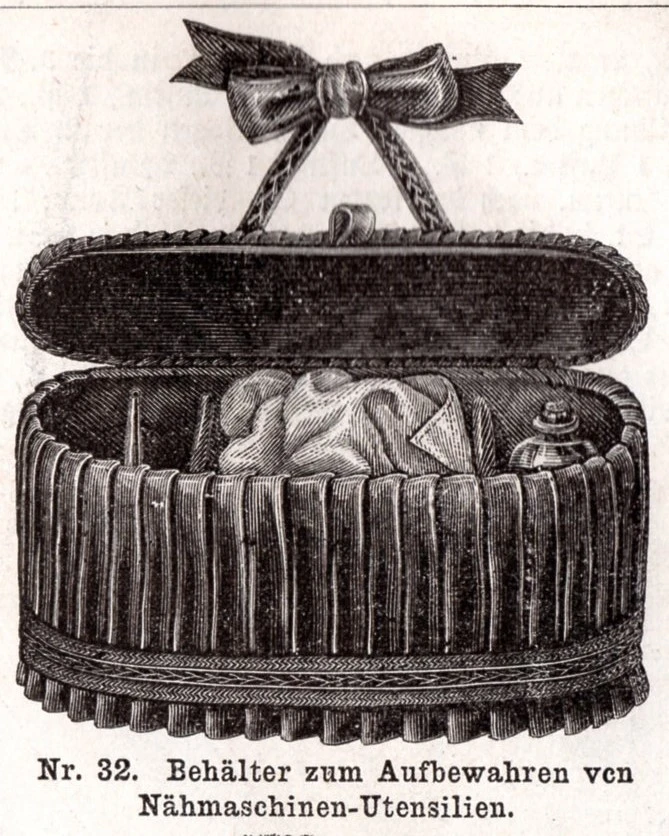
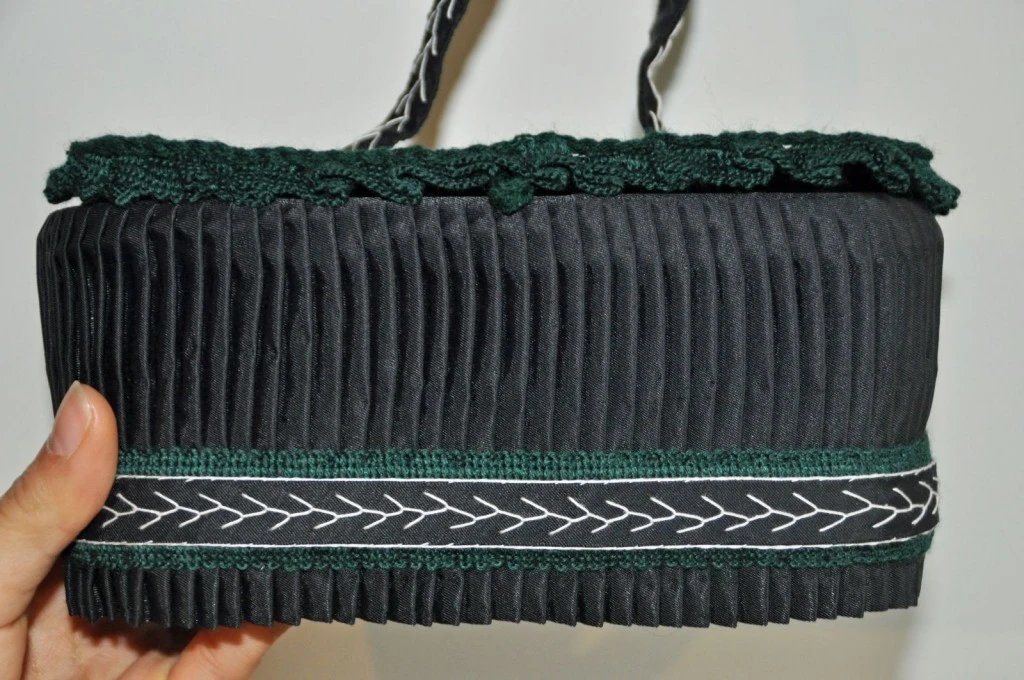
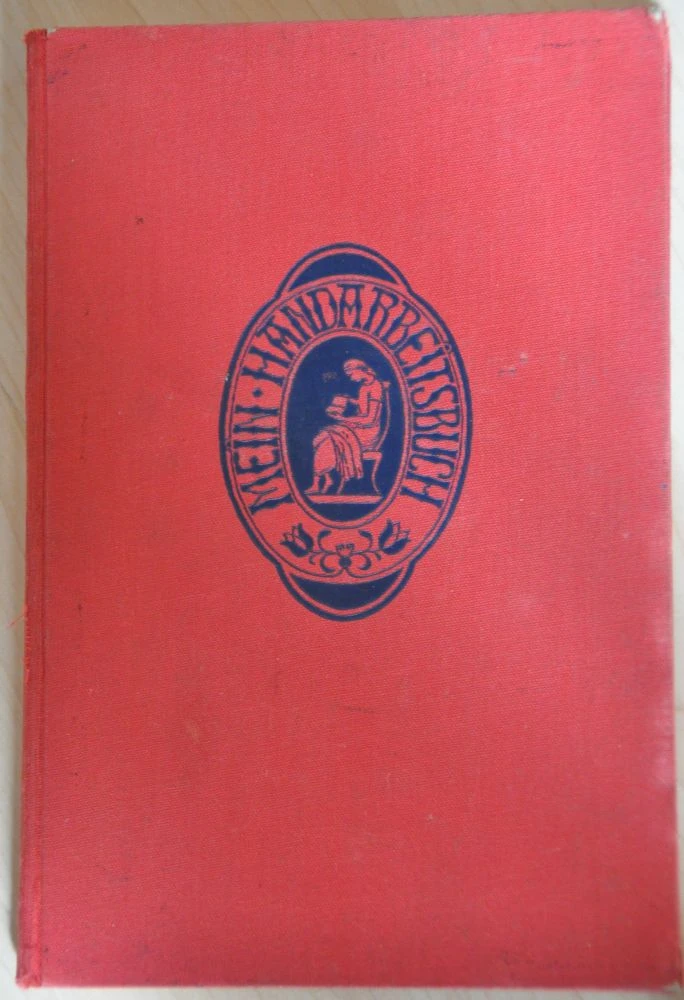
I own the “Der Bazar”-issues from 1872, an illustrated magazine on fashion with tutorials and patterns (unfortunately, the pattern sheets of mine are lost), not unlike sewing magazines today. A february issue featured a nice little box, meant to contain sewing machine supplies and I decided very fast that this was to become my project for the challenge:
Sewing machine supplies in these days meant oil and a cloth in first place. 🙂
The tutorial asks for “Ledertuch” to use as main fabric, which I would translate as leather-cloth. I was very sure that this wasn’t meant to be real leather from the beginning. Though I wasn’t sure what this word exactly described, I went to work, using a very shiny fabric from my stash. The ones who have been following my blog for some time might remember it: I bought very much of it, because I planned to wear a hooped skirt as my prom dress. After having bought the fabric, but before I started cutting I saw that this was a little over-ambitious back then and went for a completely different style, using only very little of the fabric. A few years ago I made part of it into a half-circle skirt, using the wrong side as right side, because I didn’t like this shiny style of the fabric anymore. I still have plenty of it left and this time the shiny-ness of the fabric was just what I had been searching for.
I searched for the meaning of “Ledertuch” shortly afterwards. According to an encyclopedia from 1905, “Ledertuch” describes a linen or cotton fabric, covered with linseed oil and grime, technically comparable to oilcloth, a treatment with patterned barrels gives it the appearance and marking of real leather (source).
Well, I had assumed something like this. But, first, I do not know if it is still possible to buy real oilcloth, what is sold nowadays is plastic-covered fabric, at least in normal houseware shops, no tinted oil anymore. I have to admit, I keep a whole roll of patterned oilcloth from the 1950ies in my closet, but that wouldn’t have made a good match, I suppose.
Secondly, I don’t suppose oil cloth is very nice to work with.
I decided the shiny fabric is as close as I could get to the original one without extensive search and bleeding fingertips (and as I said, I had already begun).
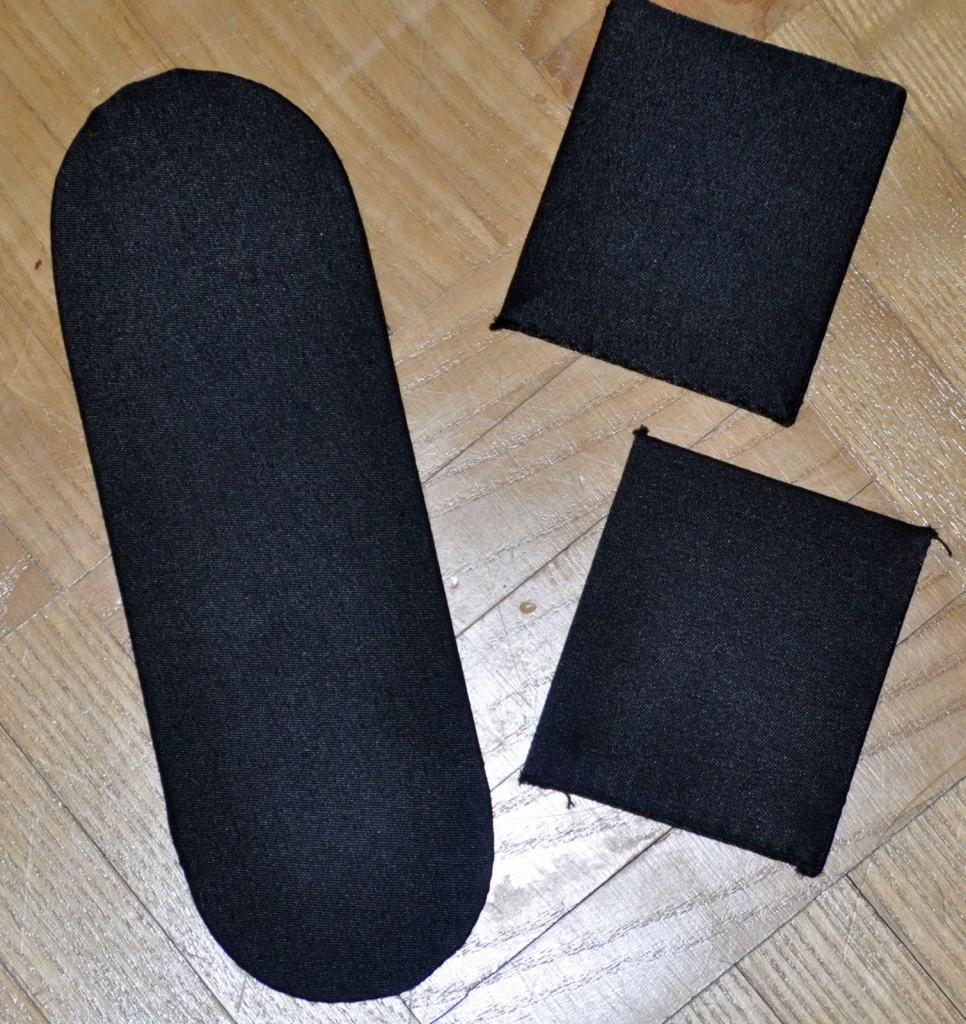
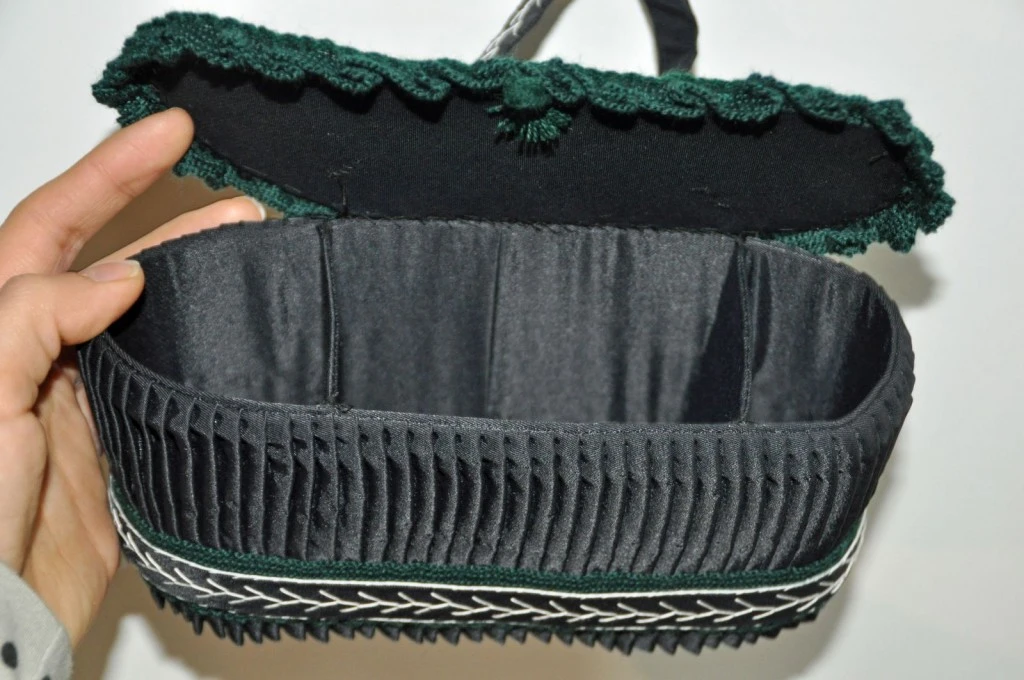
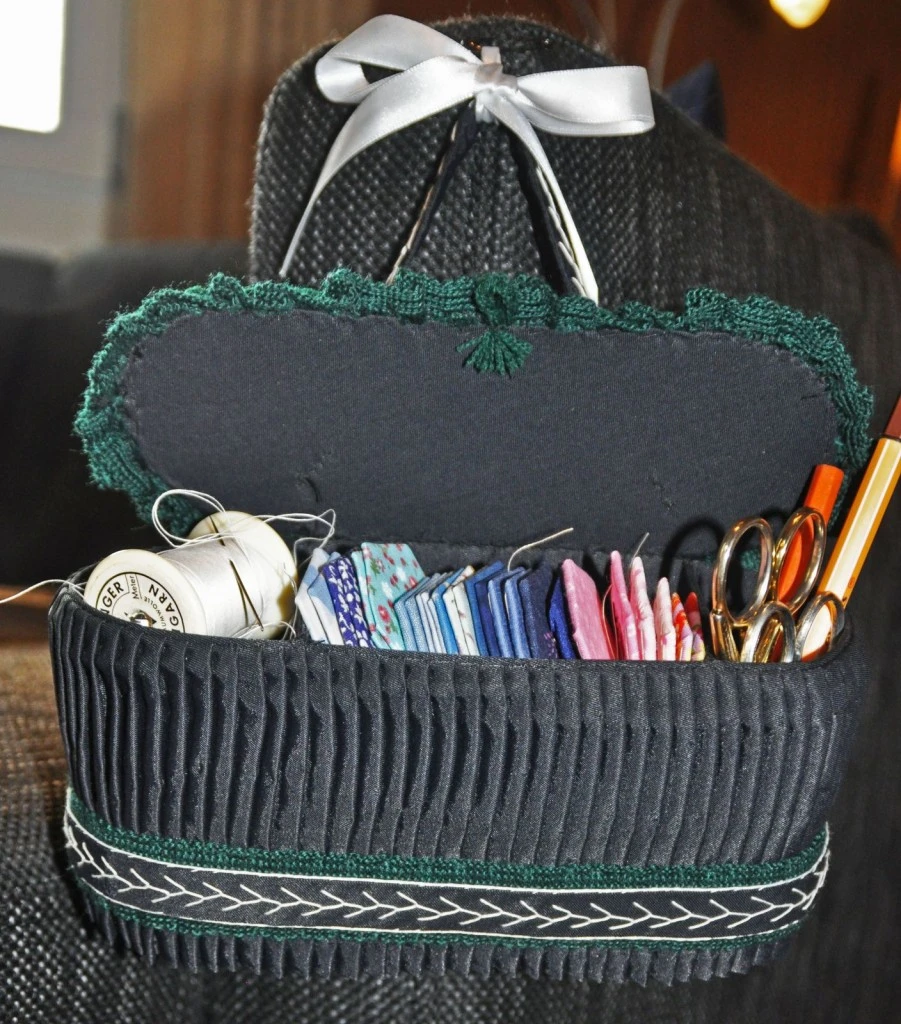
The box consists of two ovals, a large strip and two rectangles, all cut from cardboard and covered with the fabric.
the lid and the rectangles to form the compartments, already covered
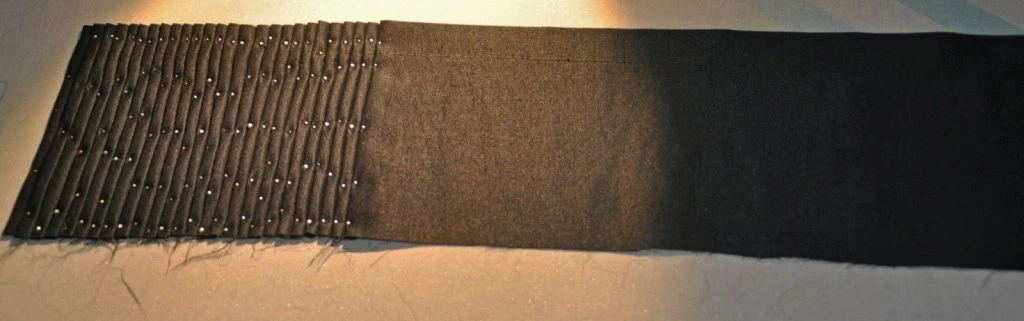
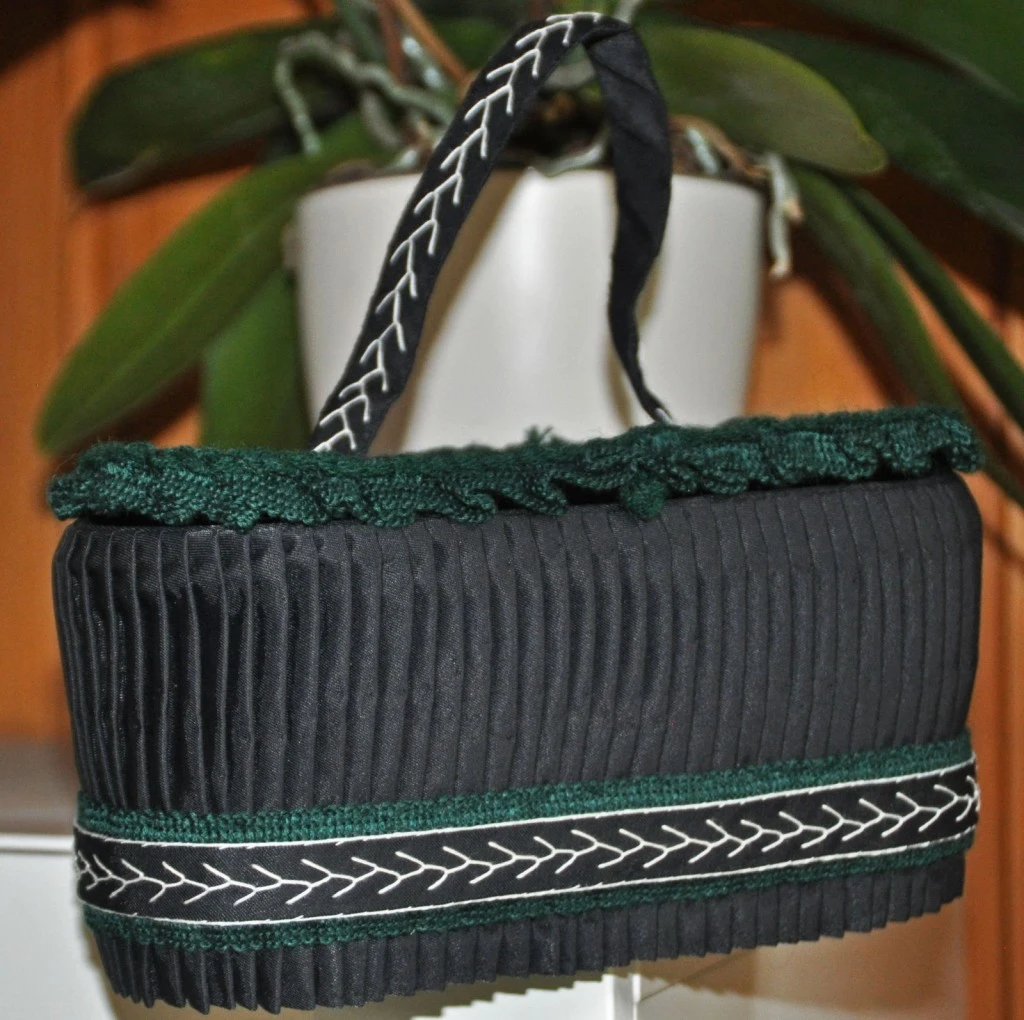
The outside of the box was to be covered in pleats on all sides but the back of the box. So I made a loop from the fabric for the inside and a panel of pleats. The latter one alone took me a couple of hours. I measured the pleats (0,5cm each), pinned them down, ironed them and basted them in four parallel lines (three of them where removed after assembling the box, one is hidden under the embroidery).
pleating in progress
I closed the upper seam, connecting the pleated panel with the lining fabric, with the machine (there are in fact only very few machine sewn seams on the box, only this connective seam and the pleats’ hem). I had cut the fabric for the inside larger than needed, like this I was able to sew it in place stringing it, connecting the seam allowance with the fabric at the bottom of the box.
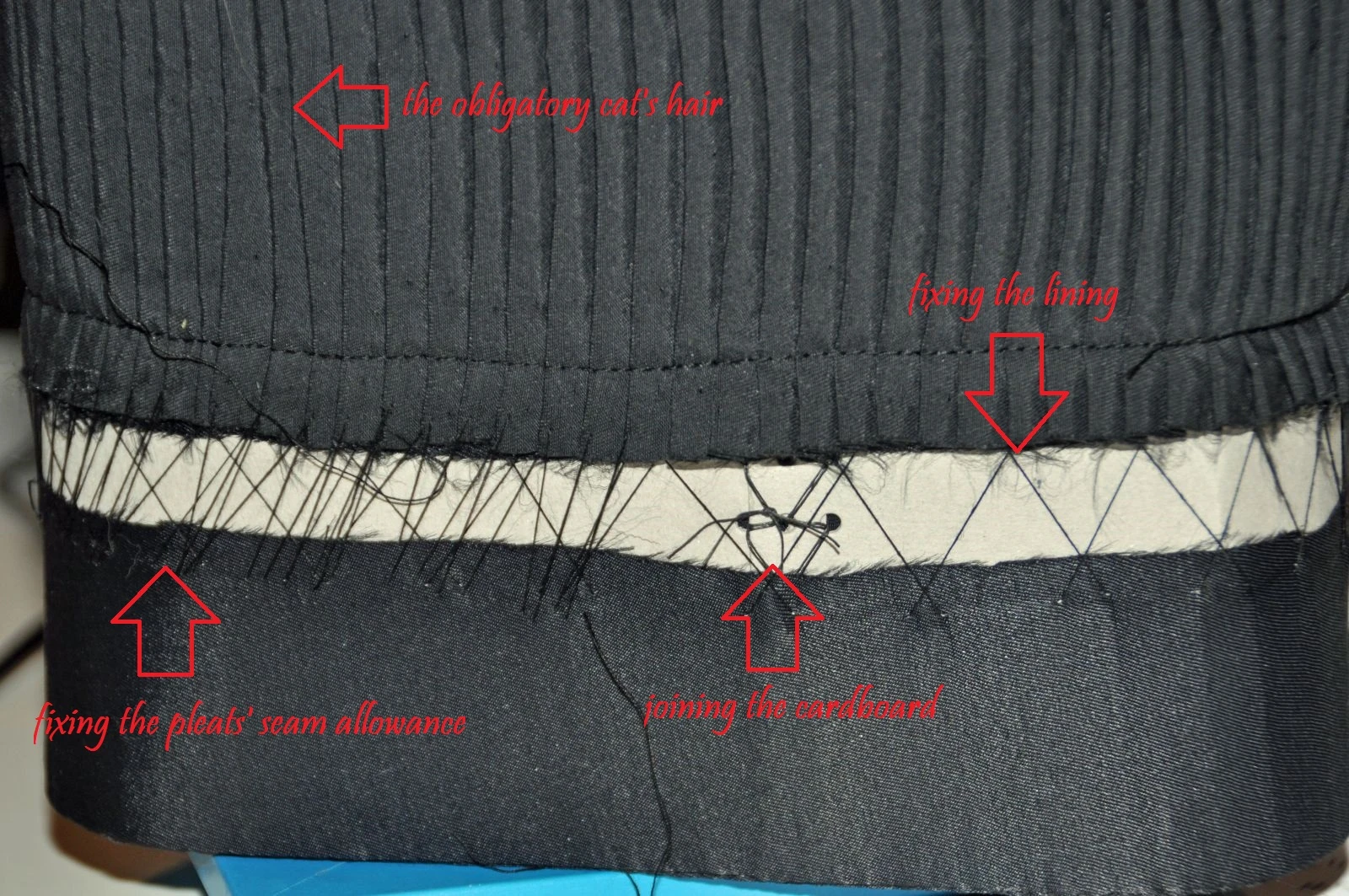
Here you can see the different basting seams hidden below the pleats: the seam I used to form the cardboard strip to a ring (there is no trace of glue on this box), the seam I made to tense the lining fabric and the basting I had to do to keep the pleated seam allowance in place, without it, it shore up and was visible beneath the pleats on the outside.
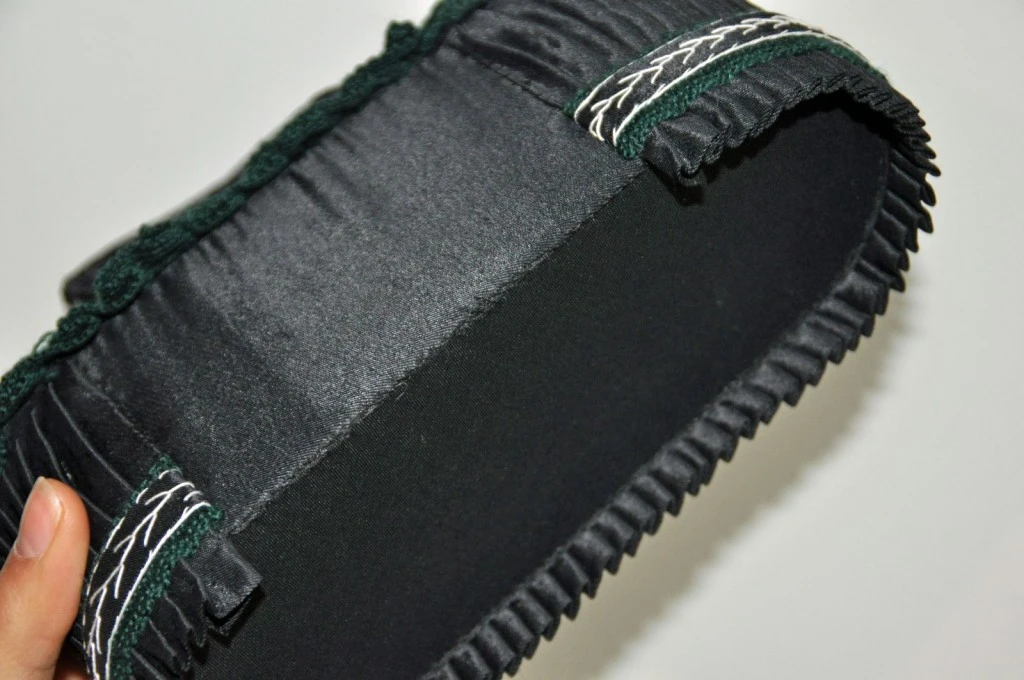
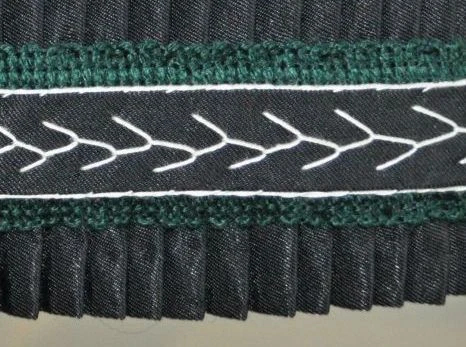
After this step I sewed the bottom oval in place, attached the embroidered band to the pleats (it is in fact an embroidered strip of the fabric sewn onto a green galloon, tutorial asked for a woollen ribbon, that was as close as I was able to get) and connected the pleats to the boxes’ bottom., the gap in the back of the box I filled with a piece of fabric.The pleats are 1,5cm longer than the box itself, so it really has to hang, or it would stand on them.
The embroidery is said to be executed in “point russe” stitch. There are very different definitions online what a point russe has to look like, but the image looked to me like a feather stitch, so I went with this.
To sew the rectangles into the box to form the compartments was hell! I used curved needles, straight needles, nothing helped, it was just awful. And as you see, they aren’t set in properly, no to say orthogonally, but I won’t undo this seams to give it a second try, never!
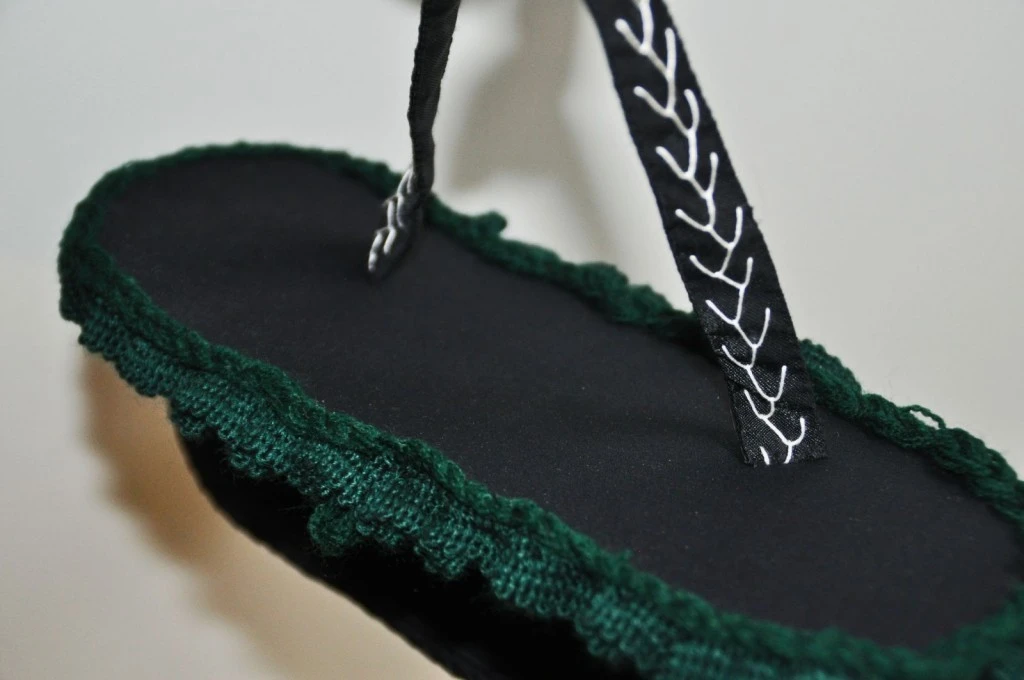
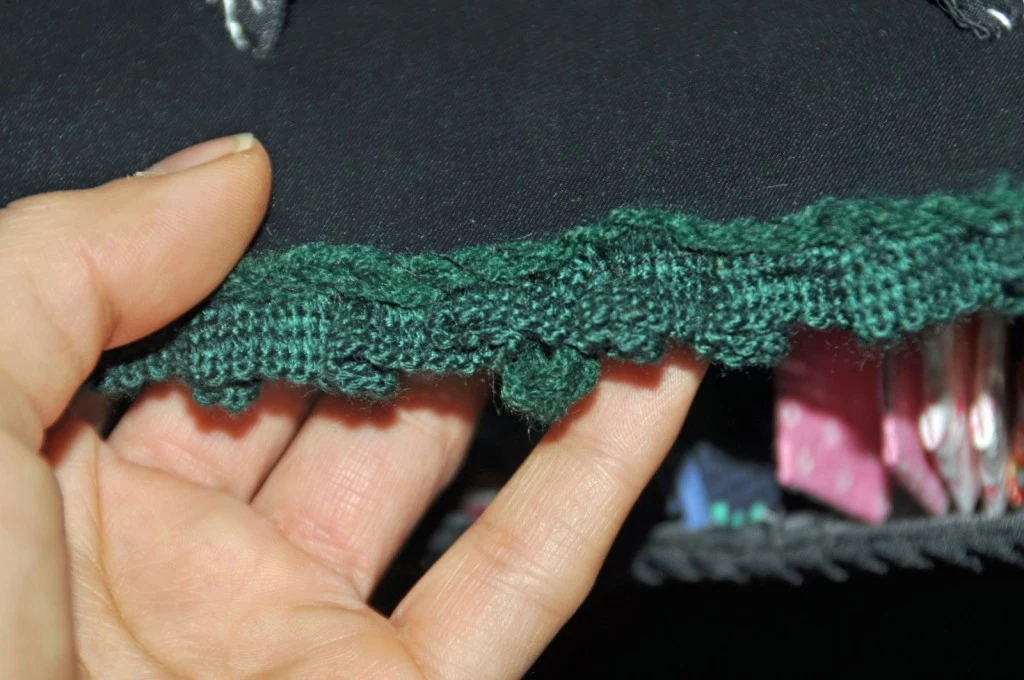
The decoration of the lid was only very briefly described in the tutorial, it only said to apply a ruffle from the same green ribbon as used below the embroidery around the edge. So I cut the rest of the galloon in half and turned it into a a loop. This loop was laid in pleats and attached to the lid, upside down, so that I would be able to fold it over the sewing allowance and give it a clean look on the upper side. Unfortunately the galloon frayed horribly and while I folded and basted it in place, the seam allowance became visible in several spots. I couldn’t think of an alternative to attach the galloon with a better result, so I sought for an emergency solution. Luckily a darning cotton I founnd in my stash matched the colour very well, so I turned the 20m I had of it into a braid and sewed it on top of the fraying sewing allowance.
You can see that colour of the darning cotton is close, but not the same. But this is really barely visible. In the middle of the lid I attached a small loop below the ruffle, made of a small rest of the braid (the tutorial suggested ribbon or fabric, but because I had no use for the rest of the braid, I chose this).
The colours, black fabric, green ribbon and white embroidery, where given in the tutorial. I stuck to them but for some exceptions: The rectangles inside the box as well as the lid were meant to be attached with white thread. I decided this to be a very stupid idea, at least for me, because that wouldn’t only mean that the compartment themselves look messy, but the seams holding them as well, So I went to work with black thread. And the bow on the handle was to be made from black silk ribbon, but because I still had some white satin ribbon in my stash, I used this.
The Challenge: #2 Innovation
Fabric: black shiny fabric, presumably polyester
Pattern: tutorial without a pattern found in “Der Bazar. Illustrirte Damen=Zeitung, Nr. 7, 12. Februar 1872”
Year: 1872
Notions: cardboard, twine (to sew the cardboard), polyester thread (machine seams), cotton thread (hand sewn seams), pseudo-woollen galloon (normally used to edge wool-fabric), white thread (maybe mercerized cotton, used as embroidery thread), 20m darning cotton, satin ribbon.
How historically accurate is it? Very, but for the materials used. I followed the pattern very close and tried to use only techniques available back then. I am pretty sure the green galloon is not made from real wool and I certainly know the fabric and ribbon to be artificial fibres. So the shiny-ness of the material is not caused by linseed oil, as would have been historically accurate, but by the fabric itself, so I would argue the overall appearance is at least comparable to the original.
Hours to complete: very many. This is by far the most time-consuming thing I ever made, considering the time it took and its final size. 10-15 hours I suppose.
First worn: in use since 25th January 2014
Total cost: I can’t remember how much the fabric was, something between 6 and 7€/m, I used only very little of it, so maybe 2-3€ for the fabric, but it has been in my stock for years. Cardboard was left from some calender or wrapping, can’t remember, but it was definitely for free as material. Embroidery thread was old, found it in my stock, can’t remember from where I got it, same applies to the darning cotton. Only thing I had to buy for this project was the green galloon, I bought 1m and paid something like 2 CHF.
If you include the pattern, the project was pretty expensive. For the complete issues of the year 1872 (48 issues, 392 pages total) I paid 200€ a few years ago, which is actually too much, considering its condition and its age. It is available for less, but I didn’t know back then (it was a time before iphones where widely spread and I stood at this antique fair booth having to decide very quickly). But this is only one pattern from many I can make from this source 🙂
what bow? This bow! And here you can see that I made it into a home for my hexagon quilt supplies:
As a résumé I must say, this tutorial wasn’t logical at all. The loop suggests to be used to open the box, but the lid can’t be closed, because the pleats force you to hang it, using the handle on the lid, opening it. Additionally the lid should have been made slightly larger that the bottom oval. The pleats seem to enlarge the box visually, so the lid appears to be too small. Additionally, the cardboard bents a little to the outside and intensifies the effect.
But I am content with the result and working with an almost 140 year old tutorial has been real fun.
See you soon,
ette
all information on the technical history and the expansion of sewing machines derives from: Peter Wilhelm: Alte Nähmaschinen. Namen. Daten. Fakten, Duderstadt 2002
I already mentioned the small antiques Shop “das Puppenhaus” in my hometown quite a few times.
In front of the actual shop the owner installed a shelf with modern, less valuable or broken things. Everything in this shelf is 1€, if you fill one of the plastic bags next to the shelf, it is 3€ total. Of course, what you find there is rarely more than rummage, but if you search for chipped plates, cheesy 70ies novels and other stuff, this is the place to go.
Obviously, you only need to be interested in a very few things to start thinking “mh, maybe I should fill a bag”. What I usually filled the gaps with was clothing, you can always use it as a fabric resource. I found a Korn-Bandshirt, a skirt that now forms part of my quilt and a hilarious 1970ies (?) nightgown.
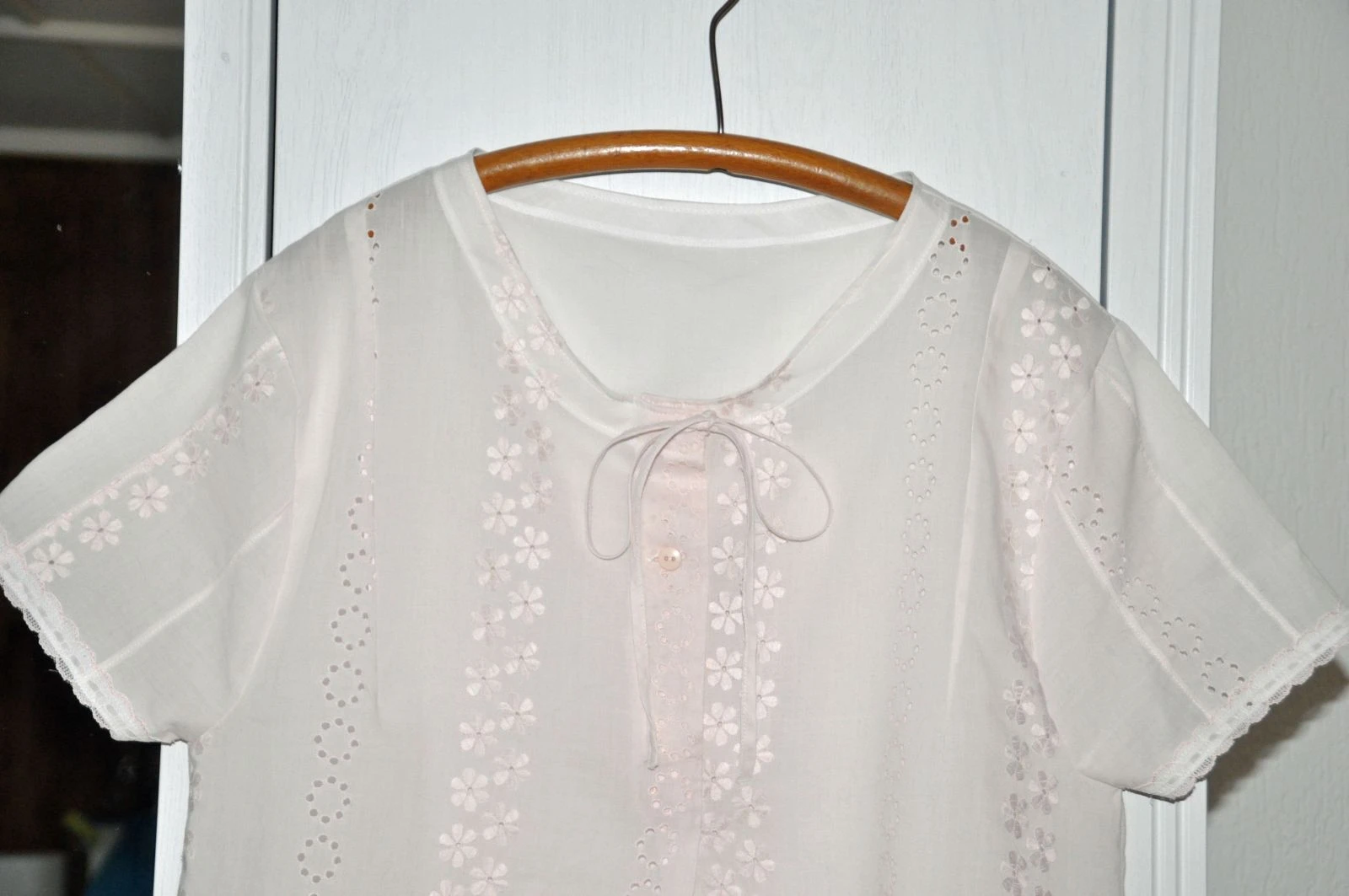
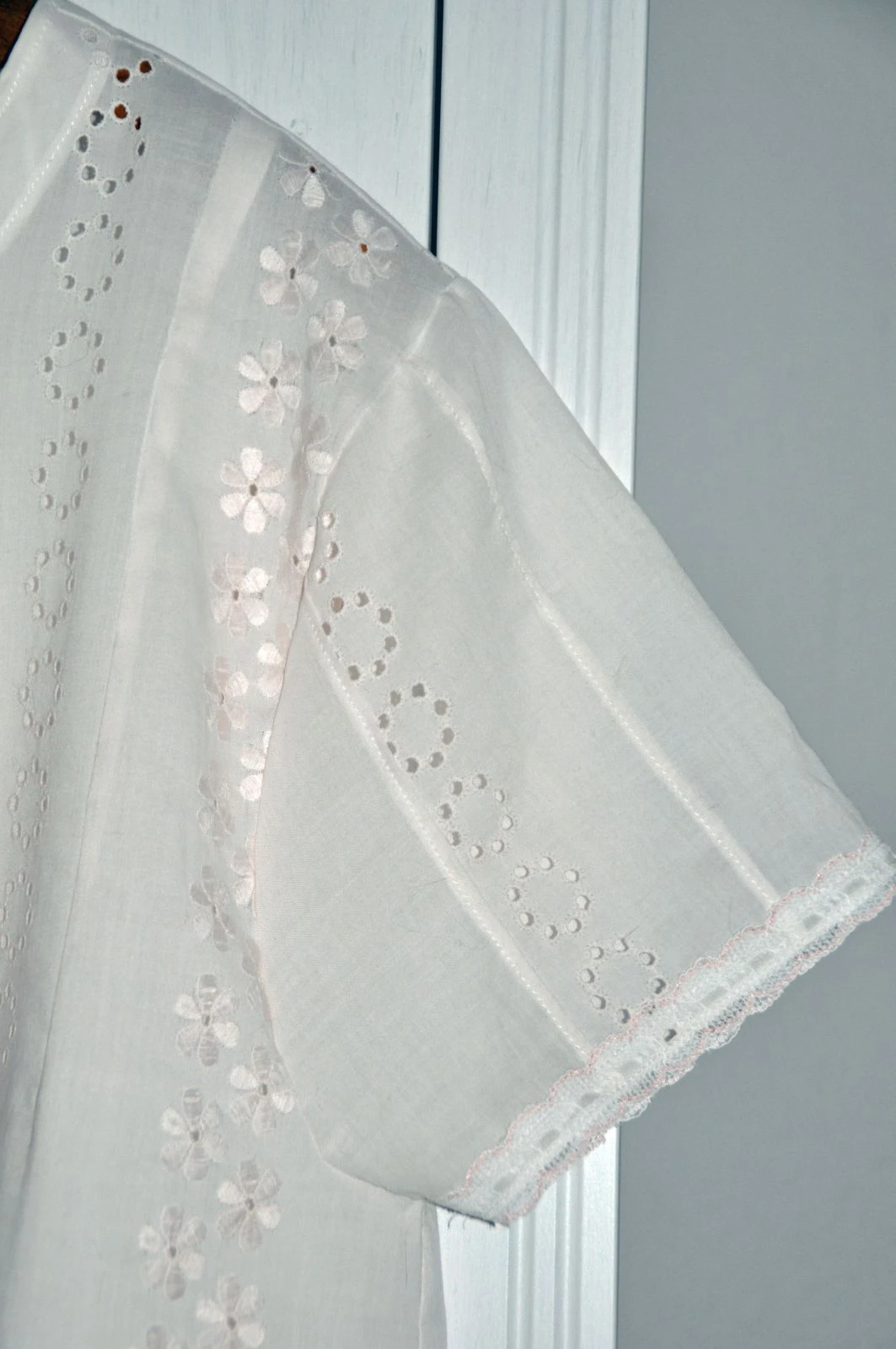
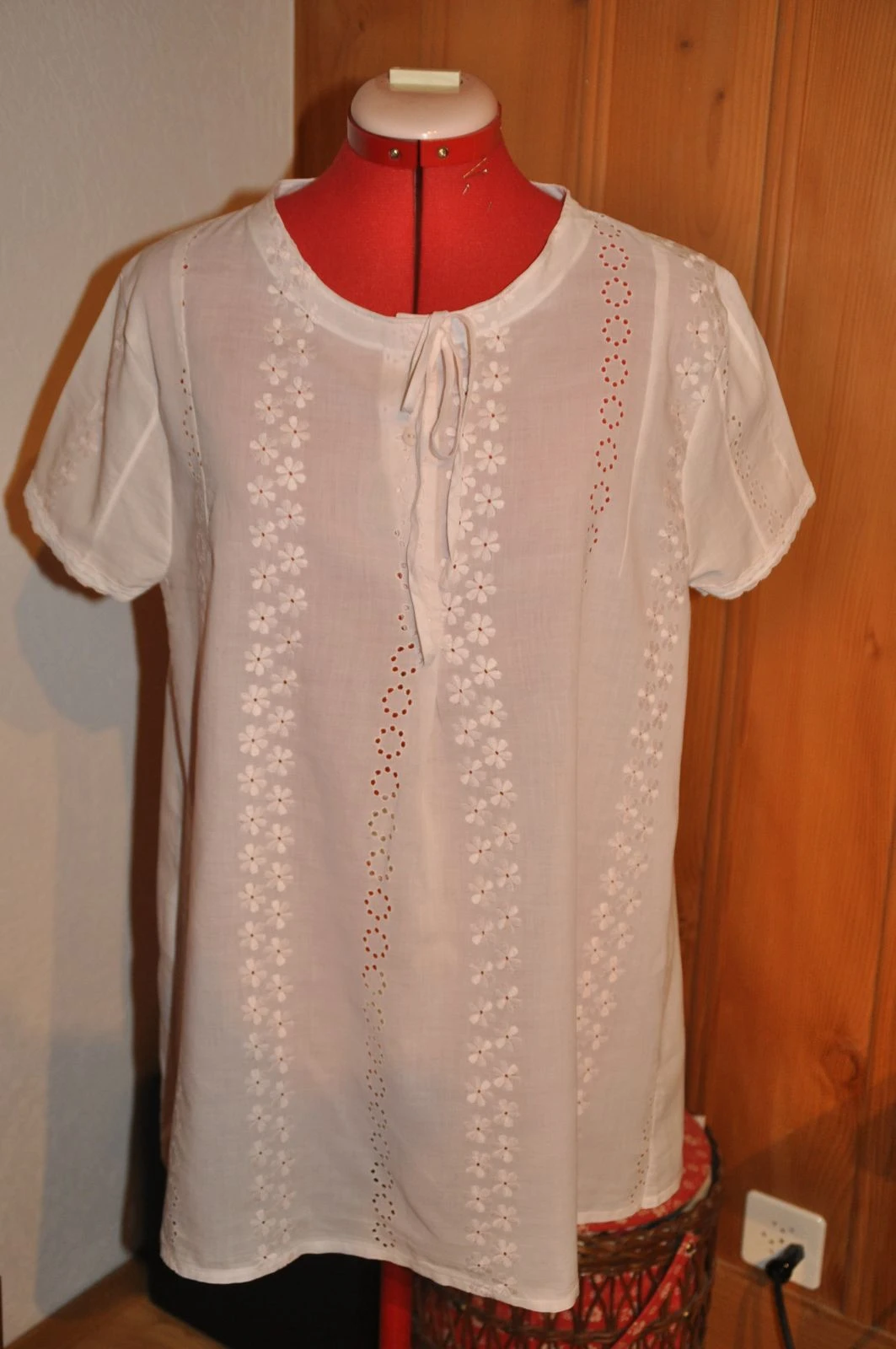
This colour is very difficult to describe and even more difficult to photograph. It lies somewhere between “very-light-shade-of-pink” and “I-forgot-a-red-sock-in-the-white-laundry”. As you see, it is very wide, label says size 50 (though sizing has changed in the last 40 years, 50 must have been pretty large already back then). The fabric is a very light, sheer cotton with machine embroidery in the front, the back is plain.
Now, this dreadfullness has been in my stock for a rather long time, maybe around 6 years. I always planned to turn it into something wearable, adjust it to my size, make something completely different out of it, I had plenty of ideas. But then, everytime I looked at it I shook my head and put it back.
Finally I faced the monster.
First I cut away all the seams, but kept the hem and the buttonband.
The sleeves’ fabric was very worn and threadbare, I was close to throwing it away (but I didn’t, as you’ll see later). The front and back were each made from one large sheet of fabric without any darts or similar (but for the buttonband). Because the original cut had raglan sleeves, the fabric was much narrower on the top end than at the hem.
I chose a pattern for a nightgown I found in a 1937 schoolbook I bought in april 2013.
I copied the upper parts of the front and back and placed them onto my fabric as high as possible (remember, the raglan cut). The resulting pieces I sewed together, using french seams. The sleeveless gown was much shorter than I had hoped for, but at least it was already hemmed.
What was left of the fabric were the bits cut away to form the armholes in the front, a larger piece from the back and the sleeves. I cut away all the fabric that was too worn to be used, turning the rest into more or less straight stripes. These stripes, eight in total, I patched together to two rectagles of four, having one embroidered stripe in each of it. I formed kind of a halfcircle to turn them into sleeves. The hem I decorated with a polyester lace, that is in no way less horrible than the original nightgown had been. I set the sleeves in and finished the neckline with white bias binding on the inside (it is a little stiff, I hope it gets better after having been washed a couple of times). I re-attached the ribbon (not before re-sewing it, the thread was more brittle than the fabric itself, and yes, it is off-centre, don’t tell me 😉 ) and found a button in the exact same hilarious pale shade of pink (maybe it even came from this nightgown, I can’t remember if the buttons were already missing or if I took them off).
Well yes, and now it looks like a late 1950ies babydoll-dress, though I made no alterations to the pattern at all. Well, except for the length, the sleeves and the already given buttonband and ribbon.
The Challenge: #1 Make do & Mend
Fabric: pale pink cotton with machine embroidery
Pattern: basic nightgown pattern from a schoolbook
How historically accurate is it? well, the pattern is an original one, the fabric is imaginable in the 1930ies. But the machine embroidery, the length and the overall impression it gives aren’t suitable for this decade at all, so let’s say 20-30%
Hours to complete: 4
First worn: january 3, 2014
Total cost: maybe less than 1€ (3m bias binding cost 0,80€, I used less than 1m, lace surely was part of a convolute bought somewhere at a flea market, button as well. Costs for the nightgown I already explained above)
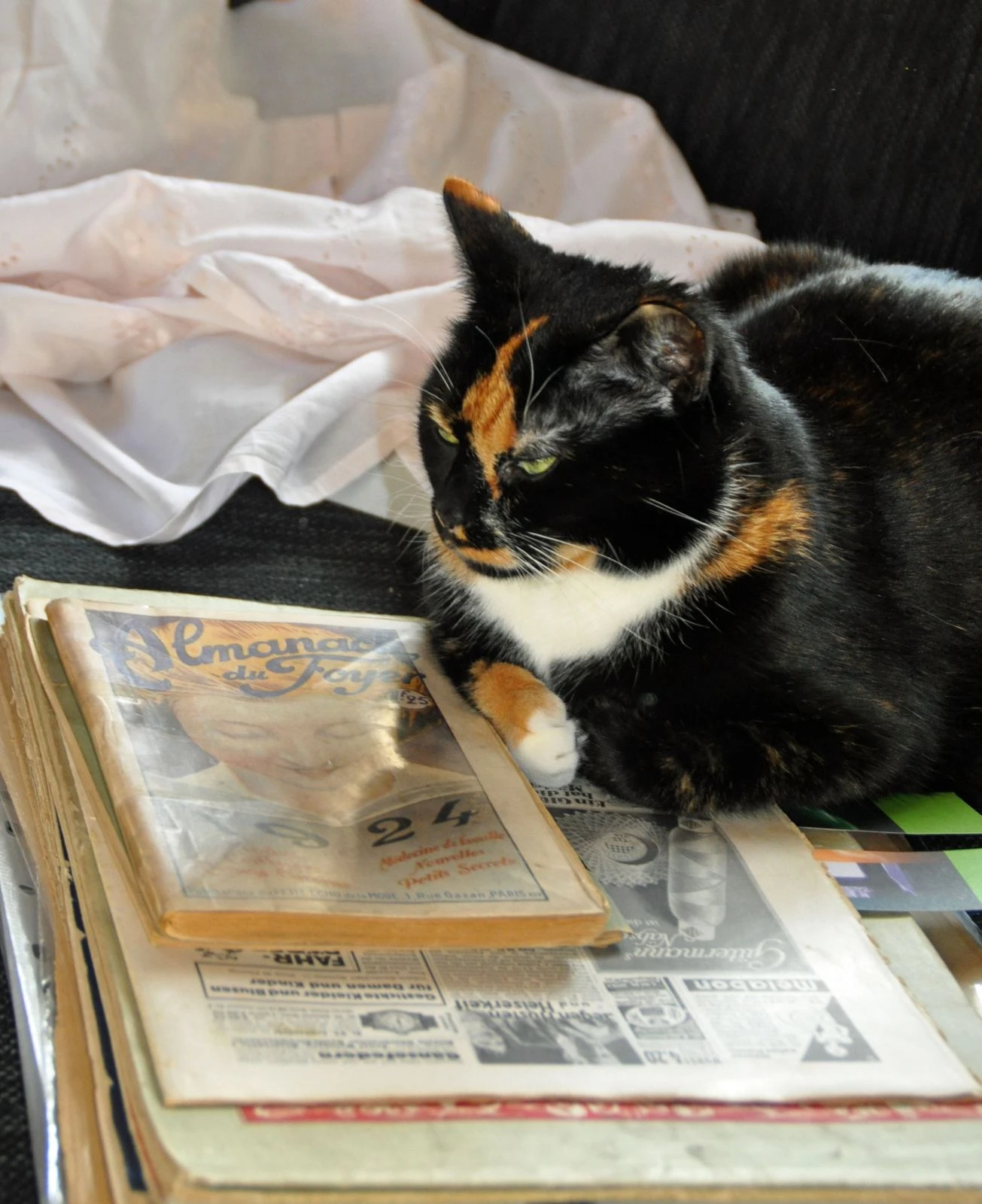
And a funny work-in-progress-photo featuring the lady of the house. I had searched for inspiration for the next challenge when I didn’t work on the nightgown (lying in the background), that’s why the magazines still lay on the sofa. Seems as if they have their own bobyguard now. She even stares like an aged librarian.
As each month, SwinginCat is hosting “Getrödelt, gefunden, gefreut” at her blog “Beswingtes Allerlei”. Thank you so much for this series!
I haven’t been to one single flea market in november. First because I was pretty busy, second because it is cold (ok, that doesn’t keep me from going normally) and third because I was stunned discovering what loads of stuff I have while moving. Buying antique patterns on sundays and working the rest of the week is fine, but this doesn’t give you any chance to work with the things you purchased. So I decided to reduce my fleamarket-sundays and increase my sewing-sundays, let’s see how long I will be able to stick to it. 🙂
I’m not sure if I mentioned it, in november I spent a whole week in Gotha, a city in Thüringen/Germany. We visited Schloss Friedenstein, a rather unimpressive baroque castle from the outside, but with an amazing interiour and a lovely textile collection in storage, which we (some fellow art historians and students along with our professor) were able to see and examine.
And there I found, what is to become this month’s find:
maybe the trained eye is already able to discern some characteristic features?
On one of the evenings I went to an antique book shop, as I always do when finding the time to do so. Having dicovered the shelf with handcrafting and decorative arts I was first a little disappointed, because nothing was really interesting. But directly next to the shelf I found a whole stack of pattern magazines, some in great, other in deplorable condition.
The seller refused to say what he asked for one magazine, but forced me to give him a prize for the whole lot. I, knowing what those magazines can cost today and knowing that I wasn’t willing to spend this amount of money that one evening, declined to make an offer. So he did, unfortunately one that I wasn’t able to resist.
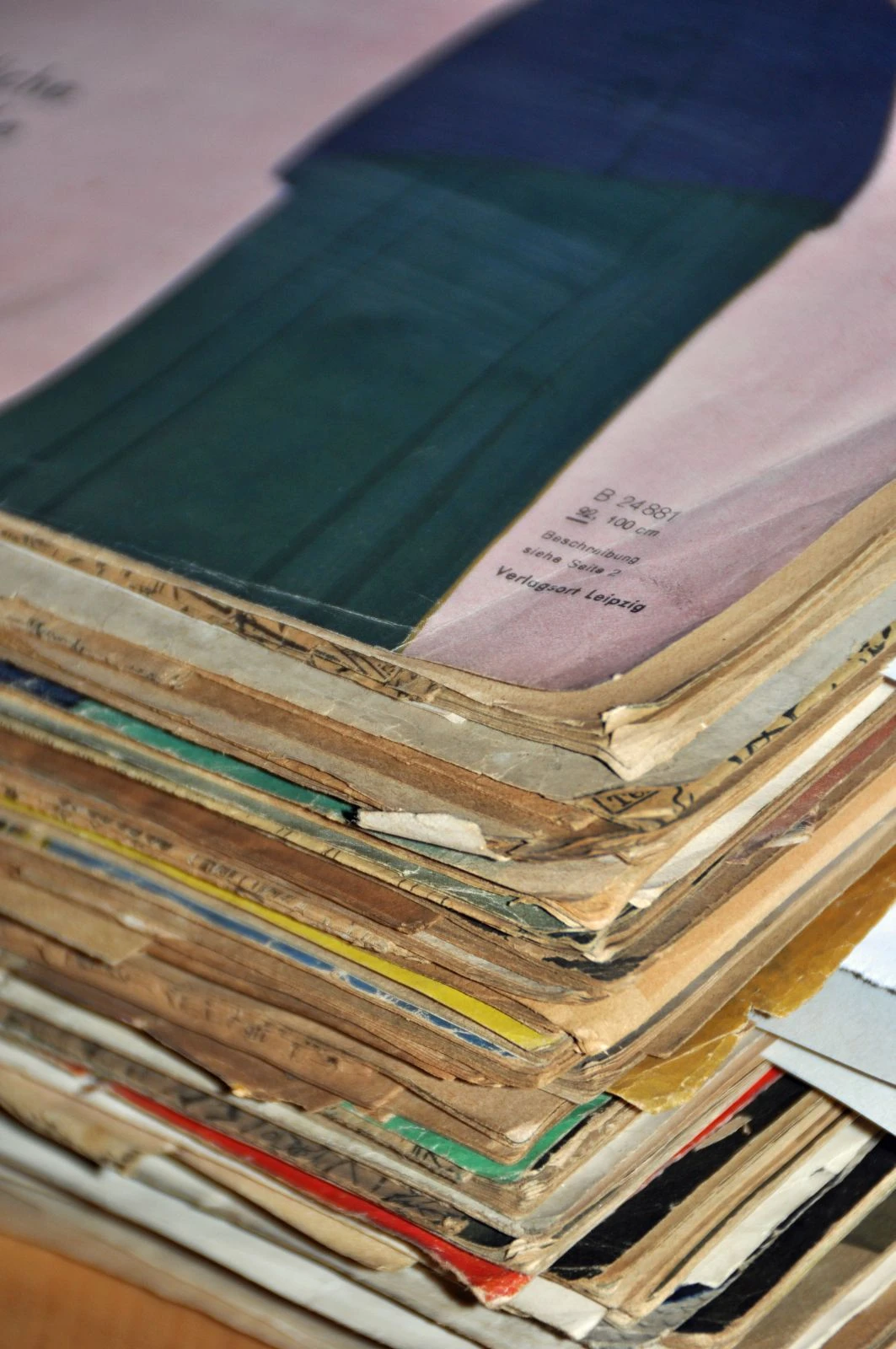
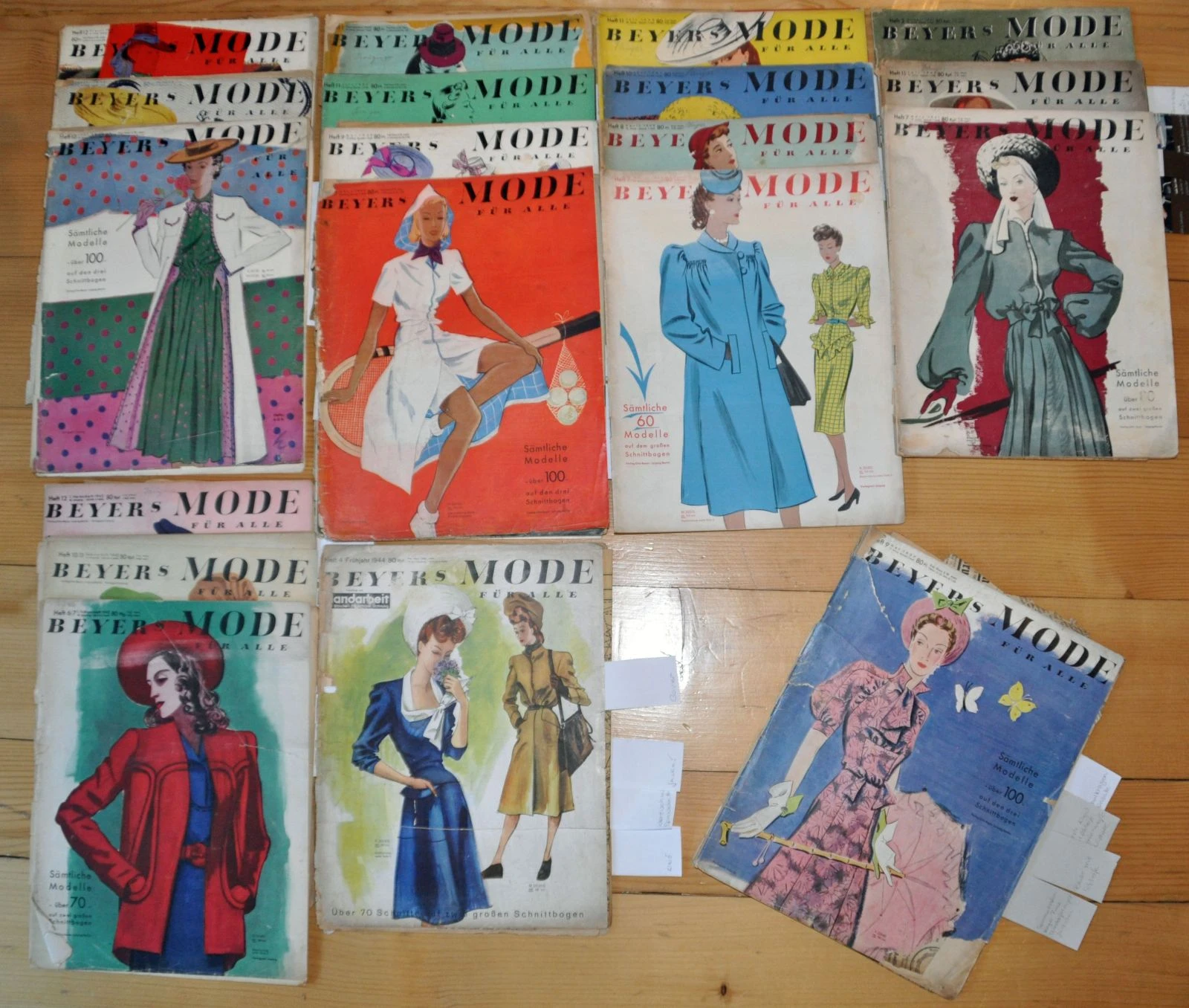
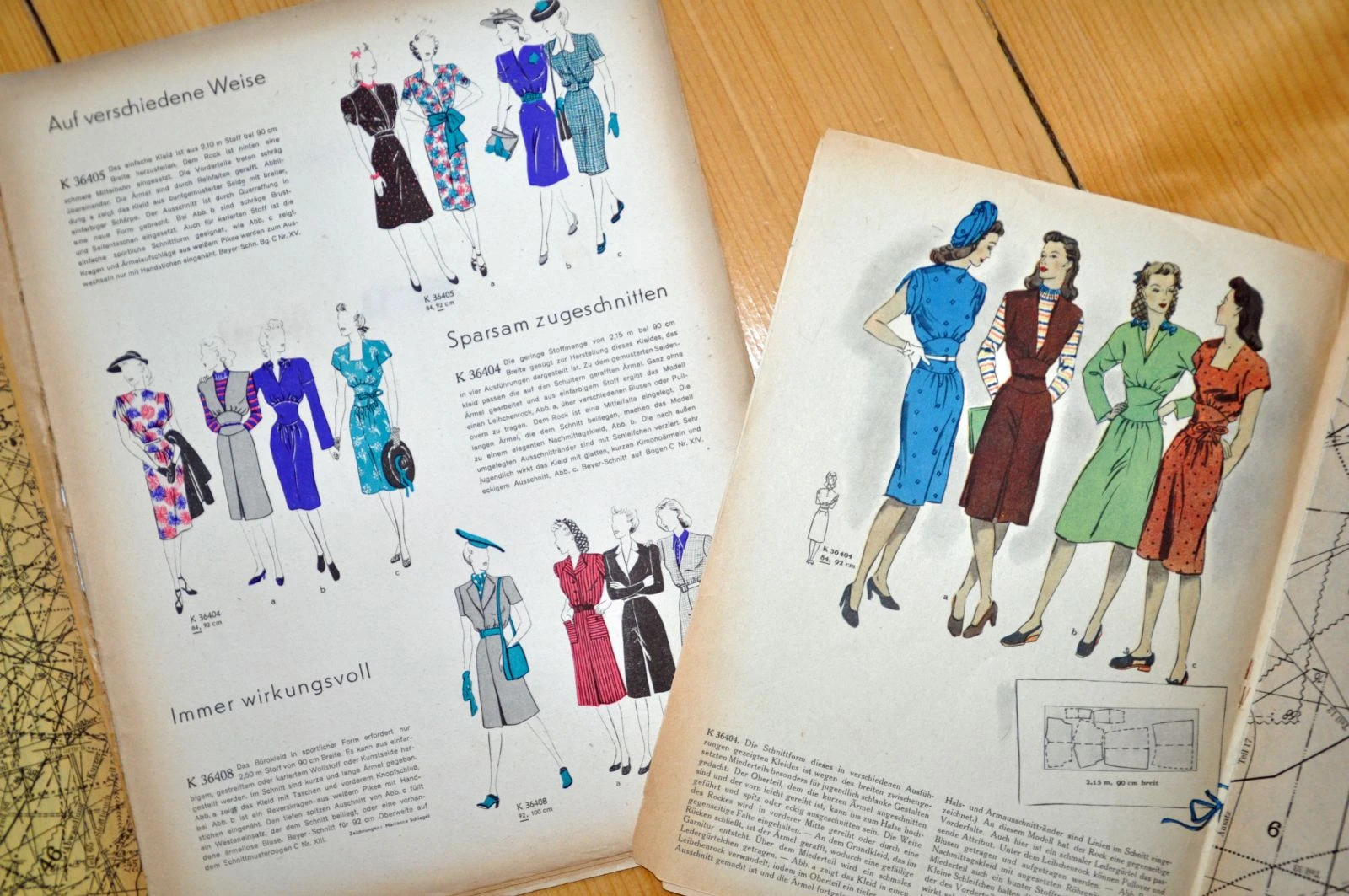
The lot consists of 19 Beyer pattern magazines, dating mostly from 1938 to 1942, there is each from 1937 and 1944. Instructions and patterns are almost completely included (only one magazine misses one of the pattern sheets).
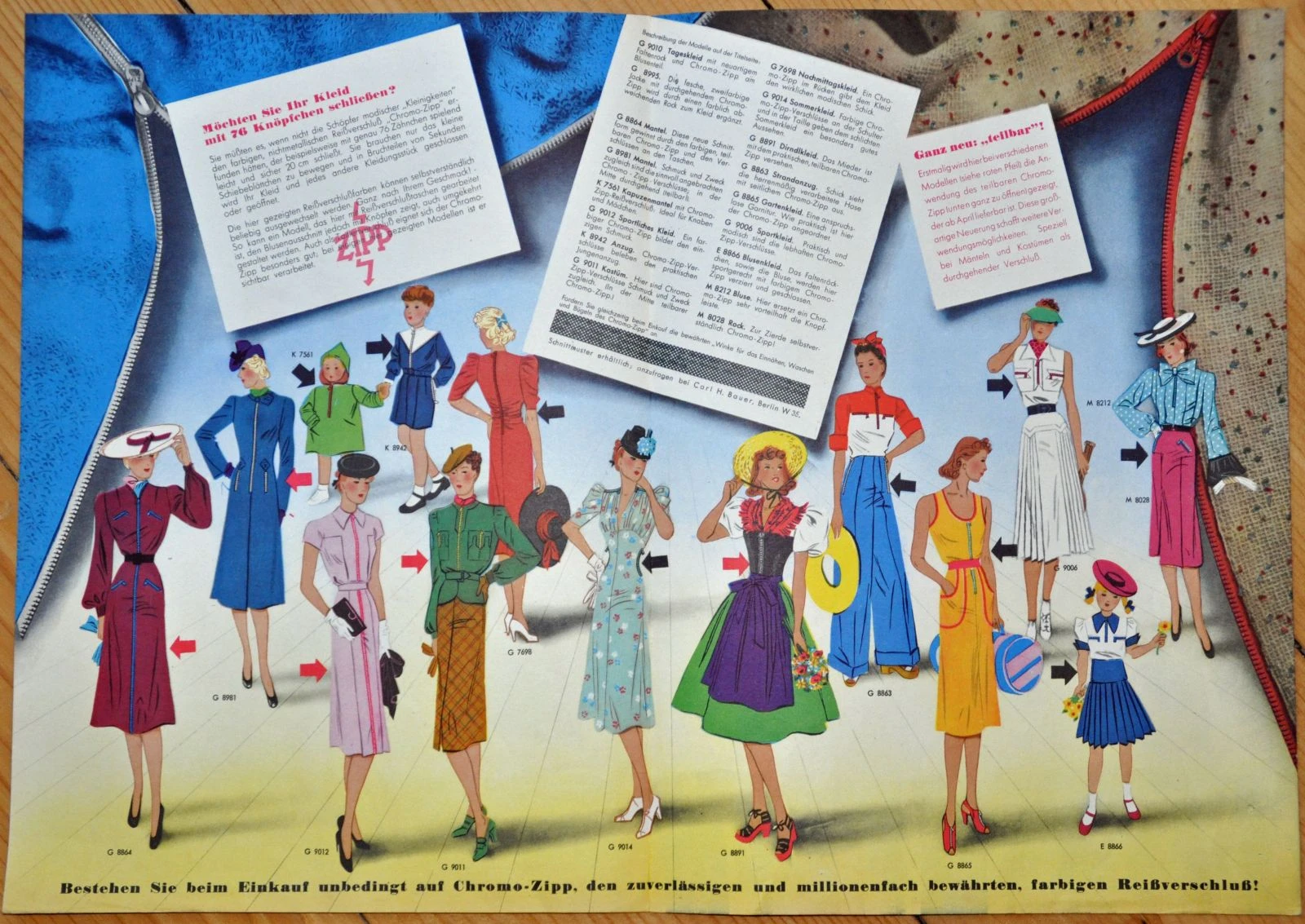
Included in the stack were some other things as well: A 1939 zipper promotion (all those little arrows point to where they used the zippers on the garments)…
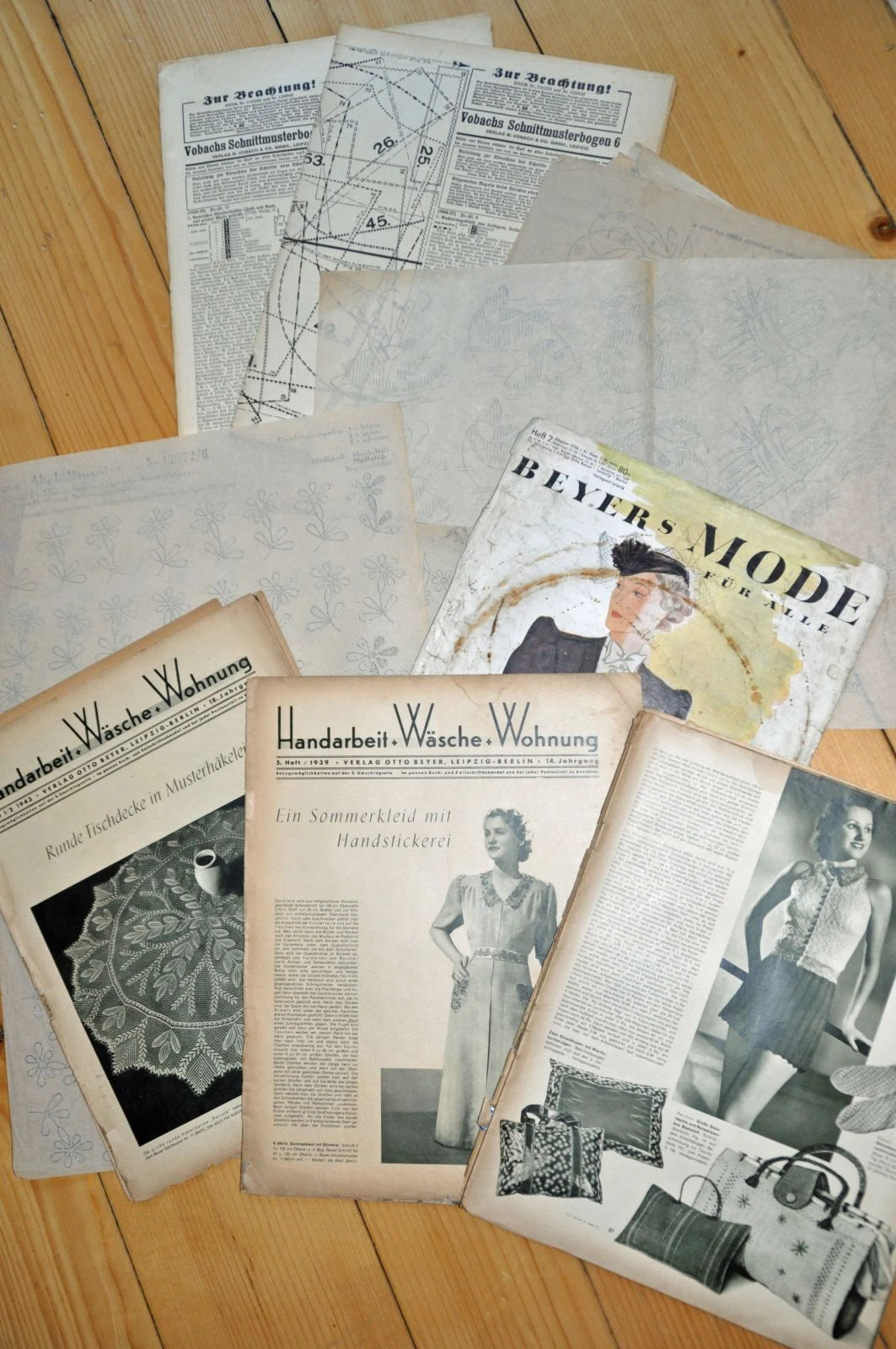
…some fragments of other handcrafting magazines (and a cover of another Beyer issue), two pattern sheets of now lost Vobach-magazines and lots of so-called “Abplättmuster”. These are patterns, mostly for embroidery, printed in a special blue ink, that can be ironed onto fabric. So you don’t need to transfer the pattern by drawing, but simply by ironing. Some of those patterns are Vobach ones as well, but the majority belongs to the Beyer-magazines. Because those patterns had to be ordered mostly seperately, they are not dated, but only marked with a number. I am pretty sure that those numbers will match many of the ones given in the magazines.
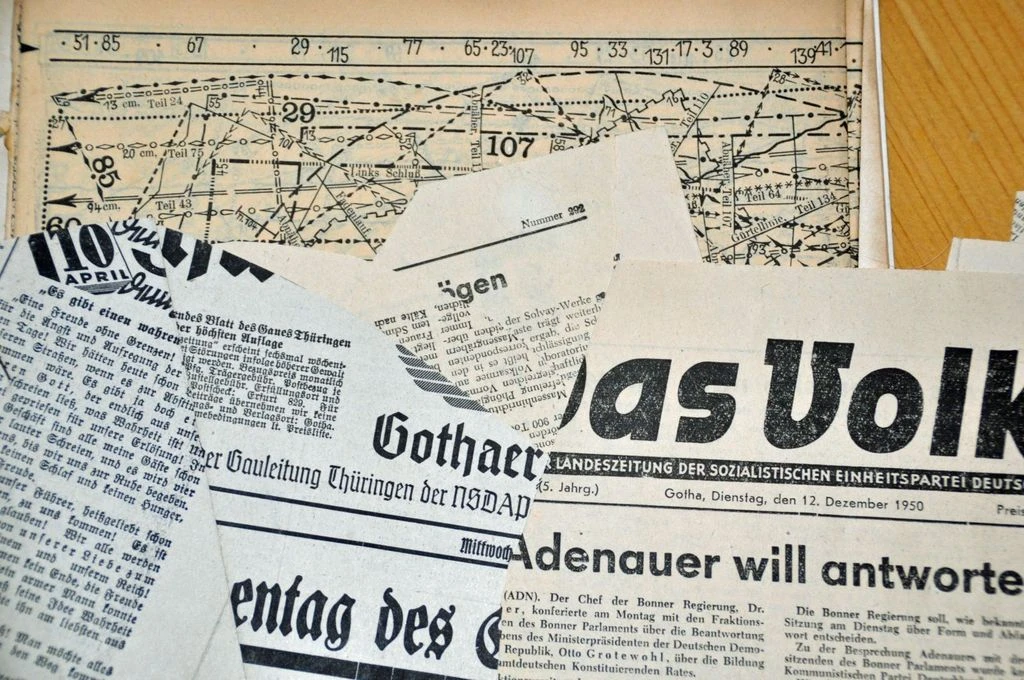
On the one hand I think we are all aware of the fact, that those magazines are a product of their time. On the other hand they had a life afterwards and they still have. This becomes very obvious when looking at the patterns that have been used. They where traced onto old newspapers, sometimes years after publishing (as today, I still use my 1990ies patterns). In the 1937 issue I found a 3rd Reich newspaper from 1939 right next to a socialist one from 1950. We don’t know if the owner changed between those two dates or if it was the same person, but it is quite interesting that the older pattern wasn’t thrown away as well as those are both mute witnesses of two very different totalitarian regimes, used in a completely unpolitical way after they had fulfilled their original purpose.
And something a little more funny to end: I don’t know if you, but I happen to stumble across patterns that I own printed in a Burda-magazine and that are also available as a single pattern, published afterwards. While looking at all those patterns in the Beyer-magazines, every now and then I had the feeling, that I had already seen that particular pattern elsewhere. First I thought “well, it is similar to another one” or “maybe you saw it earlier when flipping through the pages”. But then I found one pattern of that I was very sure that I had already seen it, even made it.
Does somebody remember that dress I wrote about in august 2012?
I made it using a 1940ies pattern-booklet I had bought in Dresden in 2011.
Yes, and it seems as if Beyer didn’t do different than Burda does today, that is republishing patterns:
I wish you all a very beautiful 1st advent sunday!
Joanna of Dividing Vintage Moments hosts a lovely giveaway with really beautiful things to win.
All she asks for is writing a post about my 10 personal vintage inspirations. Where do I draw my inspiration for vintage clothing or living from.
So, dear Joanna, this is my list (and in case you wonder: I have none of the accounts asked to comment on your posts, so I can’t write into the comment form, but be sure, I love reading your blog!)
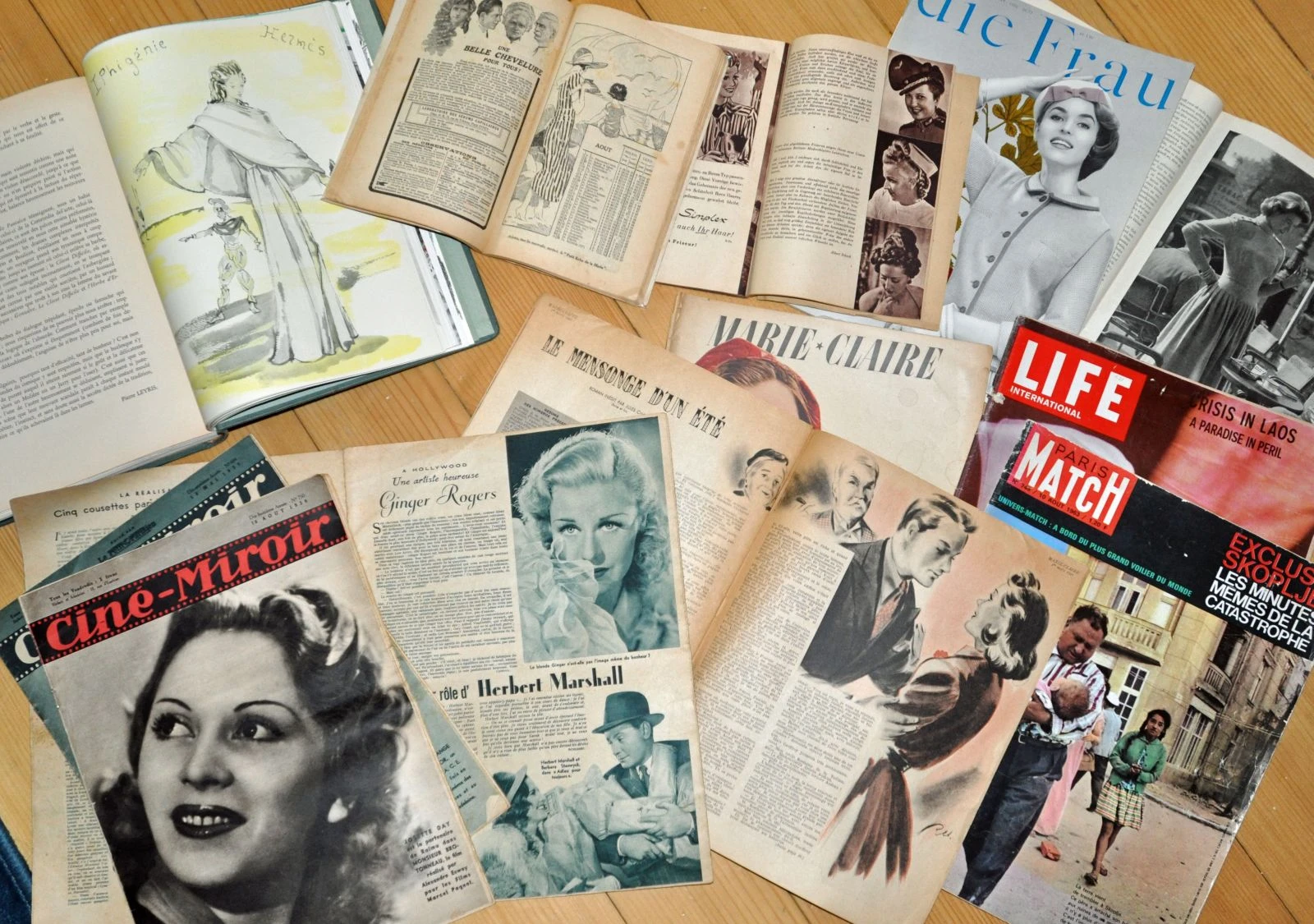
1. magazines
I love flipping through magazines of the time. Not especially fashion magazines, what I love is to capture the feeling of a certain period, so I love to read good old gossip or an article on education or budgeting as well.
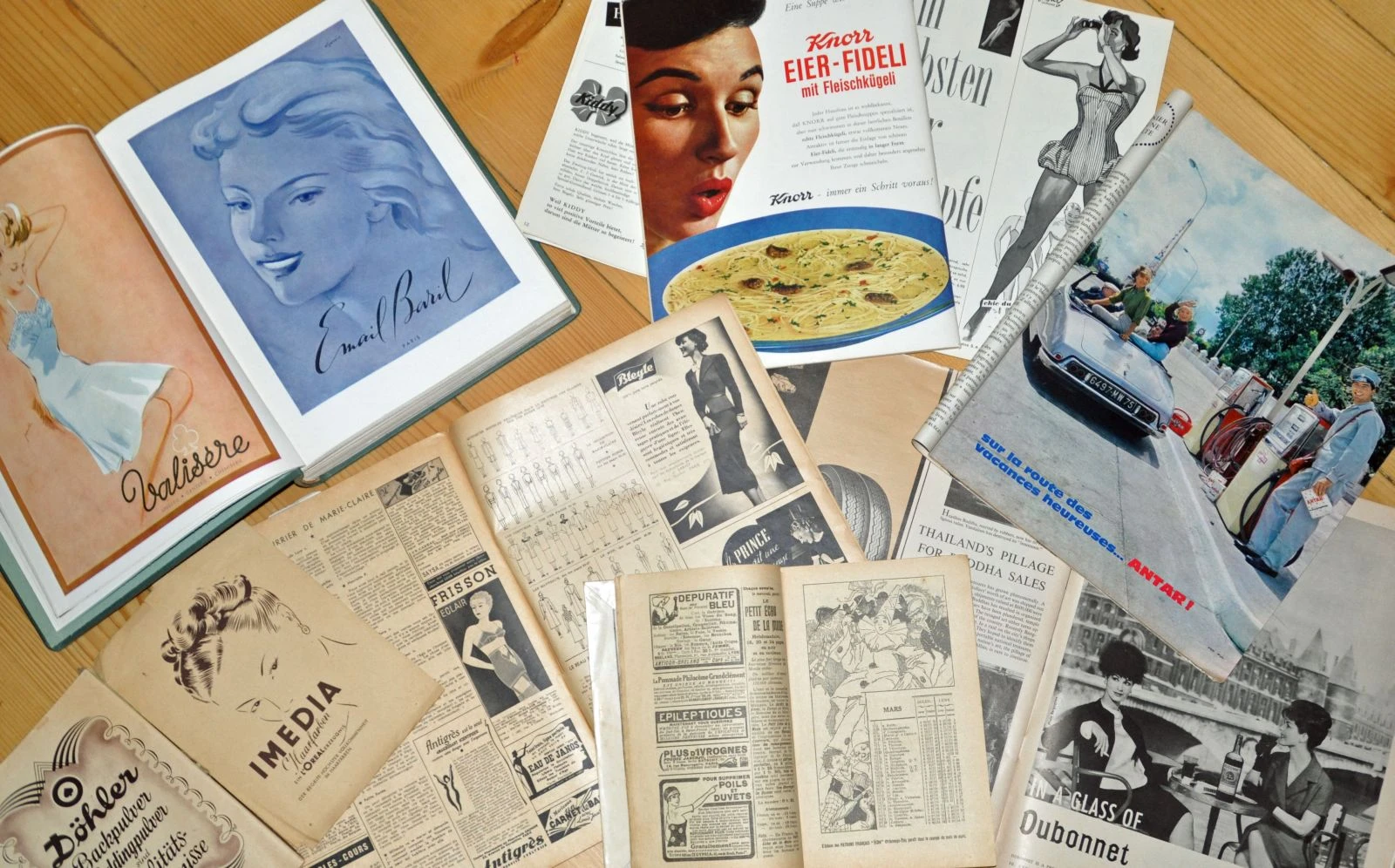
(clockwise from top left: Formes et Couleurs 1944, Almanach du Foyer 1924, Der Silberstreifen 1948, Die Frau 1956, Life international 1961, Paris Match 1963, Marie Claire 1941, Ciné-Miroir 1938+1939)
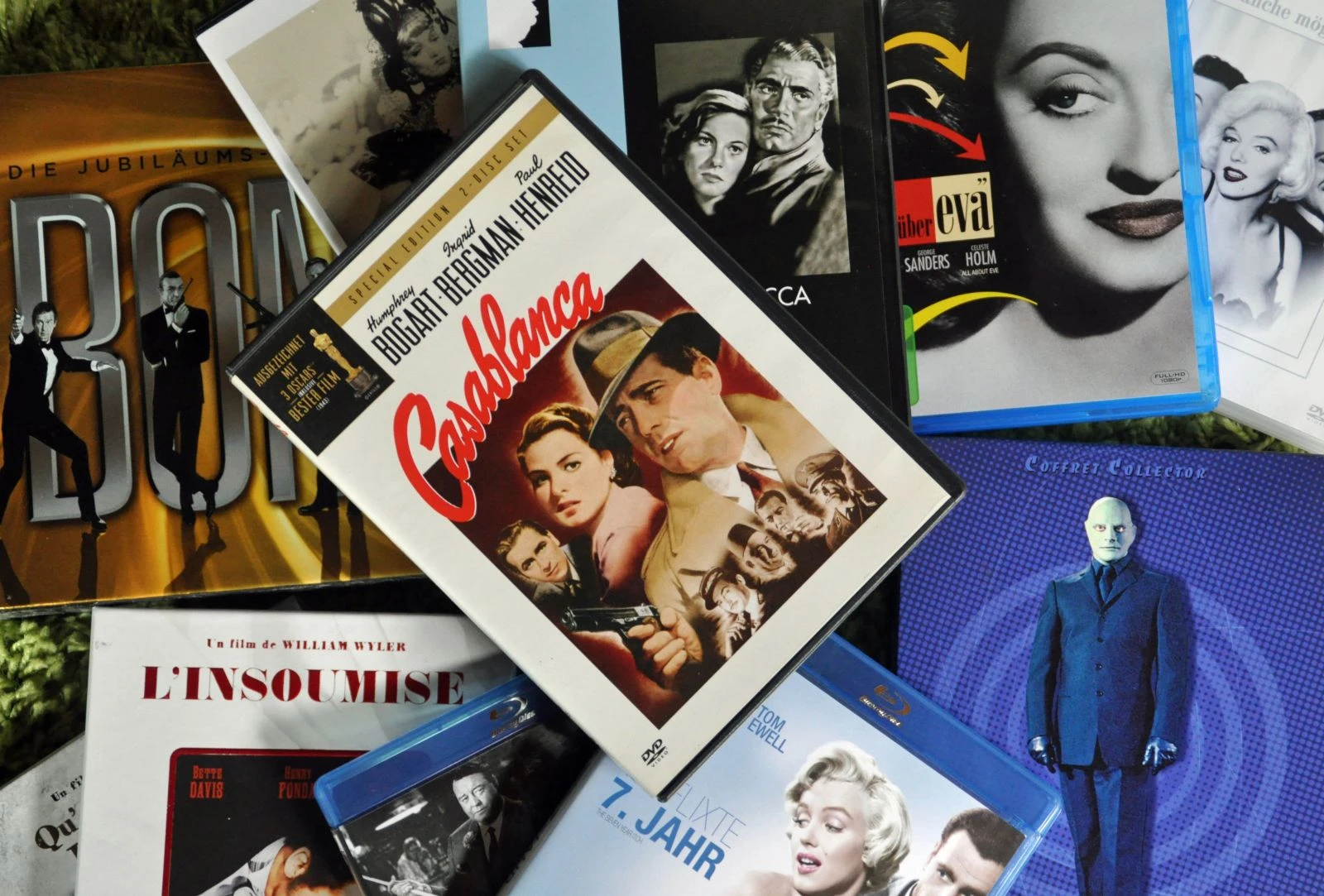
2 films
First of all, I love, I adore Bette Davis, don’t ask why. It’s like falling in love with someone, I can’t give you a reason. So she is a constant inspiration for me. But I love films from the 1920ies to 1960ies in general and watch them whenever I happen to catch one on television. Besides this and a growing DVD collection, Youtube is my best friend, happily so many films are free to watch today.
3 books on fashion history
Though they often use materials I can’t afford and are made with a level of perfection I will never manage to achieve, I love looking at preserved designer’s dresses from earlier decades. It doesn’t make me want to recreate the actual dresses, but they give me inspiration, on what to draw attention to, on what to concentrate, how to treat a special cut or fabric. And of course, it is a glamorous world I have never been part of, it’s simply lovely to see.
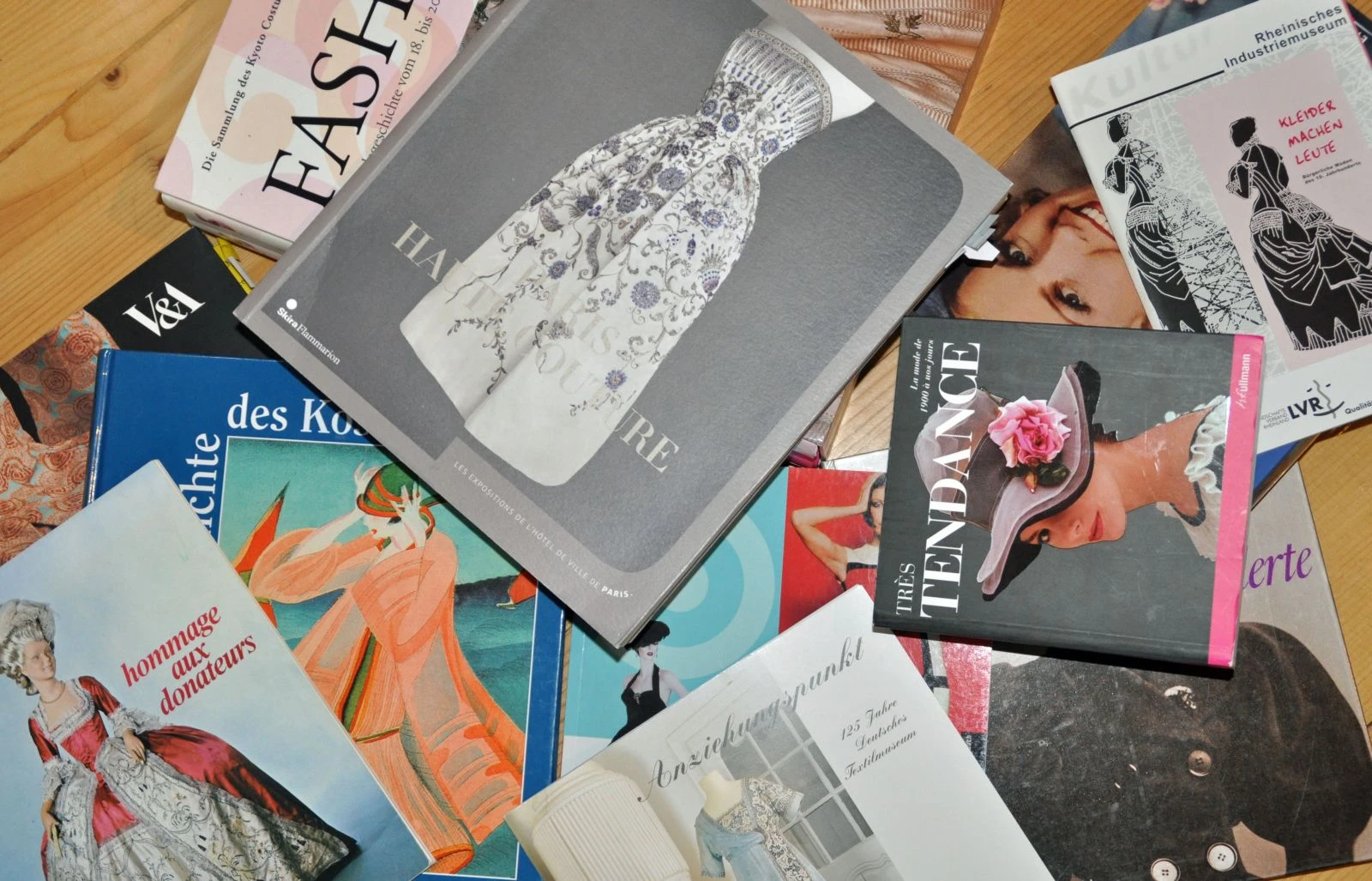
(clockwise from top left: Fashion. Eine Modegeschichte vom 18. bis zum 20. Jahrhundert, Kyoto Costume Institute (pub.), Köln 2006; O. Saillard and A. Zazzo: Paris Haute Couture: Paris 2012; C. Fiell and E. Dirix: La mode des Années 1930 en images, Paris 2012; Kleider machen Leute, Bürgerliche Moden des 19. Jahrhunderts, Rheinisches Industriemuseum (pub., exhibition catalogue); H. Worsley: Très tendance. La mode de 1900 à nos jours, Potsdam 2011; J. Stockar: Zürich. Mode durch die Jahrhunderte, Zürich 1974; T. Tolkien: Schick & Schrill. Klassiker der Designermode, Hamburg 2002; Anziehungspunkt. 125 Jahre Deutsches Textilmuseum (exhibition Catalogue), Krefeld 2005; E. Thiel: Geschichte des Kostüms. Die europäische Mode von den Anfängen bis zur Gegenwart, Berlin 2004; Hommage aux donateurs. Modes françaises du XVIIIe siècle à nos jours; Ville de Paris Musée de la mode et du costume (pub., exhibition catalogue), Paris 1980; L. Johnston: Nineteenth-century fashion in detail, London 2009)
4 actual originals
Here again, as with the magazines: These don’t need to be actual garments. A beautiful embroidery on a handkerchief bought at a flea market, a pair of gloves with a lovely detail, a brooch, an embroidered box, everything that somehow catches the spirit of a certain epoche or makes this very object something special and unique (though of course it often isn’t, but please, let me stay in this world of make-believe).
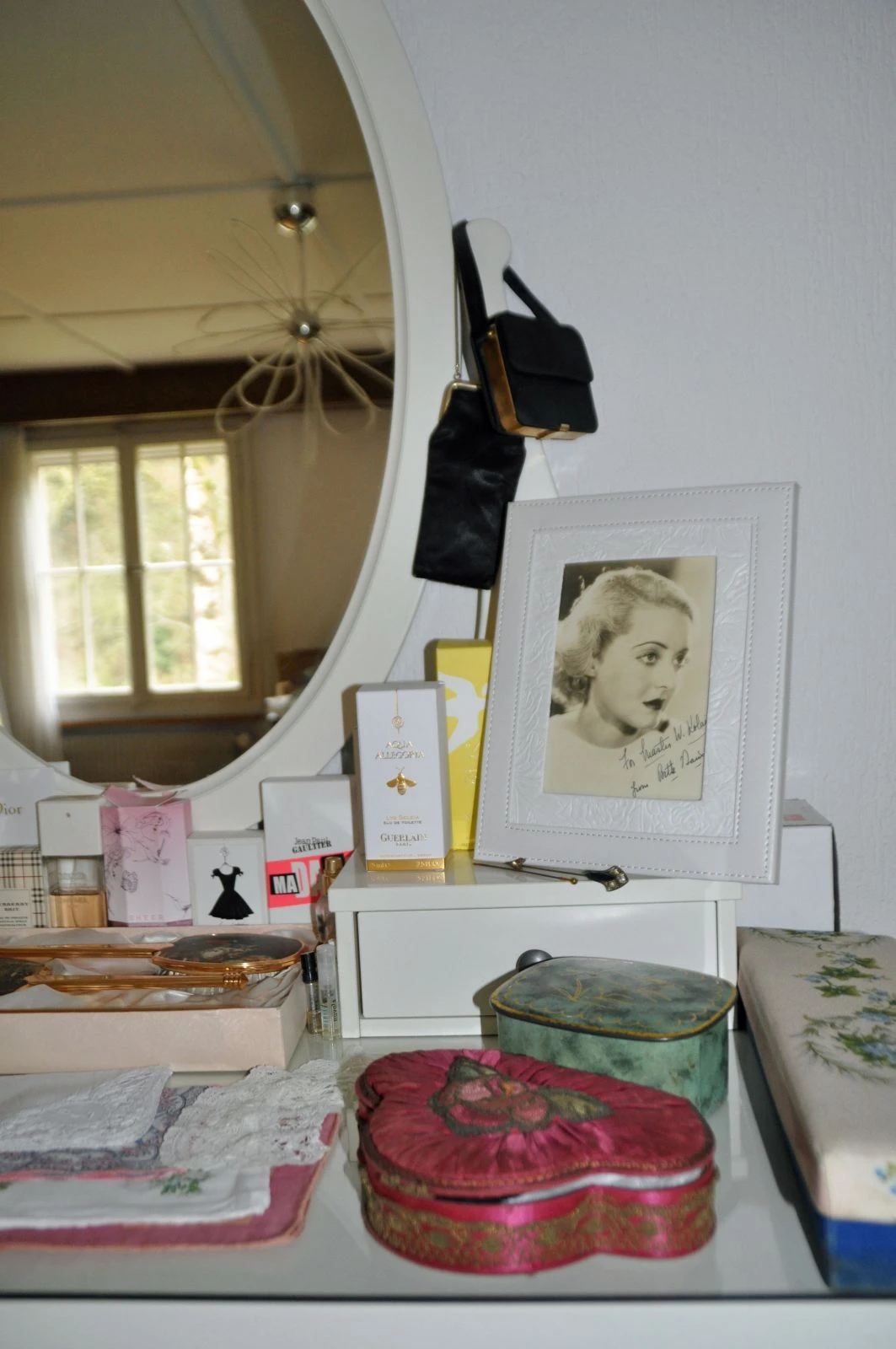
(My vanity table: 1950ies vanity set with rococo-scenes printed on silk in its original box, handkerchiefs from 50ies to 70ies, 30ies lace collar, 30ies silk-covered box with embroidery, 40ies tin can, 50ies glove box, art deco-brooch, 30ies (?maybe earlier) spectacle case, 70ies make-up neccessaire)
5 books
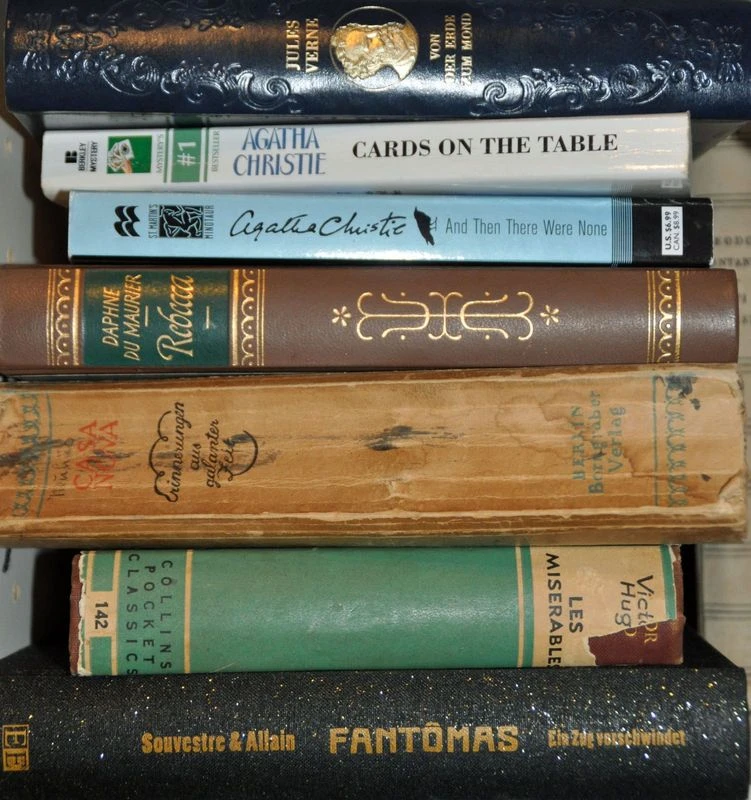
Knowing the cut and shapes that were fashionable in a certain decade, I love reading books that were written some decades ago. Mostly, the description of garments is not very detailed, but, knowing when a book was first published, I love to “dress” the charakters in my imagination, make them fit into their time, have them wear something scandalous or rather old fashioned. So I draw the inspiration from a book, but imagine the actual design myself.
6 advertisements
This seems to be kind of a trend at the moment. Last week I even found a Mid-Century-Ad-Calendar for 2014. But knowing how shiny and glamorous, sometimes really ridiculous advertising is today, one can easily imagine that this didn’t change much the last 100 years. And still I love being seduced by those full-bodied promises and imagine what I would have chosen to buy.
(same as in 1)
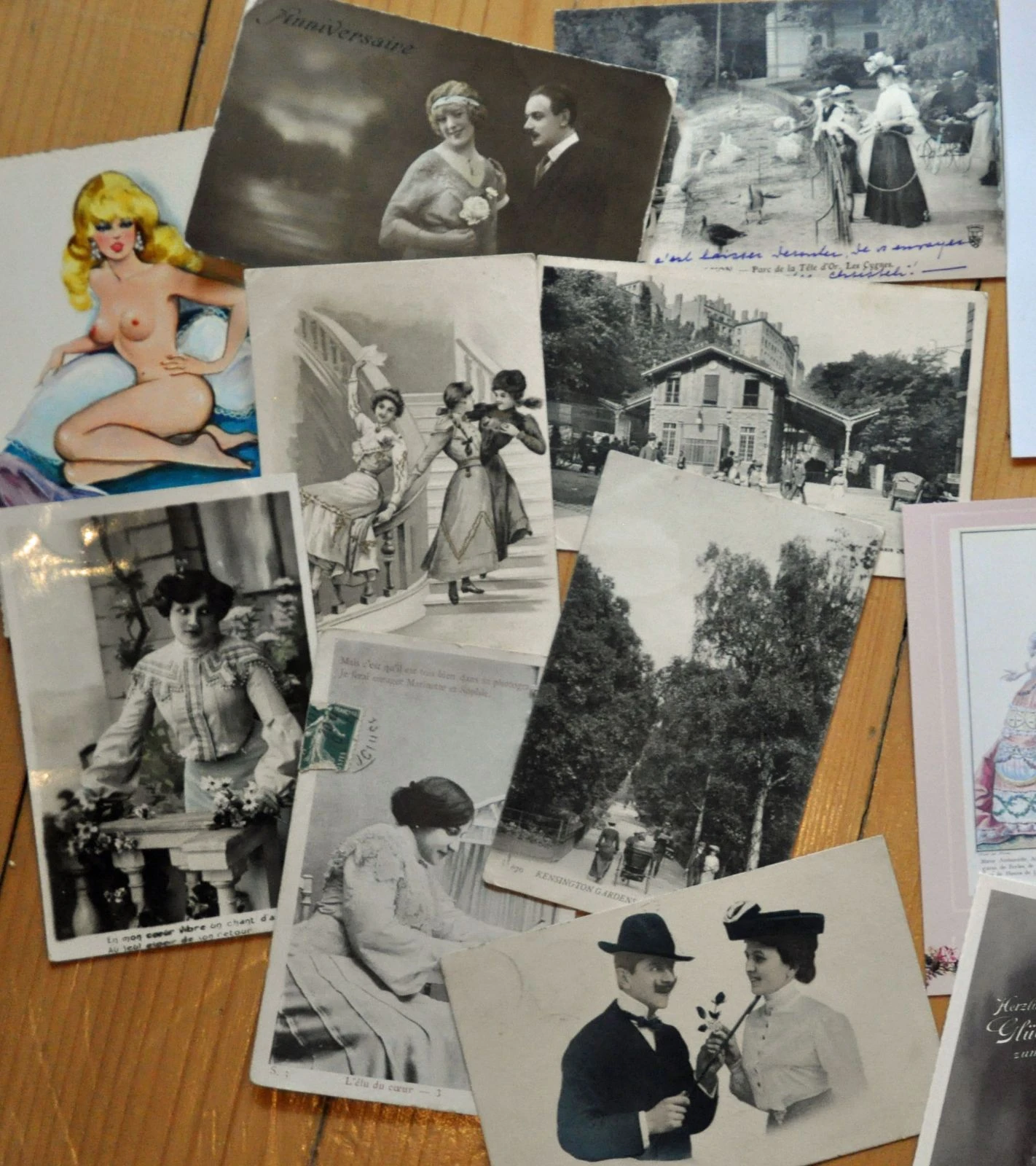
7 postcards
I would like to include three types of postcards in here: First, antique ones. A lovely source not only for images. I love reading words of love or of friendship that have been written decades ago.
The second type are reproduction postcards. They are cheap, easy to find and show lovely images of whatever period you want.
And last, museum postcards, showing certain dresses, details or fabrics of the museum’s collection. As with the reprinted cards, they are comparably cheap, easy to store and give you the possibility to have a closer look at rare originals without buying loads of books or ruining yourself buying antique dresses in great numbers (ha, as if I could afford that, really, who could?).
(some antique postcards I own)
8 music
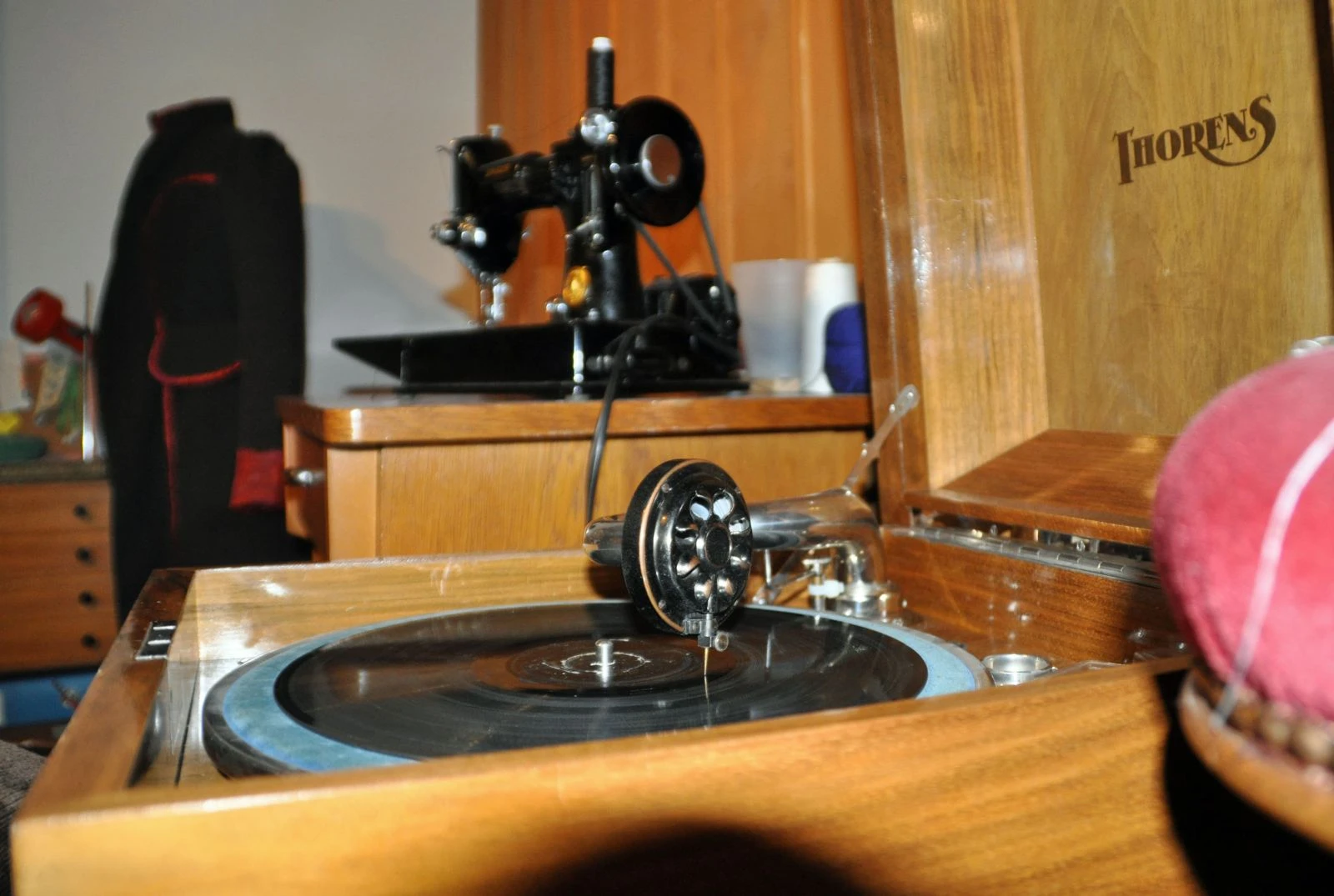
Most of the decades of the first half of the 20th century are connected to a special kind of music or dancing. Thinking of the 20ies, many people tend to think of dancing flappers, same applies to the 50ies, where images of whirling petticoats on the dancefloor begin to come to one’s mind. At the same time, music can make us feel as if we were in another place, can make us forget our environment. I have a modern record player in the living room but, more beloved than this, a 1950ies gramophone right next to my sewing machine. I love listening to my 78RPM-records while sewing something historical on my 1948 Singer machine and the images that come to my mind at those times may form the basement of a future project of mine.
(from fore- to background: Early 20th century pin-cushion table, 1950ies Thorens gramophone , 1948 Singer Featherweight on a mid-century Gritzner with table, my current sewing-project, mid-century sewing-table, 1960ies desk lamp)
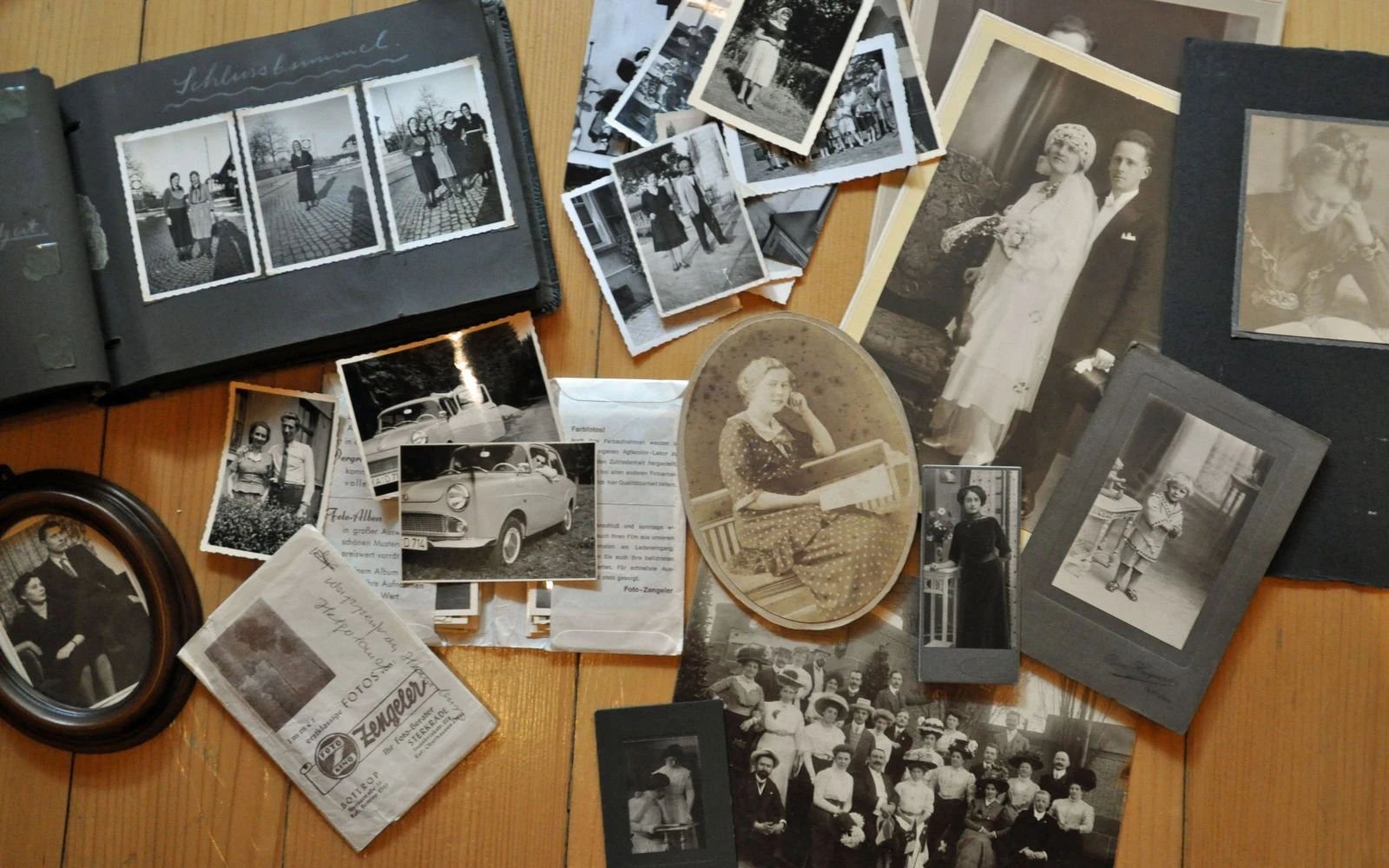
9 photos
Same as with postcards, photos are easy to find on flea markets and the like and are comparably cheap, especially when they are in a bad condition. But stains or a tear don’t ruin the photo, as long as I can see what is pictured, it is fine to me. And additionally, I love to see that those things had a live much more than finding them in mint condition.
(clockwise from top left: 1930ies photo album, mid-century photos, early 20th century photos, 1960ies photos of my relatives)
10 my job
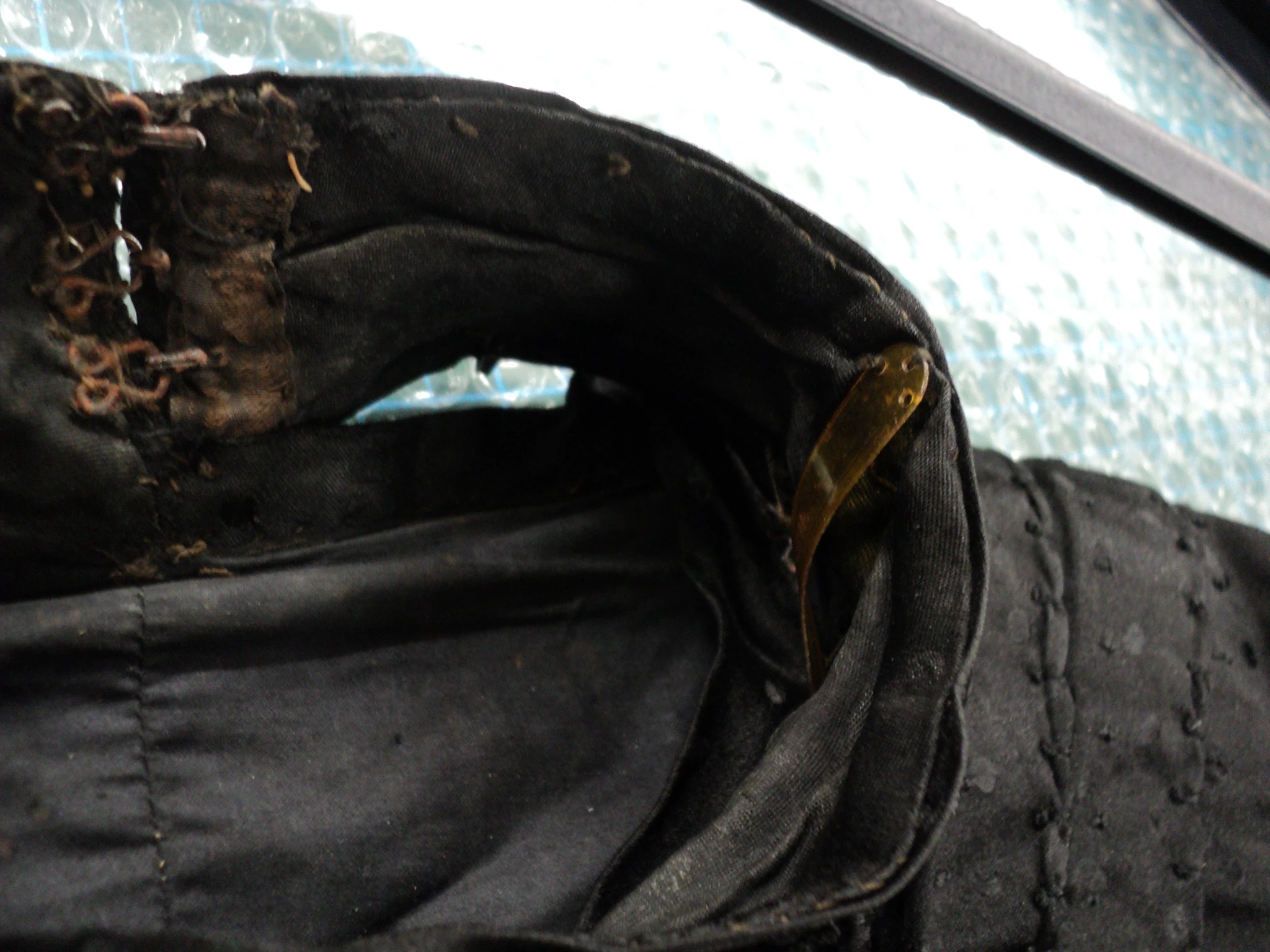
Being an art historian with special qualification in the history of textiles, I come in contact with antique costume and fabrics quite often. There is little more inspiring than touching a hand-sewn 18th-century robe, standing speechless in front of a 16th century embroidery, looking at a silk-brocade through a magnifying glass, catching a glimpse at the inside of a mid-century tailor-made jacket. Discovering technical finesses a tailor used 200 years ago is so special. Examining how a garment or a decoration was actually constructed gives me so many ideas on how to make my own historical or vintage garments.
I admit this is quite difficult to do when working in another kind of business. 20th century clothing can be found in some charity and antique shops. For earlier pieces try to find an antique shop who is specialized in clothing or see if a local auction house will have a textiles auction soon, sometimes they offer to see the objects some days previous to the auction. Visit museums, if you really want to research something ask if you will be allowed to see a certain object in detail, some museums (for example the V&A, but I am sure the MET and many more do have, too) have study collections for those purposes.
(detail of an early 20th century women’s blouse, Gemeindemuseum Krauchthal)
So, I would divide two main areas of inspiration for myself. First, the actual object: it gives you hints on techniques, on the impression of special materials and embellishments, actual visual starting points to create a dress, an outfit, a style. And second: catching the spirit, be it through music, through a film, long gone news or a trip to the mountains 80 years ago, captured in photos. A note on a postcard or the rusty coffee advertisement on the inside of a tin. I love to be surrounded by those things, love to dive into this feeling, imagine what I would do actually living in this certain period.
Normally official holidays aren’t something you are really aware of. When living in my hometown there were always those holidays who were only marked in the calender and the federal ones who meant a day off school. In this part of Germany, the 1st of November is a federal holiday, so of course Halloween was celebrated every single year since the 5th grade.
Meanwhile I have moved to another country and to a protestant part of it. That means the 1st of november is a working day as every other day (except for the fact that all the people from catholic regions of Switzerland go shopping in Berne, so it is very crowded).
For that reason a dear friend of mine had to plan her Halloween Party on Saturday, so please forgive that slightly belated costume post.
As you can imagine, the last weeks weren’t the perfect time to prepare a perfect costume out of nothing, so I went for something already proved and tested.
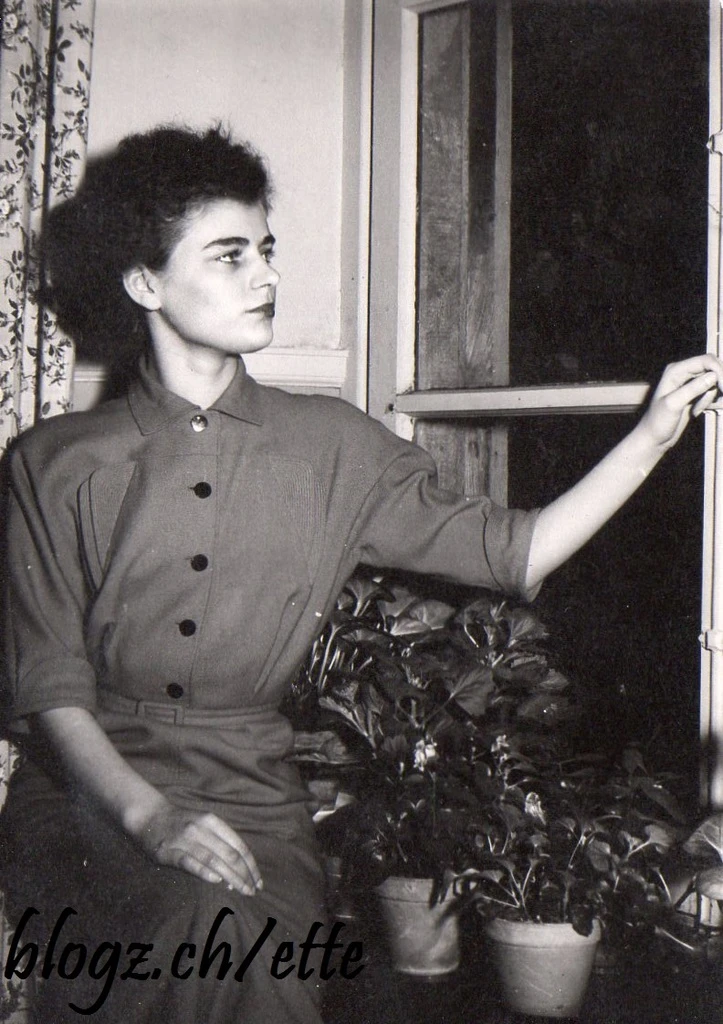
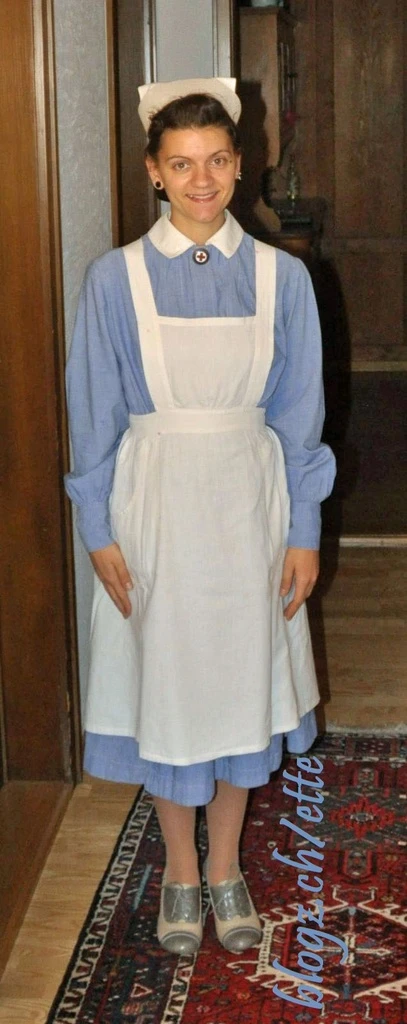
My grandmother, born in 1933, became a nurse after she had finished school. I don’t know exactly when she started her apprenticeship, but it must have been somewhen around 1950. What I can say fore sure is that she quit her job in 1965 when my father was born and she has been a stay-at-home-mum ever since, being at the age of 80 today.
This is my grandma in 1953:
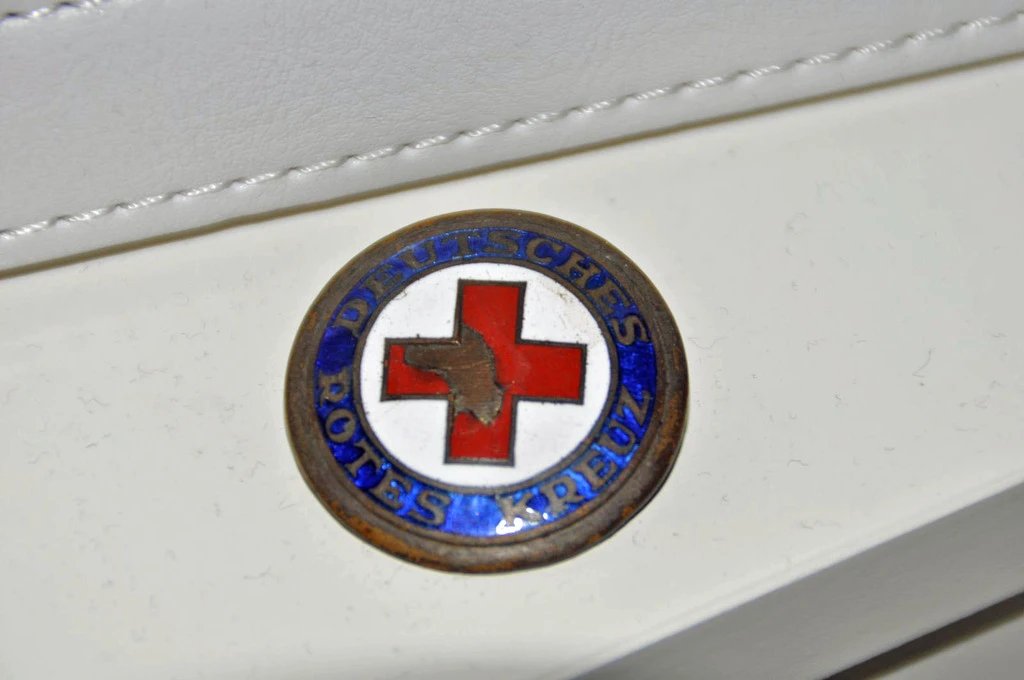
A few years ago she told me, that she still had her nurse’s uniforms in the basement. I was very exited and asked her to show it to me. In an old wardrobe she kept multiple of her dresses, aprons and other stuff. I was so very happy (also because my family isn’t very rich or aware of tradition and has only very few family heirlooms and souvenirs) and she asked if I wanted to have one of them. She gave me a dress, an apron, a cap, a surgical gown and even a matching brooch (well yes, the enamel is broken, I think she kept the intact one).
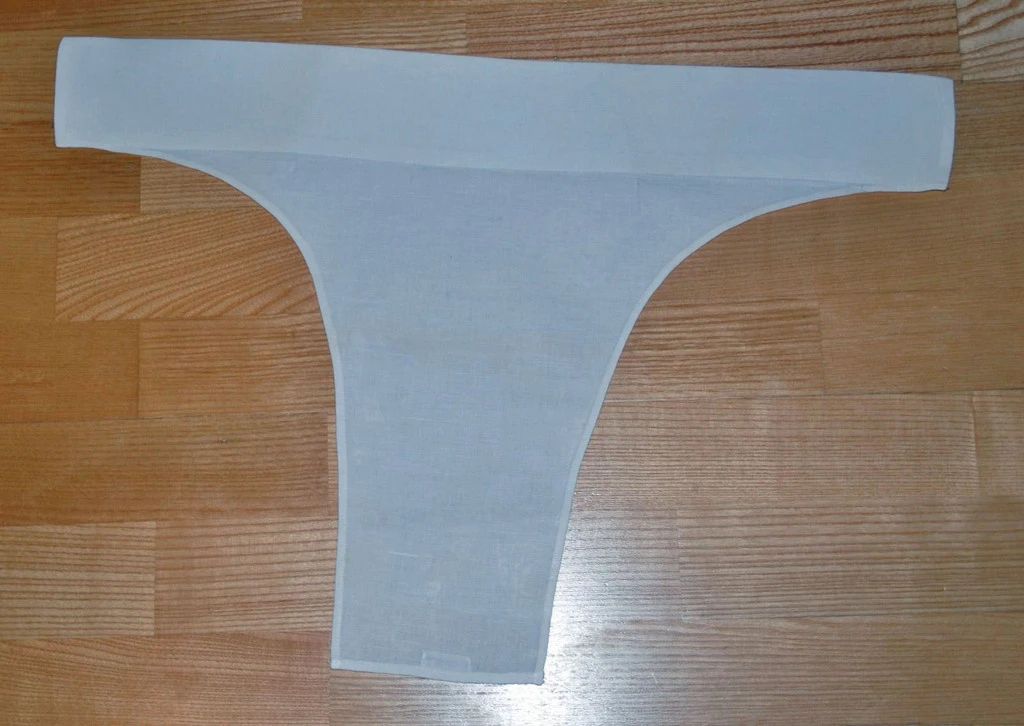
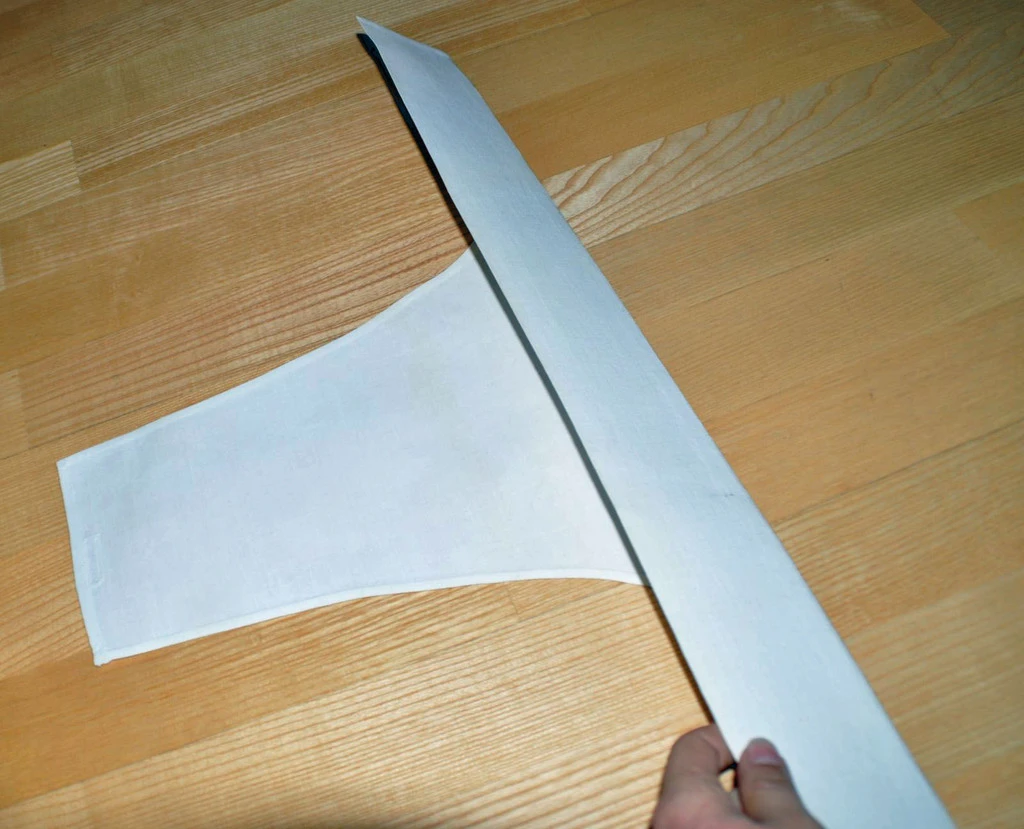
The cap was a bit of a challenge, because she didn’t remember how it had to be folded. Looking at some photos at the internet and with a lot of trial-and-error experience I figured out something that could be at least a possibility of how it was worn, though I am still not sure if this is the right way.
So, if you ever come across something that looks like a gigantic single layer slip, it is a nurse’s cap. It is starched very heavily, I didn’t dare to wash it until today because I am sure I will never be able to starch it as the hospital’s laundry did.
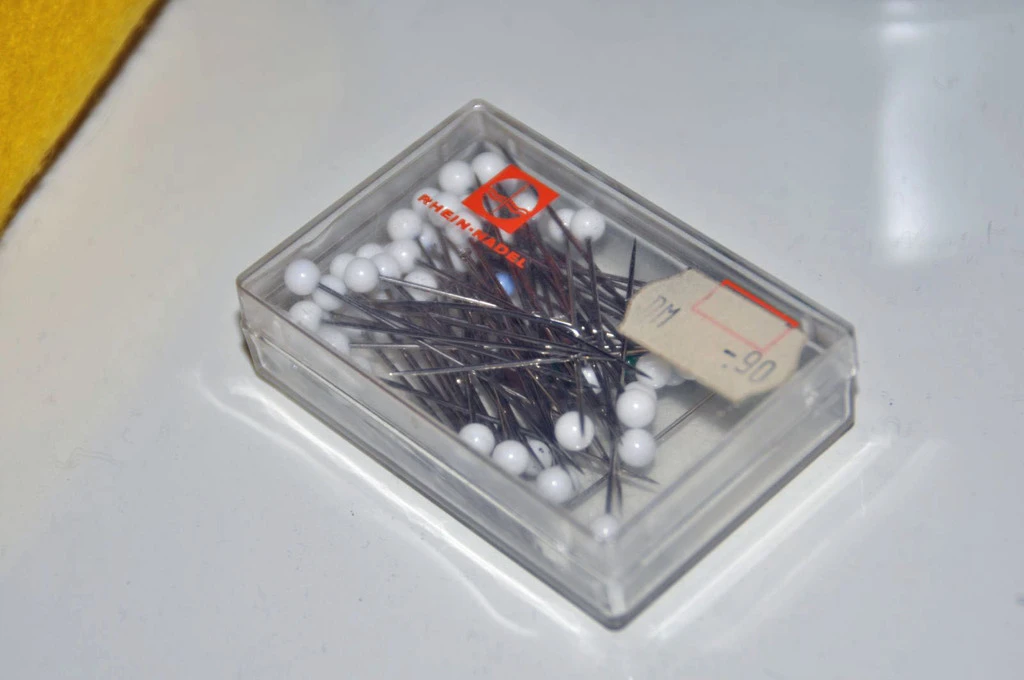
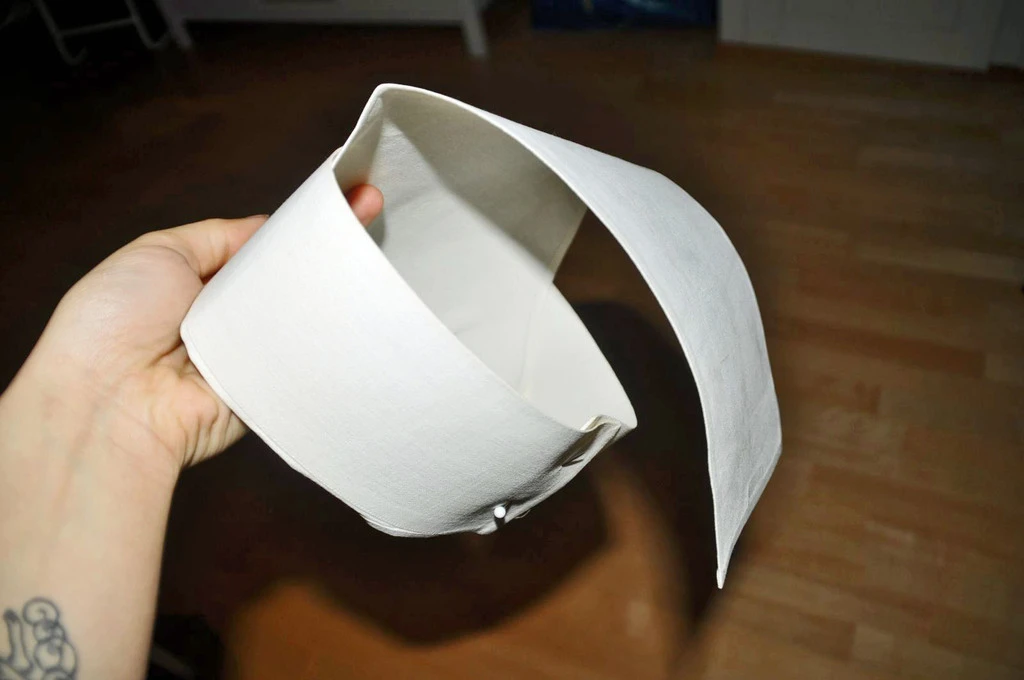
The first thing you’ll need is something called nurse’s pins. I didn’t even know that they existed (having had always assumed that those caps had been pinned with standard pins) until a client of the haberdashery shop I used to work in asked for them (of course, we didn’t have them). But when I found a little box of white-headed pins in a sewing basket I bought on a flea market, I knew immediately what I had found. They are a little longer and stronger as standard pins and, as already meantioned, come only in white.
First thing to do is fold the double-layered part of the cap back.
Pin the ends together to form a circle.
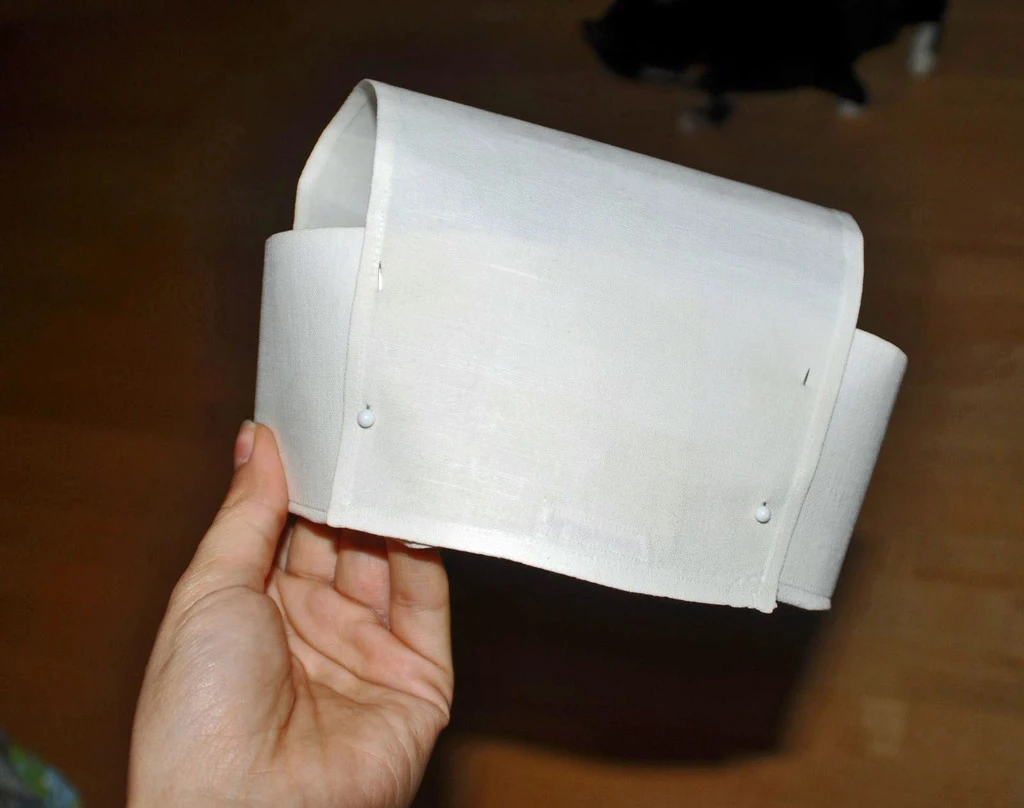
Pin the flap over the ends as shown. You can change the size by reducing or enlarging the overlap of the two ends and of the flap.
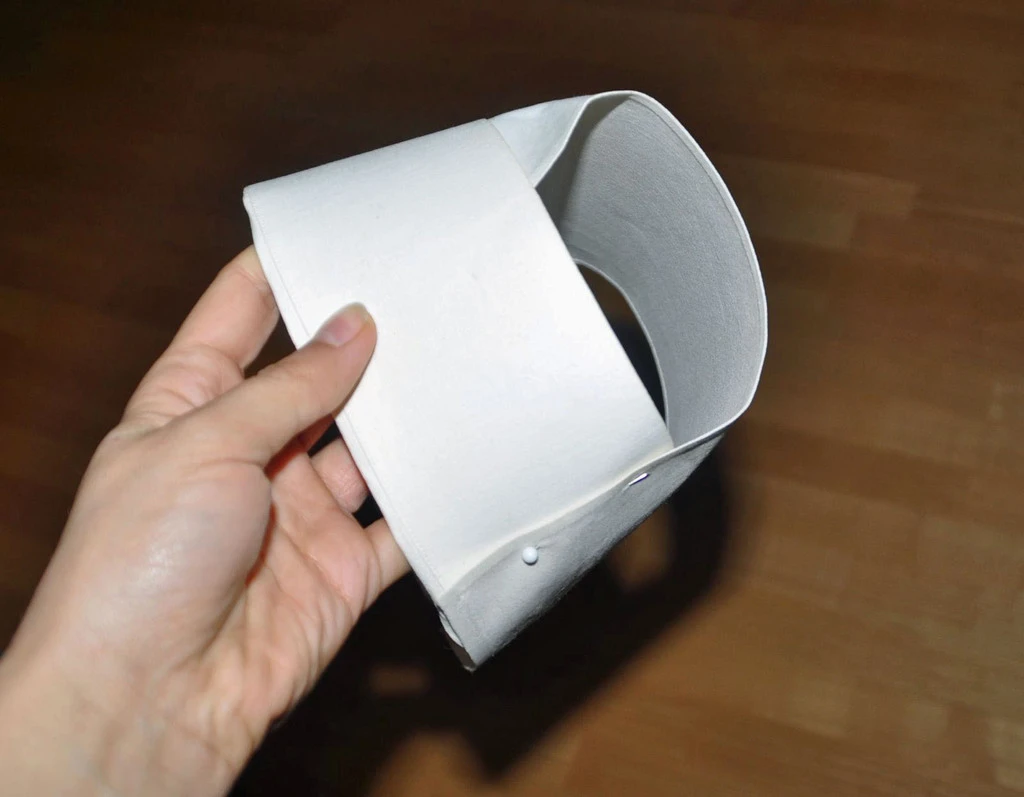
And voilà, your cap!
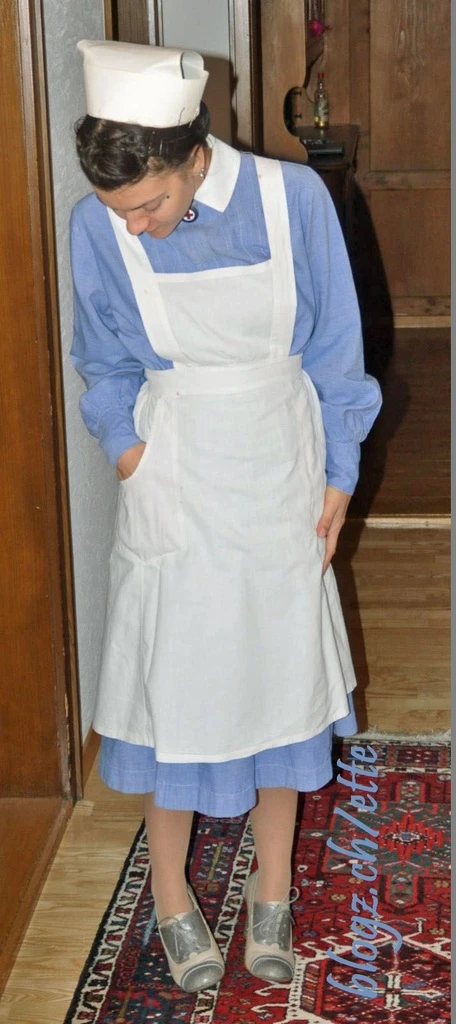
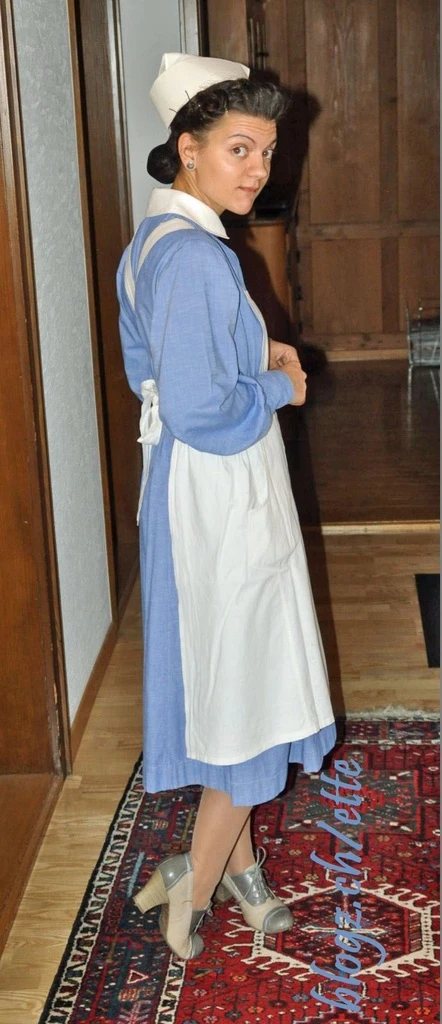
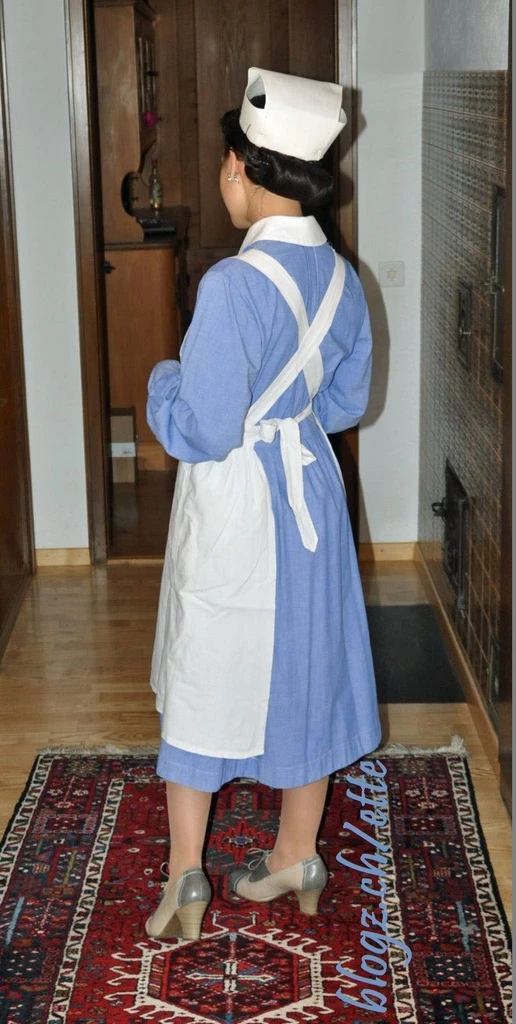
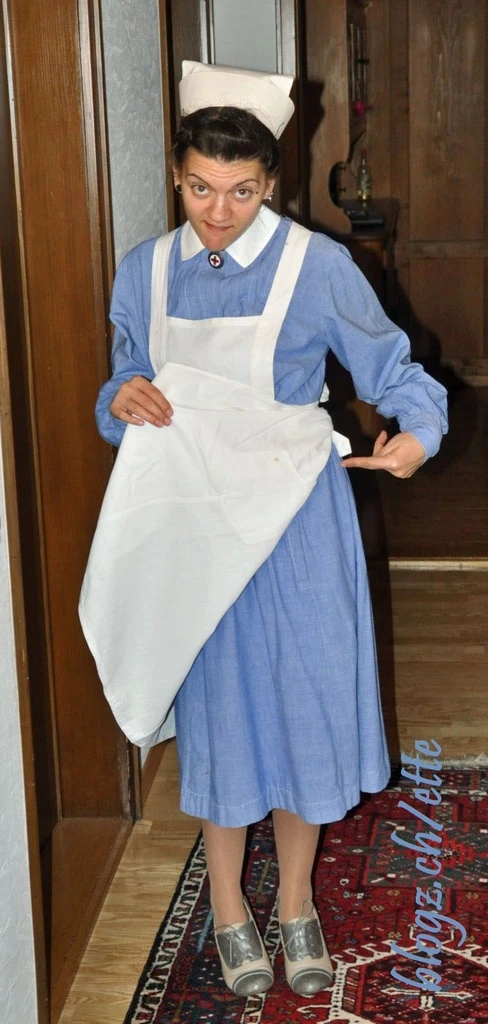
And here is the complete costume:
Somebody at the party asked me if it was on purpose that I wore my apron inside out. But I didn’t. It has one pocket for the right hand on each side, so if it get’s dirty you can turn it around. For someone standing left from me it looks as if my pocket was on the wrong side of the apron.
Me trying to make an ugly halloween-y face. And on the inside you can see a 50 year old (blood?) stain the laundry didn’t manage to eliminate.
I was accompanied by my boyfriend, wearing some giant plastic screws on his head as a costume (he hates costumes, that was all I managed to convince him of) and lots of homemade cookies (these are only the few we kept for ourselves):
I hope you had a nice weekend and a happy Halloween,
 Follow